

Geopolitical Tensions and Sector Rotation: The Oil and Shipping Story
Saturday, August 15, 2026
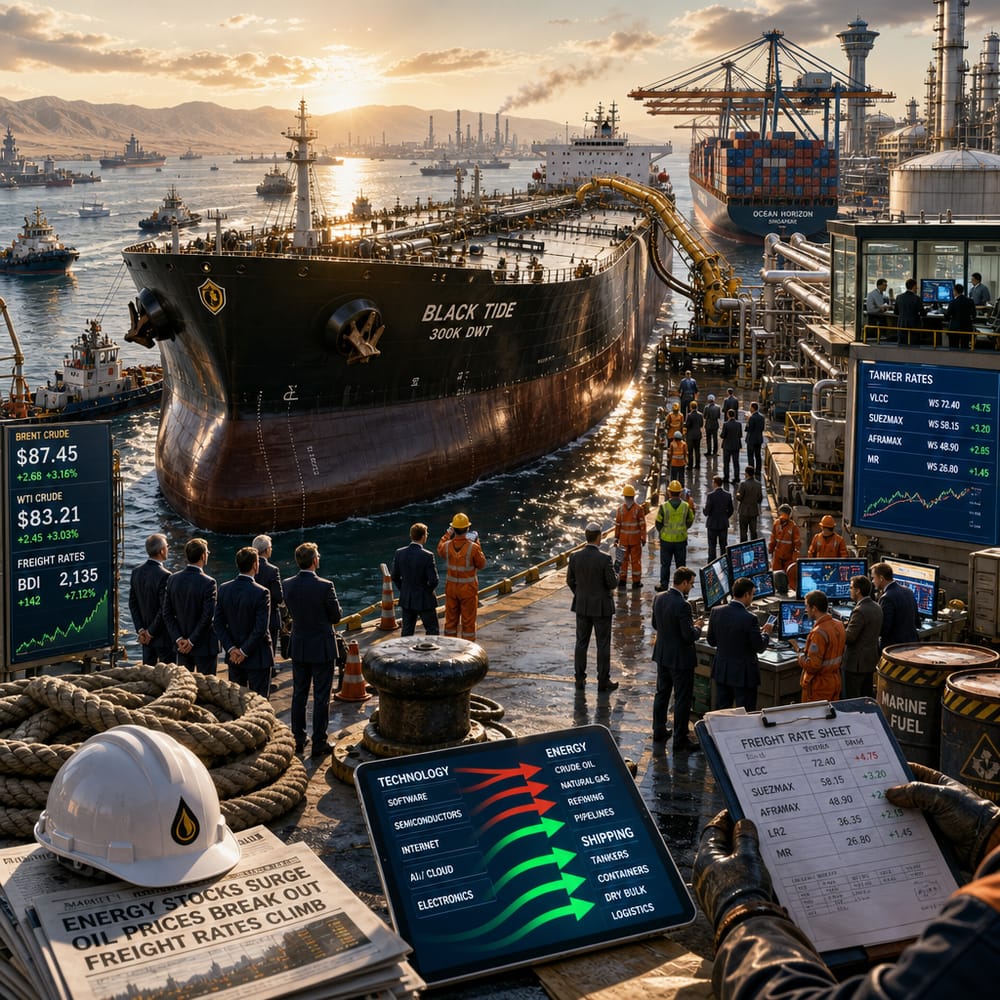
GEOPOLITICAL TENSIONS AND SECTOR ROTATION: THE OIL AND SHIPPING STORY
In the world of investing, being caught napping can be costly, especially when global tensions are playing havoc with sector rotations and investor strategies. While Middle East geopolitics might not be your usual Netflix binge, it’s the latest drama shaking up a market near you, starring none other than oil and shipping stocks.
Global events can send ripples across sectors, but sometimes they cause a full-blown tidal wave. Roll out the world map, and you’ll spot a red-hot zone right in the Middle East. The Strait of Hormuz—a nerve-wracking chokepoint through which 20% of the world's crude oil flows—could easily be mistaken for a Monopoly board, with Iran claiming sovereignty and the U.S., along with Gulf Arab countries, crying foul. Add a splash of military action, and you have yourself a perfect cocktail for market volatility.
HOW ARE ENERGY PRICES AFFECTING SECTOR ALLOCATIONS?
When tensions rise in oil-rich regions, energy prices are usually the first to feel the heat. And like a domino effect, those shifts in prices are causing investors to rethink their portfolios faster than you can say "barrel of oil." With the Strait of Hormuz playing cat-and-mouse, energy prices have been anything but stable. This has pushed investors to rethink sector allocations, making energy stocks the reluctant darlings of Wall Street.
Integrated oil companies like ExxonMobil and Chevron are basking in the spotlight. Their stocks are receiving a boost, driven by the anticipation of higher oil prices. After all, when 20% of global crude is at stake, the stakes get high, very quickly.
WHICH SECTORS ARE MOST IMPACTED BY GEOPOLITICAL RISKS?
While energy takes center stage, there are other players in this geopolitical saga. Shipping stocks are also dancing to the Middle Eastern beat—or should we say, dodging the artillery fire. With the Strait of Hormuz being both a lifeline and a liability, shipping companies are in a pickle. On one hand, restricted access means fewer ships and delayed schedules; on the other, it could mean higher freight rates as demand for alternative routes skyrockets.
Shipping giants like Maersk and Hapag-Lloyd could either sink or swim, depending on how the current geopolitical script plays out. Investors would do well to keep a telescope handy, watching these developments as closely as a pirate on the high seas.
POTENTIAL LONG/SHORT PLAYS
So where should you place your bets in this high-stakes geopolitical poker game? Well, if you're feeling bullish, backing integrated oil companies might be your play. Consider those firms that can refine, produce, and distribute oil—they’re not just one-trick ponies. They’ve got the flexibility to ride out market fluctuations better than those solely focused on exploration.
But let's not forget that every action has a reaction, and every bull has its bear. If you're of the glass-half-empty camp, you might consider shorting airlines and transportation companies. Skyrocketing fuel prices could hit their bottom lines hard, turning a risky move into a profitable one if the dice roll in your favor.
In shipping, consider a long position on companies nimble enough to adapt to new, albeit longer, trading routes. These firms may capitalize on increasing freight rates, turning geographical hurdles into opportunities.
THE BIG PICTURE
It's easy to get lost in the weeds when markets start spinning like a roulette wheel, but don't lose sight of the grand scheme. Geopolitical tensions are a reminder that markets are global, interconnected, and, yes, a bit unpredictable. It's a dance between risk and reward, with sectors like energy and shipping consistently finding themselves in the limelight whenever global tensions flare up.
So, while geopolitical risks can feel like a million miles away, their implications can—and often do—hit closer to home. Keeping a finger on the pulse of these developments could turn an uncertain market environment into a fertile ground for savvy investments.
Next time you scroll past news of Middle Eastern tensions, remember it's not just global politics—it’s a market opportunity waiting to be seized. And in a world where timing is everything, being ahead of the curve could make all the difference. So brush up on your geopolitical chess game because, in the world of investments, sometimes it’s the unseen moves that change the game.
This article is for informational purposes only and is not investment advice. Always do your own research or consult a licensed financial professional before making investment decisions.
© Copyright 2024. All Rights Reserved.
© Copyright 2024. All Rights Reserved.