

Geopolitical Tensions and Inflation Expectations Drive Bond Yields Higher
Monday, August 24, 2026
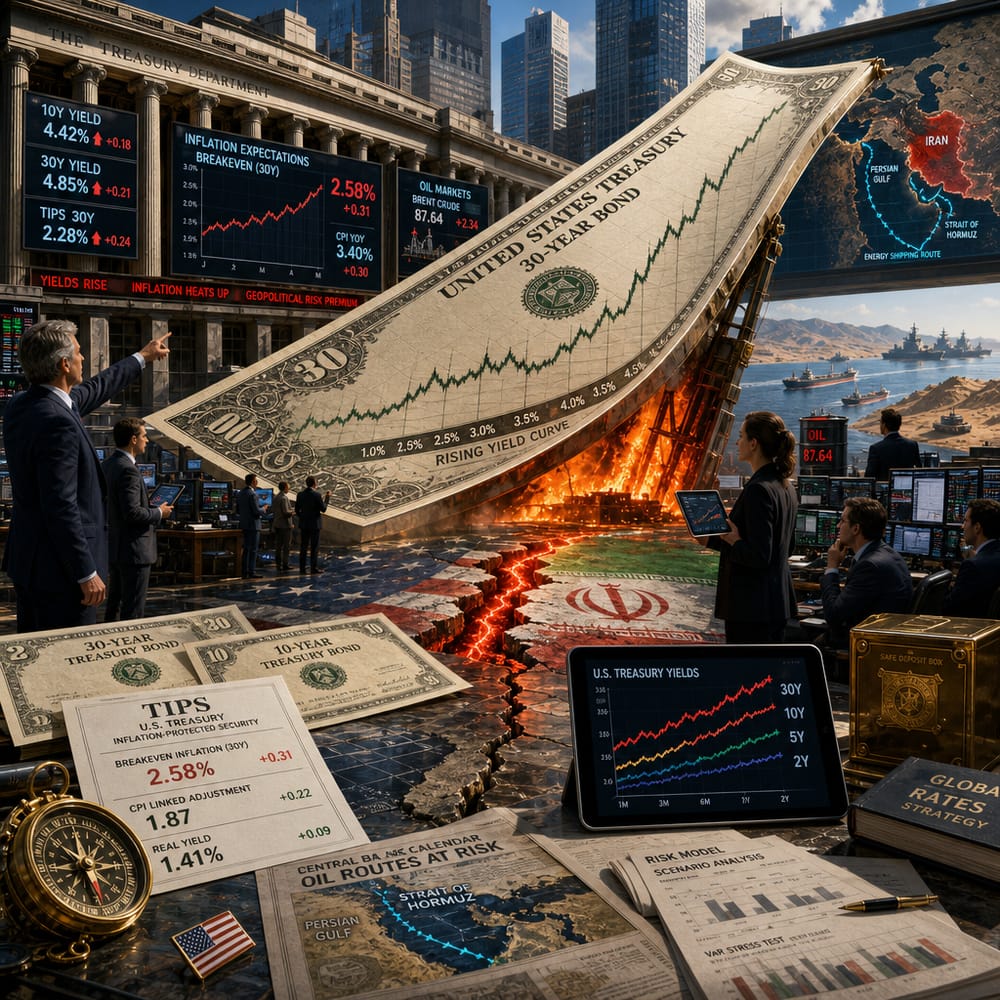
GEOPOLITICAL TENSIONS AND INFLATION EXPECTATIONS DRIVE BOND YIELDS HIGHER
In the world of finance, where numbers and reserves rule, sometimes it's the drama off the trading floor that steals the spotlight. Just as the market was settling into a post-pandemic rhythm, cue the geopolitical pot to stir things up. Tensions with Iran and a bout of tariff tiffs with our northern neighbors, Canada, have sent bond yields on a wild ride, and investors on a search for sanity—or at least a decent night’s sleep.
BOND YIELDS IN THE SPOTLIGHT
Let’s start with the basics: bond yields. Not exactly the rock stars of finance, but crucial players in the grand economy band. Recently, these yields have been climbing like a cat scaling curtains, leaving investors clutching their pearls (and portfolios). At the heart of this are geopolitical tensions—namely, the escalating U.S.-Iran sanctions and the collapse of U.S.-Canada trade talks. The former holds the potential to disrupt global oil supply, while the latter threatens cross-border trade stabilities. Both scenarios are like caffeinated squirrels in the global economy’s attic, creating a ruckus that cannot be ignored.
HOW GEOPOLITICAL TENSIONS ARE INFLUENCING INFLATION EXPECTATIONS
Now, you might be thinking, “What does this have to do with inflation?” Well, when countries start locking horns, it sets off alarm bells about future supply chain disruptions. If oil supply is pinched or trade barriers rise like the drawbridges in an epic medieval battle, the cost of goods can skyrocket faster than you can say "hyperinflation." And when prices rise, inflation expectations follow—investors start bracing for a world where today’s dollar doesn’t go as far as yesterday’s. Higher inflation expectations can lead to higher bond yields, as investors demand greater returns to offset anticipated inflation.
IMPACT ON GLOBAL TRADE AND ECONOMIC STABILITY
This is where things get more tangled than a pair of earbuds at the bottom of your bag. Higher bond yields generally mean higher borrowing costs—not just for individuals, but globally. Companies looking to expand, governments funding infrastructure, and even the day-to-day operations that rely on borrowing feel the squeeze. When borrowing costs rise, investments can slow down, potentially putting a damper on economic growth. And if trade tensions flare, as we've seen between the U.S. and Canada, it could mean more than just grumpy neighbors—it could mean real challenges for industries dependent on cross-border supply chains, leading to volatility that makes the stock market look like a rollercoaster with a few too many loops.
INVESTOR SENTIMENT IN THE FACE OF MARKET VOLATILITY
In times like these, the financial markets transform into an emotional rollercoaster—and this ride doesn’t come with seat belts. Investor sentiment can swing wildly, and market volatility often spikes. With each news headline about tariffs, sanctions, or central bank maneuvers, market participants become more jittery than a cat on a hot tin roof. Some investors might flee to "safe haven" assets like TIPS (Treasury Inflation-Protected Securities), which adjust for inflation and offer a sort of financial security blanket. Others might double down on risk, hoping for a big payoff if the tension eases and the economy stabilizes.
The tightening spotlight on the bond market is like a scene from a tense thriller—one where every twist of geopolitical drama, every reveal of inflation data, and every utterance from central bankers puts investors on edge. The ride isn’t over yet, and if history’s any guide, we’re in for more twists and turns. But hey, if you’re looking for a little excitement, there’s nothing quite like the heady mix of geopolitical tensions and financial markets to keep you on your toes. Just remember to hold on tight.
This article is for informational purposes only and is not investment advice. Always do your own research or consult a licensed financial professional before making investment decisions.
© Copyright 2024. All Rights Reserved.
© Copyright 2024. All Rights Reserved.