

Geopolitical Tensions and Fed Rate Hike Odds Rattle U.S. Futures
Monday, August 31, 2026
GEOPOLITICAL TENSIONS AND FED RATE HIKE ODDS RATTLE U.S. FUTURES
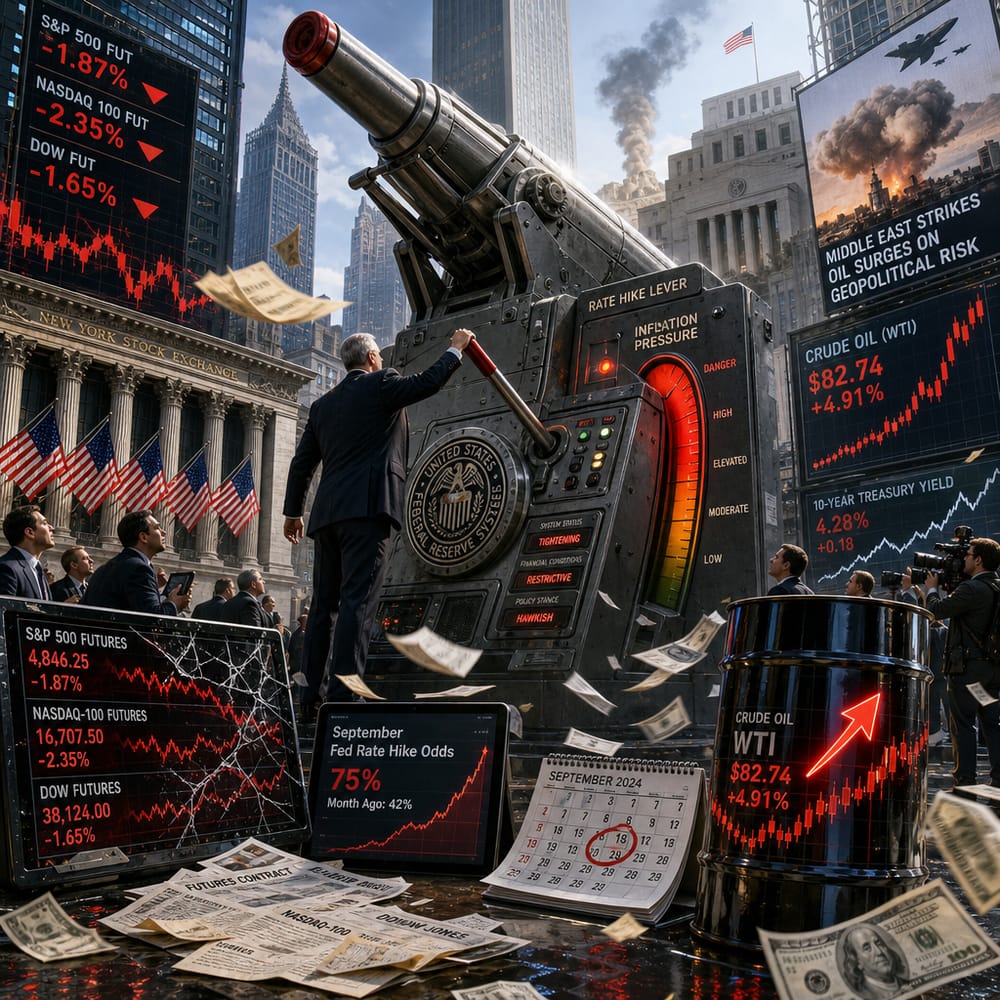
When you thought the only thing brewing this fall was your pumpkin spice latte, the financial markets decided to serve up something a bit spicier. U.S. futures took a nosedive this Monday, spooked by fresh military tensions between the United States and Iran. And just to keep things interesting, the prospect of another Fed rate hike looms large, threatening to move the market goalposts once again.
THE MIDDLE EAST MELEE
Let's cut through the fog of war: the U.S. recently launched strikes on Iranian positions, marking the first public acknowledgment of such an action since late July. In retaliation, Iran reportedly targeted U.S. bases in Jordan. This fiery exchange isn't just keeping diplomats on their toes; it's shaking up the financial markets and rattling the nerves of investors.
The immediate reaction? Stock futures are singing a sad tune. Dow Jones, S&P 500, and Nasdaq-100 futures all slipped into the red. It's as if investors woke up to realize their portfolios had taken on the role of the proverbial canary in a geopolitical coal mine. And who can blame them? Geopolitical tensions have a knack for turning market sentiment upside down faster than you can say "diversification."
THE OIL PRICE PREDICAMENT
Now, let's talk about the slippery stuff—oil. When missiles start flying, crude oil prices tend to follow suit, climbing higher as fears over supply disruptions take hold. This isn't just a headline-grabbing issue; rising oil prices can fuel inflation faster than a Ferrari on the Autobahn. And that, dear reader, is a headache for everyone, from Wall Street bigwigs to the average Joe filling up his gas tank.
Higher oil prices feed inflation, and inflation is like that one unruly party guest who just won't leave. It puts pressure on everything from grocery bills to interest rates, ultimately leaving consumers with less cash to splash on non-essentials. So, while investors typically rejoice at the ringing of the opening bell, right now, they're clutching their wallets a little tighter.
FEDERAL RESERVE: THE WILD CARD
Here's where the plot thickens. The Federal Reserve, America's financial puppet master, has been keeping a watchful eye on inflation, ready to yank on the interest rate strings if things get out of hand. With the recent oil price hikes, the odds of a Fed rate increase in September have just notched up. Think of this as the Fed's way of preemptively striking at inflation by making borrowing a bit pricier, which in turn cools down spending.
But what does a potential rate hike mean for the markets? Well, if history's any guide, higher interest rates can put the brakes on stock market rallies. It becomes more expensive for companies to borrow for expansion, and consumers might think twice about big-ticket purchases. In short, rate hikes could rain on the bullish parade many investors have been enjoying lately.
WHAT'S AN INVESTOR TO DO?
So, as an everyday investor, how do you navigate these choppy waters? Well, diversification remains your trusty compass. Spreading your investments across different sectors can help cushion against volatility. Keeping an eye on commodity markets, particularly crude oil, can also provide valuable insights into inflationary trends.
Also, remember that markets have a way of overreacting in the short term. It might not feel like it when the headlines are screaming, but often, the best course of action is to stay the course and avoid making rash decisions based on momentary market jitters.
In closing, the financial markets are, once again, reminding us that they're not just dry figures in a spreadsheet. They're a living, breathing entity shaped by world events and investor psyches alike. As geopolitical tensions simmer and the Fed rate hike looms, the smart money is staying watchful and ready for the next twist in this unfolding drama. So, keep your eyes peeled and your investment strategy sharp; it's bound to be a wild ride.
This article is for informational purposes only and is not investment advice. Always do your own research or consult a licensed financial professional before making investment decisions.
© Copyright 2024. All Rights Reserved.
© Copyright 2024. All Rights Reserved.