

GDP Surprise — Second-Quarter Growth Revised Up to 2.2%
Thursday, October 01, 2026
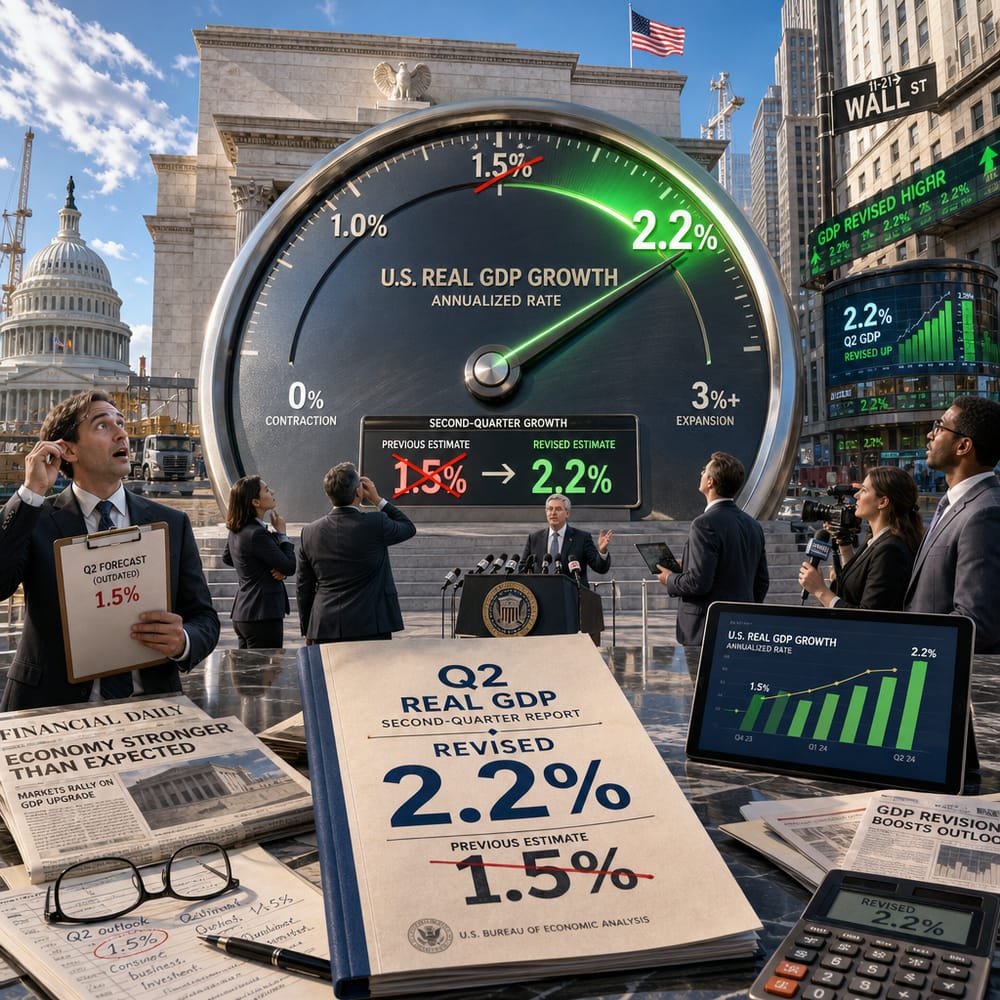
THE GDP GROWTH THAT NOBODY SAW COMING
Well, well, well. Talk about burying the lede! Just when you thought you had the economy pegged, the U.S. government pulls a fast one and upgrades the second-quarter real GDP growth from a humdrum 1.5% to a more spirited 2.2%. That's right, folks. The economy has more spring in its step than most economists expected. Let's dive into what this really means for you and your investments.
First, let’s lay the groundwork. GDP, or Gross Domestic Product, is like the report card for the economy. It tells us if the economy is making the honor roll or failing gym class. This surprise bump in the numbers means that the economy was doing significantly better during April to June than we were all led to believe. Economists were expecting to yawn through another report with minor tweaks, but instead, they got a wake-up call.
So, what was behind this revision? It seems the economy found some extra fuel from stronger consumer spending and a more robust housing market. Consumers, perhaps emboldened by a tight job market, decided to treat themselves, while the housing sector saw a resurgence in construction activity. These factors combined to give the economy a more vigorous pulse.
Now, let's talk about the Federal Reserve, those maestros of monetary policy. The central bank has been dancing a delicate waltz, trying to balance inflation with growth. With a stronger GDP number in play, does the Fed start eyeing the interest rate lever again? A more resilient economy might tempt the Fed to keep rates higher for longer to ensure inflation doesn't make an embarrassing reappearance at the party. Investors are now on edge, speculating whether this new data throws a wrench into the Fed's carefully plotted course.
And the plot thickens when you consider the implications for fiscal policy. Picture the policymakers as a group of chefs in the kitchen, each arguing whether more spice is needed in the stew. A stronger GDP report gives ammunition to those arguing for fiscal restraint. They can claim that the economy doesn't need as much government intervention or stimulus. On the flip side, those advocating for more spending can point to sectors still in need of support, arguing that targeted fiscal measures could build on this momentum.
Of course, with stronger growth figures, the market ripples extend further. Investors are now recalibrating their strategies. The bond market, already jittery with rising yields, may face even more volatility as traders readjust expectations. Equities could see some shake-ups too, as sectors like consumer goods and real estate get a fresh look from portfolio managers hunting for growth opportunities.
But let's not get too ahead of ourselves. It's important to remember that GDP numbers are akin to rearview mirror reflections—they show us where we've been, not necessarily where we're headed. While this revision paints a rosier picture of the past, challenges ahead remain aplenty. Global tensions, energy market disruptions, and geopolitical uncertainties are looming clouds that could rain on the GDP parade.
Ultimately, this GDP surprise is a timely reminder of the economy's resilience. It's a nudge to retail investors to stay nimble and keep an eye on how these pieces fit into the larger puzzle of market dynamics. As always, when it comes to investing, it pays to keep your ear to the ground while having a game plan that can adapt to the unexpected.
So, what's the takeaway? The U.S. economy has shown it still has some tricks up its sleeve. As we head into the final quarter, stay alert, stay informed, and maybe—just maybe—brace for a few more surprises. Because if there's one thing we know for sure, it's that in the world of economics, nothing is ever set in stone.
This article is for informational purposes only and is not investment advice. Always do your own research or consult a licensed financial professional before making investment decisions.
© Copyright 2024. All Rights Reserved.
© Copyright 2024. All Rights Reserved.