

GDP’s Sluggish Q2 and Bullish Nowcasts: Contrasting Growth Signals
Sunday, August 30, 2026
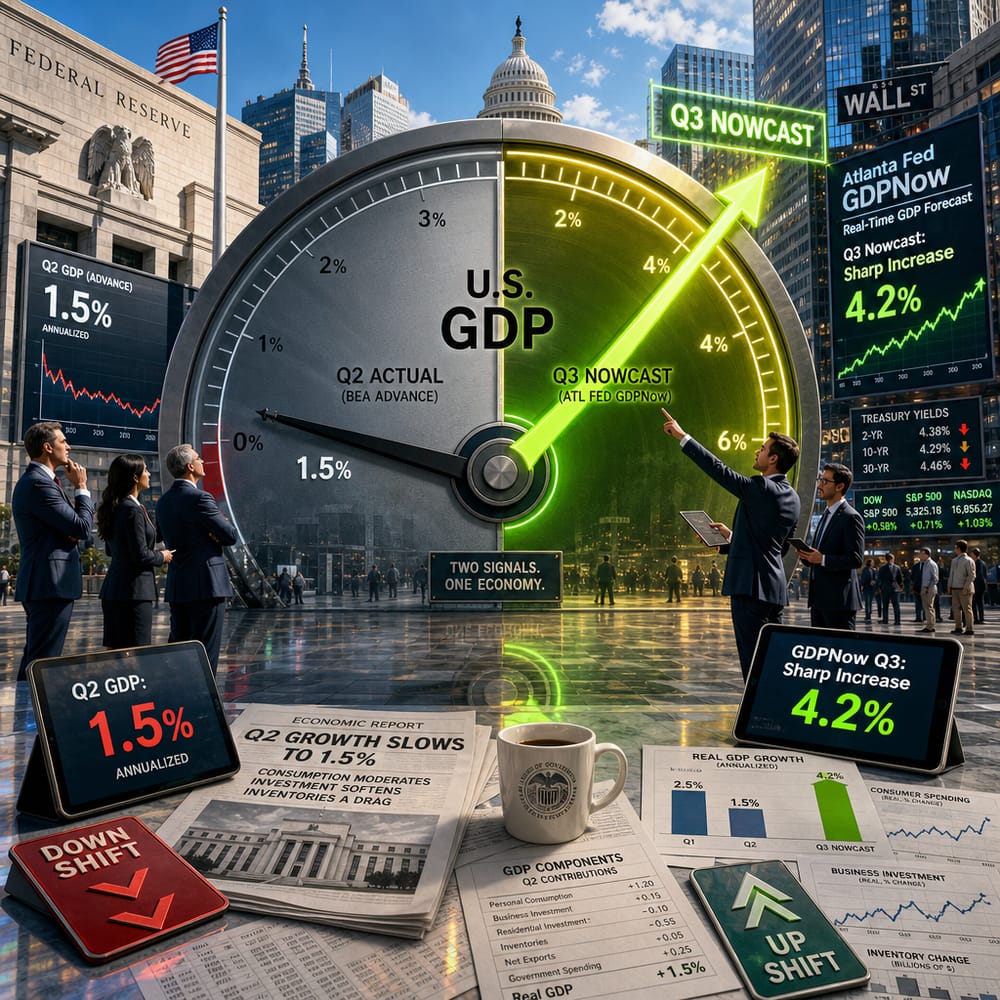
GDP’S SLUGGISH Q2 AND BULLISH NOWCASTS: CONTRASTING GROWTH SIGNALS
So, you thought your morning cup of coffee was the only thing giving you whiplash? Think again. The U.S. economy is throwing curveballs faster than you can say "recession," with Q2's ho-hum 1.5% growth being met with a big, bold prediction from the Atlanta Fed’s GDPNow model for Q3. Expecting a sharp uptick? Let’s just say this might be the biggest economic cliffhanger since the early season of "Game of Thrones."
THE SLOTHFUL Q2
First, let’s unpack Q2. A 1.5% growth rate? That’s like winning a bronze medal in a two-person race. The reasons for this sluggish pace aren’t exactly mysterious. Imagine a cocktail of high interest rates, skittish consumer spending, and businesses that are tighter than a drum on investments. Inflation is still lurking like an uninvited guest at a party, putting a damper on everyone’s spirits. And then there’s the global supply chain chaos—like a bad sequel that just won’t end.
Oh, and remember those high interest rates? They’re the spicy jalapeños in this economic tapas. As borrowing costs spike, both consumers and businesses are getting cold feet about spending. Translation: fewer house renovations and more Netflix nights in.
THE NOWCAST HYPE
Now, let’s talk about that “nowcast,” a fancy term for real-time economic forecasting. The Atlanta Fed’s GDPNow model, with the swagger of a tech bro at a Silicon Valley conference, is predicting robust growth for Q3. It’s like that scene in every underdog sports movie where the team that’s been losing all along suddenly makes a miraculous comeback. But before you pop the champagne, let’s remember that nowcast models can be as hit-and-miss as your uncle's karaoke skills.
HOW RELIABLE ARE THEY?
So, how much faith should we put in these nowcasts? If they were dating profiles, you’d swipe right with caution. While they can give a sense of where things might be headed, nowcasts aren’t clairvoyant. They’re based on incoming data, which is about as stable as a soap opera plot twist. A sudden shift in consumer behavior or a geopolitical hiccup could send the forecasts spiraling.
POLICY POSSIBILITIES
With Q2’s lackluster performance causing furrowed brows and Q3’s optimism sparking cautious hope, what’s a policymaker to do? Well, the Fed is watching inflation like a hawk. But Fed Chairman Kevin Warsh, in a move some might call frustratingly enigmatic, is keeping mum on interest rate tweaks. Instead, he’s signaling concern about inflation, leaving economists with more questions than answers.
But here’s the kicker: if Q3 does deliver on those heady nowcast predictions, the Fed might decide to sit tight. Any sign of economic resilience could be their cue to step back and let things play out. However, if growth fizzles faster than soda left out in the sun, more aggressive measures might be on the table.
WHERE DO WE GO FROM HERE?
For everyday investors peeking at their portfolios between TikTok videos, this economic rollercoaster means keeping an eye on the big signals without losing sleep over each twist and turn. A blend of caution and optimism might just be the secret sauce. While GDP numbers are critical, the broader context of market trends, consumer behavior, and global events plays a huge role in shaping the economic landscape.
In this economic theater, the coming months promise drama, intrigue, and perhaps a plot twist or two. So, buckle up, keep that popcorn ready, and watch as the U.S. economy continues to navigate the choppy waters of 2026. Remember, this show isn’t over until the final credits roll.
This article is for informational purposes only and is not investment advice. Always do your own research or consult a licensed financial professional before making investment decisions.
© Copyright 2024. All Rights Reserved.
© Copyright 2024. All Rights Reserved.