

GDP Momentum: Advance Estimate at 1.5%, Nowcasts Mixed
Sunday, August 23, 2026
GDP Momentum: Advance Estimate at 1.5%, Nowcasts Mixed
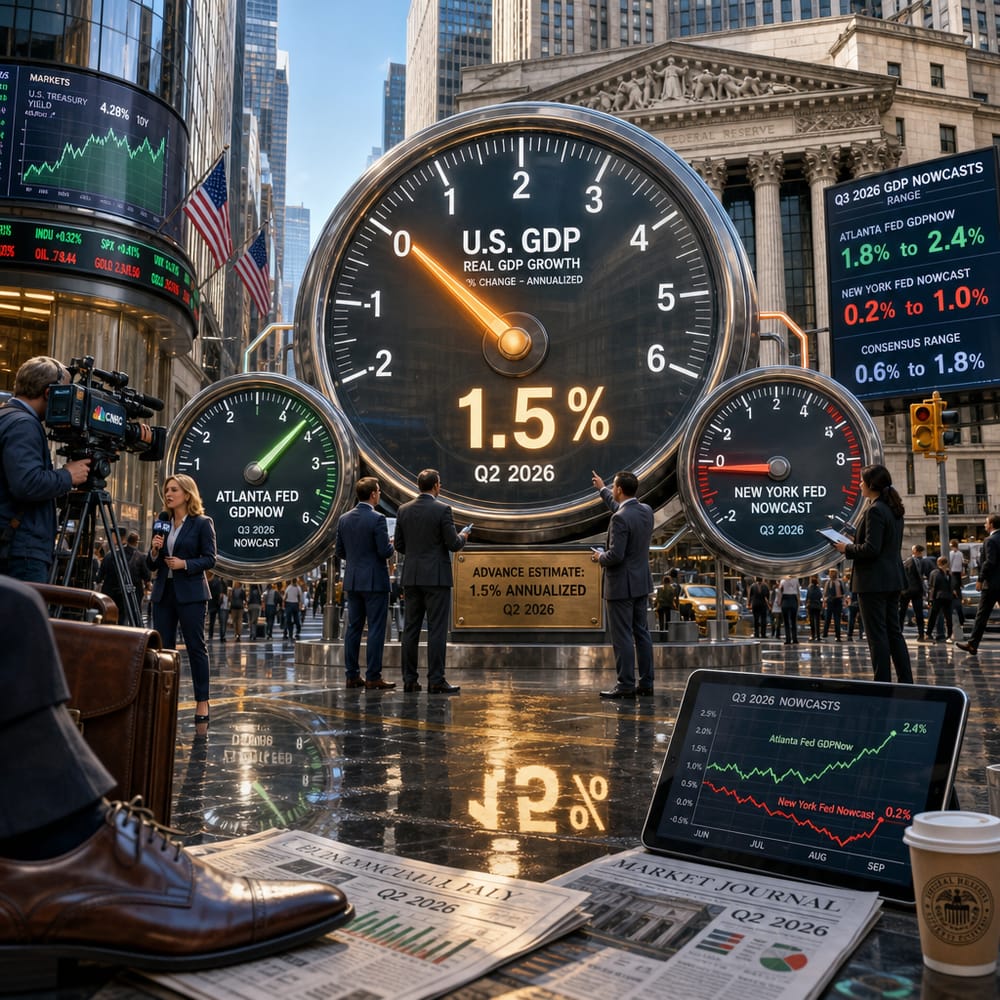
If economic forecasts were a horse race, the latest GDP estimates would be vying for first place in the most unpredictable derby of the year. The U.S. economy loped along at a 1.5% annualized growth rate in the second quarter of 2026, according to the advance estimate. That’s like a B+ on your report card—not thrilling, but hey, you’re passing. The real intrigue, however, lies in the squabble between two heavyweight models predicting what's next: the Atlanta Fed’s GDPNow and the New York Fed’s Nowcast. One’s a bit too peppy, the other, maybe a tad too gloomy.
Here's the skinny: the Atlanta Fed’s GDPNow is swinging for the fences with its optimism, while the New York Fed's Nowcast looks like it's been listening to too much sad music. But why the split? Why does one think the future’s so bright, while the other’s seeing storm clouds?
The driving factors behind these forecasts are like a complex recipe with a dash of consumer spending, a pinch of employment data, and a scoop of business investments. First up, consumer spending. Americans have been spending as if there’s no tomorrow, and why not? With inflation cooling down, your dollar finally buys you more than a sniff of air. But it’s not all sunshine and rainbows—employment numbers are in a tango between healthy growth and concerning layoffs. The labor market’s been playing a game of musical chairs, and no one’s sure when the music will stop.
Now, let’s unpack this: consumer spending and employment data are like the peanut butter and jelly of GDP forecasts. When people are buying and jobs are plentiful, GDP tends to puff its chest. Yet, if employment falters or consumers decide to save instead of spend, the GDP could find itself running out of juice.
Enter the Atlanta Fed’s GDPNow, which is reading the tea leaves and predicting a happier Q3. Why? It’s placing its chips on the bet that consumer enthusiasm and resilient job numbers will keep the economy’s engines humming. Meanwhile, the New York Fed’s Nowcast is looking at the same data with a hint of skepticism, worried about potential hiccups like global economic slowdowns or the proverbial bubble burst.
So, why does all this matter? Well, GDP growth rates are kind of a big deal. They’re like the economic pulse of the country and play a starring role in helping the Federal Reserve decide whether to juice or drain the economy. With Fed Chairman Kevin Warsh gearing up for his first Jackson Hole speech, you can bet he’ll have these numbers on his mind. If GDP growth looks lackluster, there’s potential for the Fed to practice patience with interest rates. On the flip side, too much growth might have them reaching for the rate hike button to keep inflation in check.
Beyond the ivory towers of the Federal Reserve, this GDP tug-of-war has real implications for fiscal policy too. Picture a government trying to balance its checkbook while handling a $40 trillion debt pile. Every GDP shift can influence budget decisions and even trade strategies. With trade talks diving faster than a pelican after a fish, the U.S. can’t afford to ignore these signals.
So, what does this mean for you, the retail investor with your scrolling thumb at the ready? Well, understanding these forecasts can give you a leg up on where the economy—and your portfolio—might be heading. If you’re eyeing sectors sensitive to consumer spending or employment, like retail or tech, these GDP forecasts can offer a sneak peek into potential opportunities or pitfalls.
The takeaway here: keep an eye on those GDP nowcasts. They’re not just dry, academic forecasts—they're a lens into the economy’s health and future. Whether you’re a bull or a bear, knowing the story behind the numbers can help you navigate the financial jungle with a bit more swagger and savvy.
This article is for informational purposes only and is not investment advice. Always do your own research or consult a licensed financial professional before making investment decisions.
© Copyright 2024. All Rights Reserved.
© Copyright 2024. All Rights Reserved.