

GDP Growth Slows in Q2 Despite Resilient Consumer Demand and AI Capital Spending
Monday, August 17, 2026
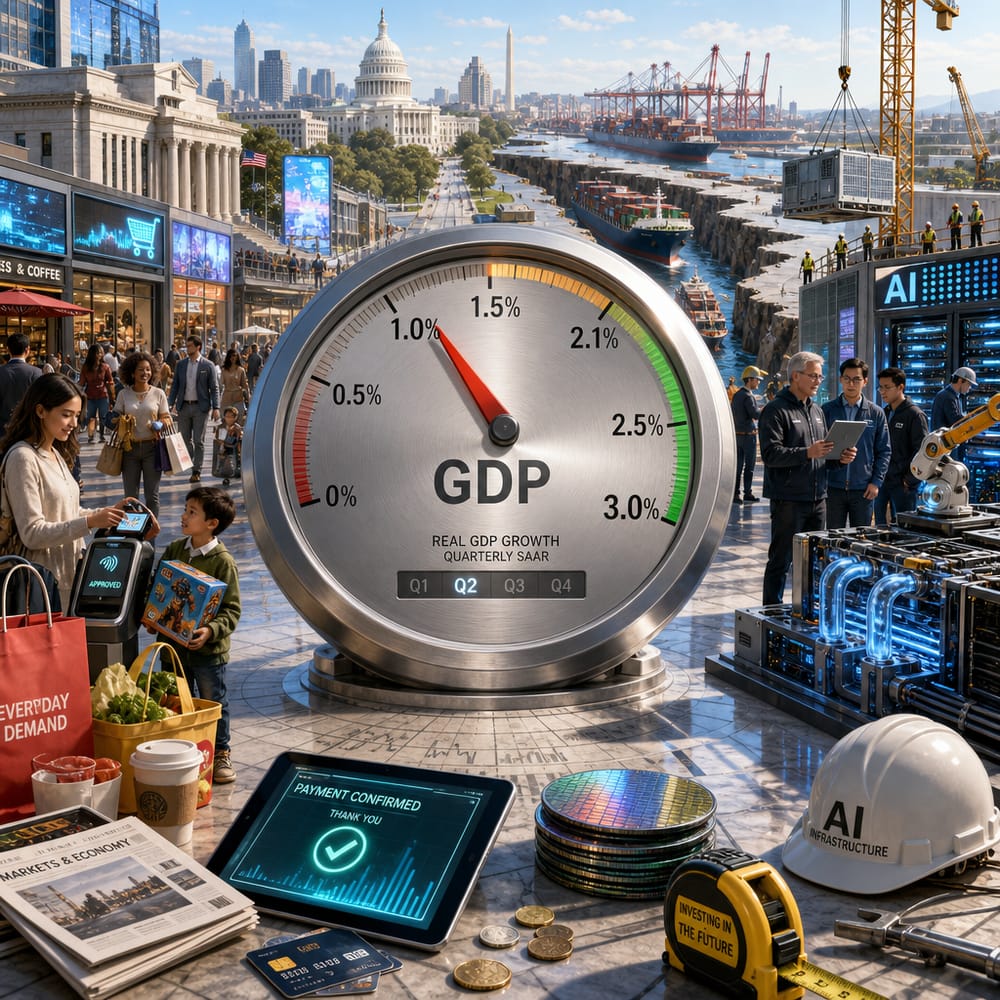
The U.S. economy just hit the snooze button in Q2 2026, growing at a lackluster 1.5% annualized rate, which is quite the yawn compared to Q1's zippier 2.1%. But don't stretch out for a nap just yet—there’s some intrigue under the covers. Despite slowing GDP growth, the economy is still receiving some surprising boosts from supercharged consumer spending and glitzy artificial intelligence (AI) investments that even Tony Stark would envy. Meanwhile, a widening trade deficit is like the persistent mosquito buzzing in the Fed's ear as it tries to balance the scales.
LET’S TALK SHOPPING
Even if the GDP growth graph is drooping a bit, consumers are still swiping those credit cards like they're going out of style. Some of the heavy lifters in the consumer spending party include the hospitality sector—think hotels and restaurants—and the retail sector, where electronics and fashion are flying off the shelves like they're on a Black Friday sale. Experiences are in vogue as folks seem eager to spend on travel and dining out, perhaps still catching up from the lockdown cobwebs of yore.
This spending spree isn't just keeping cash registers ringing—it’s also sending a message to the Fed that consumers are feeling pretty upbeat about their wallets, at least for now. But before you start popping champagne, remember that spending patterns can be as capricious as a cat on catnip.
AI: THE NEW ECONOMIC ROCKSTAR
While your smartphone is getting smarter, AI investment is driving an impressive slice of the economic pie. Companies are pouring cash into AI like it's the next gold rush, spurred by dreams of automation and efficiency. This isn’t just about jazzy robot assistants, though—they’re betting big on AI’s potential to revolutionize logistics, customer service, and even medical diagnostics.
The AI sector's influence on the broader economy is akin to giving the engine an extra shot of nitrous. Sure, it revs things up, but it also comes with its own hangover of challenges, like the need for significant workforce adaptation and the tenuous balance of staying ahead in a global tech arms race.
TRADE TROUBLES
Let’s face it: a widening trade deficit is the dark cloud in this economic weather report. Imports outstripping exports might sound like a dull topic, but it carries some serious weight. It means more dollars are going out than coming in, which can affect everything from currency values to job creation within our borders.
The implications stretch far and wide. For one, it could make the Fed’s job of steering the economy trickier than a Rubik's Cube in the dark. As the Fed deliberates over interest rates, they have to weigh these trade dynamics carefully. Could a more hawkish rate stance chase away inflation without quashing consumer enthusiasm? It's a tightrope walk of the highest order.
LOOKING AHEAD
So, what does this mixed bag of economic tea leaves spell for our future? For starters, the ongoing strength of consumer spending and AI investments may shield us from a tumble even if the broader growth picture looks a bit sketchy. Plus, let’s not forget the wild card of international economics. A slowdown in China and ongoing geopolitical tensions are external factors that could quickly change the game.
The Fed's task will be to maintain equilibrium—balancing domestic economic momentum against external turbulence. This is likely to keep things lively, with potential rate hikes or cuts lurking just around the corner, depending on how the scales tip in coming months.
Investors, brace yourselves. While AI and consumer sectors seem promising, keep an eye on those trade winds and be ready to adjust sails accordingly. In a market where uncertainty is the only certainty, staying informed and adaptable is the name of the game.
In short, buckle up. While the current slowdown might feel like a gentle deceleration, the road ahead could have more twists and turns than a roller coaster. But hey, isn’t that what makes the investing journey so thrilling?
This article is for informational purposes only and is not investment advice. Always do your own research or consult a licensed financial professional before making investment decisions.
© Copyright 2024. All Rights Reserved.
© Copyright 2024. All Rights Reserved.