

GDP Growth Moderates: Slowing from Q1 to Q2 May Rattle Growth Outlook
Thursday, August 20, 2026
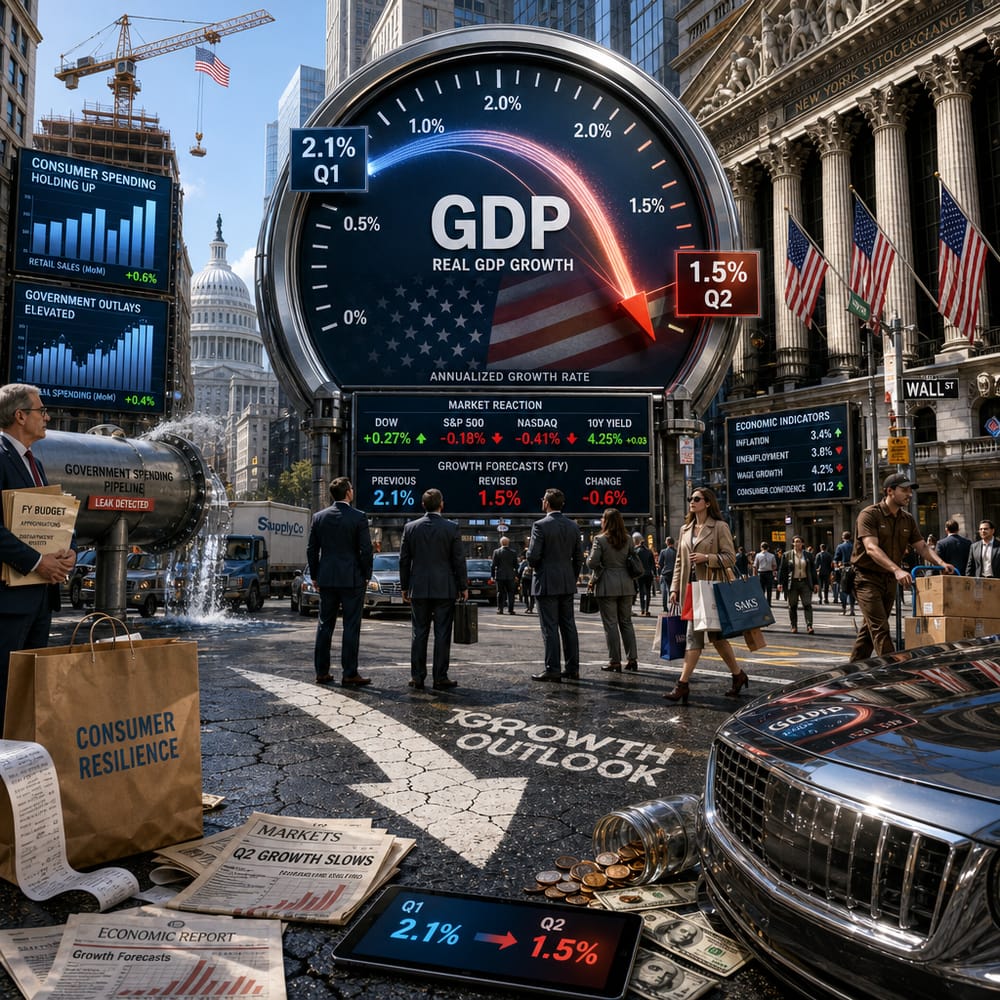
GDP GROWTH MODERATES: SLOWING FROM Q1 TO Q2 MAY RATTLE GROWTH OUTLOOK
Buckle up, folks. The latest GDP numbers are in, and the U.S. economy’s road trip hit a patch of gravel. After cruising at a 2.1% annual pace in the first quarter, GDP growth took a pit stop, sliding down to 1.5% in the second quarter. What’s throwing sand in the gears? Let’s peel back the layers.
WHAT'S SLOWING DOWN THE ECONOMY?
First off, consumer spending, usually the life of the party, is still hanging in there, albeit with less gusto. With inflation whispering sweet nothings into price tags and interest rates making borrowing less attractive, it’s no surprise that consumers are tightening their purse strings a bit. But let’s not get carried away — people are still spending, just not throwing cash around like confetti.
Then there’s the elephant in the room: government spending. It’s taken a backseat, and that’s putting it kindly. With stimulus packages fading in the rearview mirror and budget pinching becoming the new norm, Uncle Sam isn’t opening his wallet as freely. Government expenditure has historically been the kindling for economic fires, and its absence is a major reason GDP is dragging its feet.
HOW MIGHT THIS IMPACT FUTURE ECONOMIC POLICY?
Now, here’s where the plot thickens. Sluggish GDP growth is like a headache for policymakers: persistent and hard to ignore. If this slowdown sticks around like an uninvited houseguest, it could nudge the Federal Reserve to reconsider its stance on interest rates. They’ve been on a hiking spree to tame inflation, but persistent sluggish growth might just have them reaching for the brakes.
In the corridors of power, there’s chatter of fiscal intervention too. If the economy doesn’t pick up the pace, you might see politicians coming together — a rare sight indeed — to debate the merits of stimulus measures to jumpstart growth. Watch out for more infrastructure spending or targeted assistance to sectors that are gasping for breath.
WHAT SCENARIOS COULD LEAD TO FURTHER SLOWING OR RECOVERY?
There’s no shortage of plot twists that could swing this economic narrative. Let’s talk worst-case scenario first: should consumer confidence take a nosedive, or if geopolitical tensions (looking at you, Iran) spiral out of control, we could be in for a rough ride. High-stakes economic policies, like tariffs and sanctions, could also throw a wrench into global trade, impacting everything from supply chains to stock market stability.
On the flip side, there’s light at the end of the tunnel too. If inflation continues to cool and wages inch upward, consumers might feel a little rosier about spending. And don’t discount innovation — sectors like tech and green energy could turn out to be surprise heroes, driving investment and job creation.
And let’s not forget about the bond market. The recent Treasury yield rebound, while unsettling for stock markets, might entice investors looking for safer harbors. If investors flock to bonds, it could stabilize markets, though it’s a double-edged sword as it might mean higher borrowing costs linger longer.
FINAL THOUGHTS
So, what’s the takeaway here? The U.S. economy is like a high-stakes soap opera — full of drama and unexpected twists. As we steer through this economic landscape, keep your eyes peeled on consumer habits, government policies, and global tensions. Each could flip the script. Whether the economy stalls or shifts into high gear again is a cliffhanger no one can predict with complete certainty.
So, keep that popcorn handy. The next GDP release might just be the plot twist we've all been waiting for. In the meantime, stay savvy, stay informed, and remember: in the world of economics, nothing is set in stone.
This article is for informational purposes only and is not investment advice. Always do your own research or consult a licensed financial professional before making investment decisions.
© Copyright 2024. All Rights Reserved.
© Copyright 2024. All Rights Reserved.