

GDP Advance Estimate: Q2 Growth Slows to 1.5%; Consumer & Export Momentum Offsets Government Pullback
Saturday, August 15, 2026
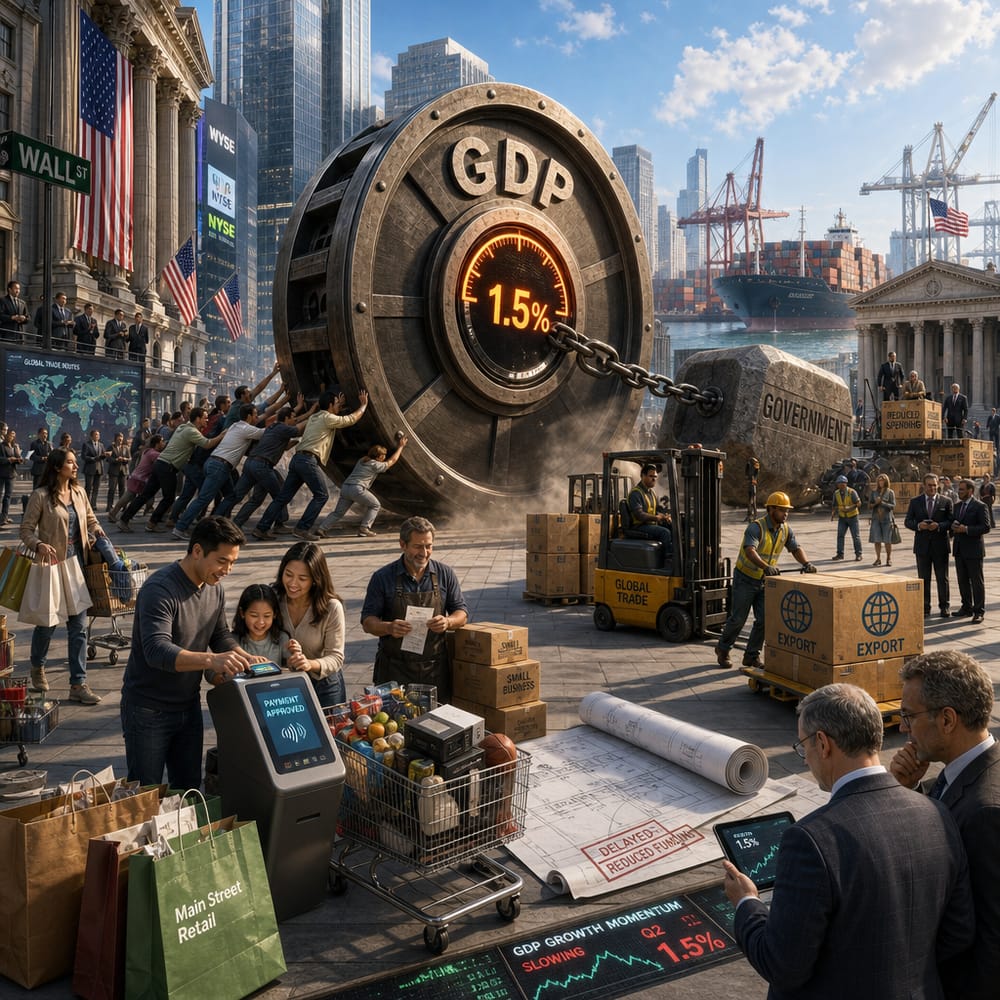
GDP ADVANCE ESTIMATE: Q2 GROWTH SLOWS TO 1.5%; CONSUMER & EXPORT MOMENTUM OFFSETS GOVERNMENT PULLBACK
If GDP were a car, it might be sputtering on the side of the highway right now, trying to figure out if it really wants to continue on at full speed or take a scenic detour. The latest advance estimate for Q2 2026 GDP growth has the economy chugging along at a mere 1.5%—downshifting from what felt like a more promising pace in previous quarters. It's almost like the economy decided to take a summer vacation.
But before sounding the recession alarms, let’s look under the hood. Consumer spending and exports are doing their darndest to keep us afloat, even as the government tightened its purse strings like a college student at the end of the semester.
WHAT'S BEHIND THE GDP SLOWDOWN?
The 1.5% growth is a slowdown from earlier in the year when GDP was growing at 2.1%. So, what’s weighing down this economic ship? The government decided to take a little break from splurging, contributing to what we’re seeing now. It’s like the government looked at its credit card bill and opted for a no-spend month. This pullback is significant enough to leave its mark on the GDP numbers.
However, fear not. The American consumer appears to be reaching for their wallets, and exports are shipping out goods and services faster than you can say "bon voyage." The consumer spending spree—likely fueled by a cocktail of pent-up demand and a touch of retail therapy—is providing a solid cushion against the government’s newfound frugality. Meanwhile, exports are being buoyed by a weaker dollar, making U.S. goods as tempting to foreign buyers as a hot dog stand at a baseball game.
HOW MIGHT THIS AFFECT FUTURE FED POLICY?
Here’s a question that could keep any central banker up at night—how does this GDP slowdown affect future Fed policy? With the economy cruising at a pedestrian pace, the Federal Reserve might have to rethink its stance. The Fed's itchy trigger finger on interest rates could get a rest. Inflation has been cooling, with wholesale inflation showing signs of slowing in July. That might provide some room for the Fed to let rates breathe before deciding on any hikes.
But here’s where it gets tricky. A slowing economy could also signal underlying vulnerability. If the wind blows the wrong way or a storm—either meteorological or economic—hits, things could change quickly. The Fed might need to be ready to shift gears just as fast.
WHAT ARE THE POTENTIAL RISKS TO ECONOMIC GROWTH?
The risks facing economic growth are a bit like a mystery novel—they’re unpredictable and could end in a twist. There’s always the possibility that consumer spending could falter. After all, there are only so many shoes and gadgets one can buy. If consumers start to feel the pinch of higher interest rates or job market jitters, the economy could start feeling a bit wobbly.
Then there’s the international front, where things are as complex as ever. From geopolitical tensions to trade uncertainties, any disruption could alter the finely balanced scale of exports that currently helps support the GDP.
Not to mention, the story isn’t complete without a nod to fiscal policy decisions ahead. Any significant tax or regulatory changes could either propel growth or, like a surprise traffic jam, bring it to a halt.
THE ROAD AHEAD
So, what’s the takeaway? The economy’s growth might not be speeding along as fast as some would like, but it’s still moving—albeit cautiously. Consumer spending and robust exports are doing their part to keep the economy afloat, even as government spending takes a back seat.
For retail investors, it means keeping an eye on sectors that might benefit from strong consumer spending and export activity. Meanwhile, the Fed and policymakers have their work cut out for them as they navigate this delicate balance.
In economic terms, we’re not exactly blazing new trails, but we’re certainly not stalling on the side of the road either. It’s a wait-and-see game—keep your eyes peeled, your seatbelt fastened, and maybe keep a map handy. Just in case.
This article is for informational purposes only and is not investment advice. Always do your own research or consult a licensed financial professional before making investment decisions.
© Copyright 2024. All Rights Reserved.
© Copyright 2024. All Rights Reserved.