

GBP/USD Under Pressure Amid Fed and BoE Policy Divergence
Monday, August 17, 2026
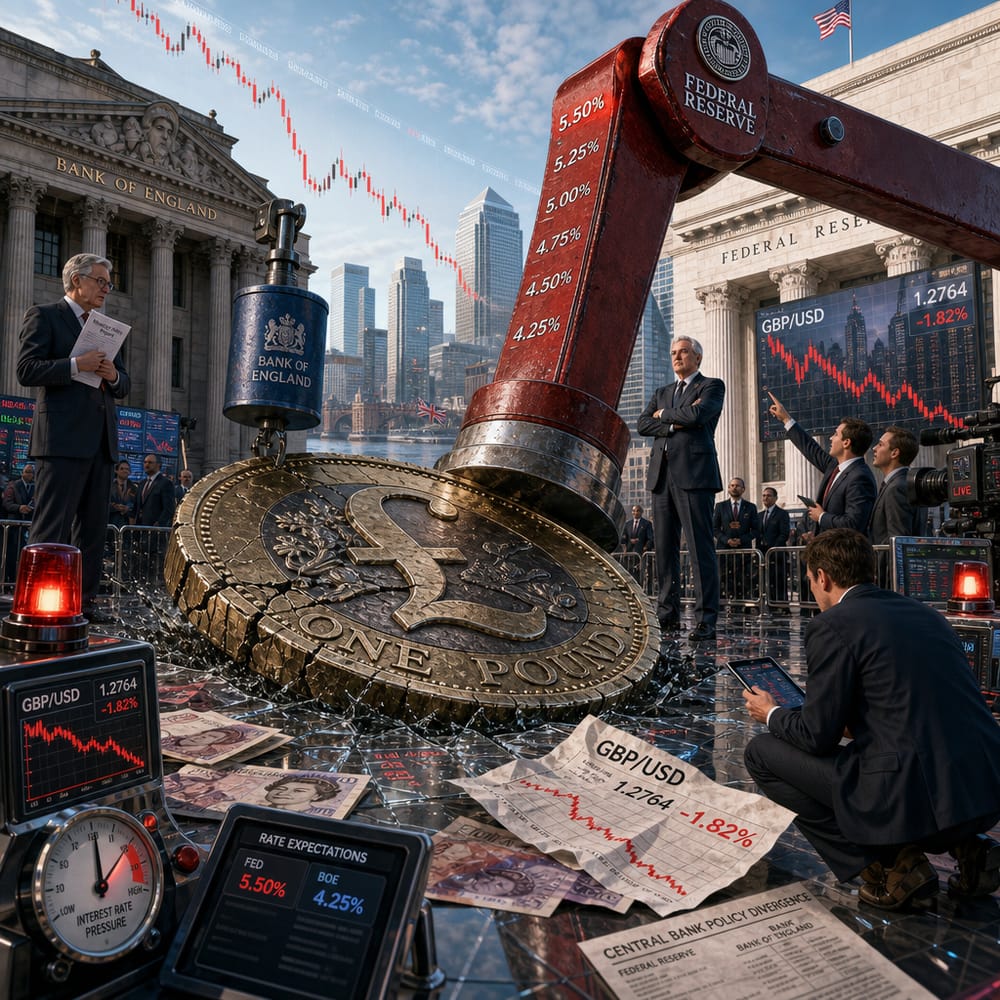
POUNDING DOWN: THE TALE OF TWO CENTRAL BANKS AND THE GBP/USD SAGA
Once upon a time in the land of foreign exchange, the world’s most traded currency pair, GBP/USD, was living its best life, strutting along the financial catwalk. But as in every great soap opera, drama was bound to unfold. Enter stage left: The Federal Reserve and the Bank of England, two monetary behemoths with competing agendas.
In the red, white, and blue corner, the Federal Reserve is donning its hawkish cape with gusto. Determined to tame inflation, the Fed's message has been clear: higher rates are here to stay, and they might even climb a bit more. This hawkish stance, which simply means they’re keeping interest rates high, has investors eyeing up the U.S. dollar like it’s the hottest ticket in town. When Uncle Sam holds his rates steady or kicks them up a notch, it makes greenbacks more alluring. Why? Higher rates mean better returns on investments denominated in dollars.
Now, if you mosey on over to the other side of the pond, the Bank of England is singing a different tune. Picture this: one eye on inflation and the other on a rapidly cooling economy. It’s like that awkward dance move where you’re not sure whether to swing left or right. The BoE is taking a cautious approach, tinkering with rates but ensuring they don't slam the brakes too hard on economic growth. It’s a delicate act, akin to baking a soufflé—one wrong move and it’ll collapse.
So, what does this transatlantic tango mean for the GBP/USD pair? Well, a diverging rate path tends to shake things up. With the Fed playing the hawk and the BoE weary of turning the U.K. economy into a soufflé disaster, the pound is feeling the squeeze. Investors, forever in search of better returns, are finding solace in the dollar, putting the GBP under pressure.
But why should you care if you're not jetting off to London anytime soon? Glad you asked. Exchange rates aren’t just numbers for currency traders to obsess over; they ripple through the economy, affecting everything from trade to investment decisions. A weaker pound makes British goods cheaper for international buyers but pricier for Brits shelling out for imported goods. And if you’re an investor with holdings in either currency—or pondering a plunge into foreign markets—those shifting exchange rates could alter your returns.
Beyond the spreadsheets and economic forecasts, there’s a sense of unpredictability swirling in the financial sky. Treasury yields are spiking as geopolitical tensions simmer, oil prices are as volatile as ever, and everyone’s got an eye on the horizon for the next economic storm. The 30-year Treasury yield has hit a high not seen since the days when flip phones were cutting-edge technology. This upsurge in yields is a nod to the Fed’s hawkish posturing, further sweetening the deal for dollar-denominated assets.
Meanwhile, in a world where oil prices dance to their own drummer, Brent crude has hit $91 following Iran’s latest diplomatic drama. Energy costs are soaring, and with those rising costs, inflationary pressures are set to thud back onto the scene like an uninvited guest at a party.
So, what’s a retail investor to do amid this policy divergence and economic seesawing? First, keep your eyes on the central banks; their next moves could send ripple waves across markets. Diversifying your asset portfolio might not just be a prudent choice, but a downright survival strategy. And if you’ve got a soft spot for all things British, now might be the time to take advantage of a cheaper pound.
Just like in any great plot, the end is uncertain. But what’s crystal clear is that the GBP/USD exchange rate narrative is one worth following. As the Fed and BoE play their monetary chess match, every move they make isn’t just a game—it’s the future of economies on both sides of the Atlantic. Stay tuned, because this saga is far from over, and every twist and turn could reshape the economic landscape as we know it.
This article is for informational purposes only and is not investment advice. Always do your own research or consult a licensed financial professional before making investment decisions.
© Copyright 2024. All Rights Reserved.
© Copyright 2024. All Rights Reserved.