

GBP/USD Rebounds Amid Oil Price Decline
Sunday, August 16, 2026
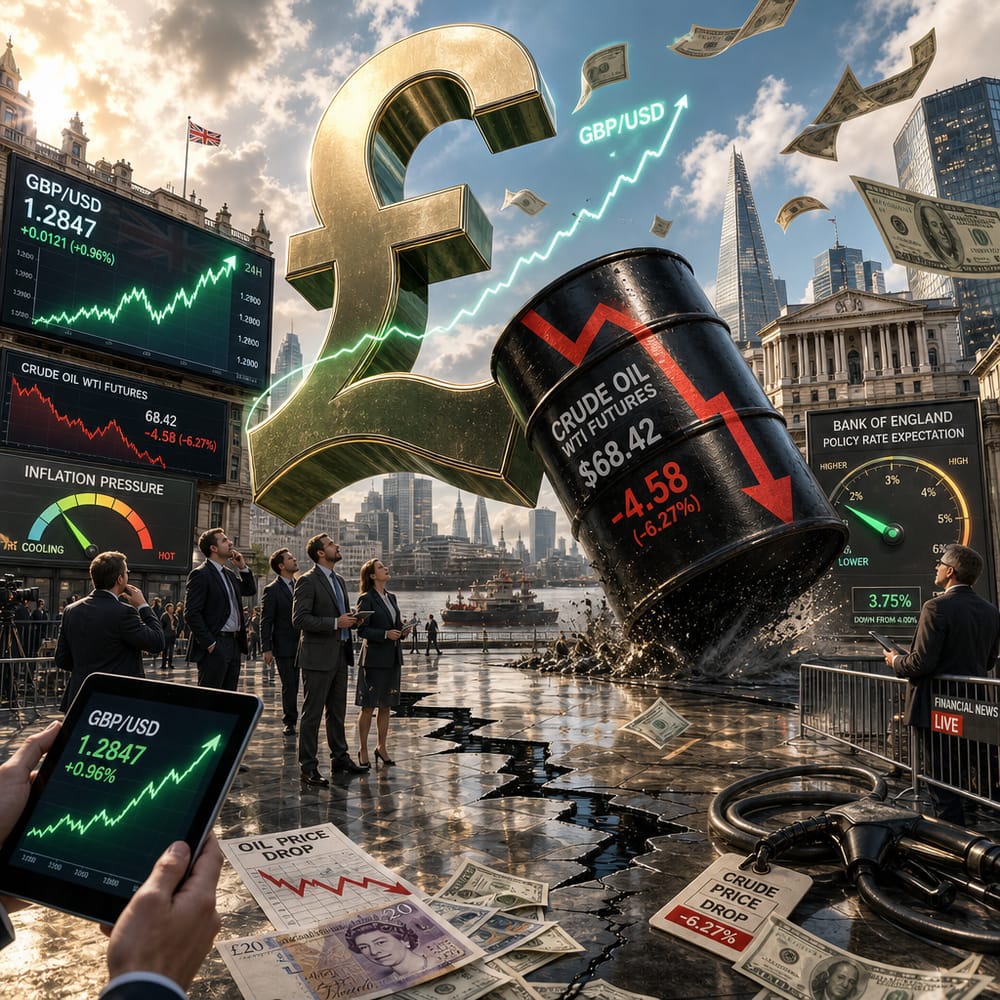
Sterling's in the ring and it's throwing punches. The pound is making a comeback, floating higher against the dollar as oil prices take a nosedive. Yep, you heard that right—oil prices are plunging like a lead balloon, and the British pound is soaking up the sunshine. But what's behind this twist? And why should you, scrolling away on your phone, care about this tango between oil and currency?
Picture this: oil prices are like party crashers for inflation. When they're high, they hike up the cost of everything from your morning latte to the gas you put in your car. Inflation goes up, and everyone gets twitchy. But when oil prices take a dip, like they have lately, it's like a pressure valve releasing steam. Inflation fears ease off, and central banks breathe a little easier. This is where the Bank of England (BoE) comes into play.
Let's break it down. As oil prices sink, inflation expectations simmer down, which offers the BoE some breathing room to reassess their tightrope walk on interest rates. Essentially, a decrease in oil prices often means the BoE might not need to hike interest rates as aggressively as they would otherwise. Think of it as giving them a bit of wiggle room to work their magic. And when there's talk of holding back on rate hikes, currency traders take notice, and the pound starts flexing its muscles against the dollar.
But why does the pound's strength matter to you? For starters, if you're planning a trip across the pond or shopping for British goods, a stronger pound could mean more spending power for those dollars. And for those of you dabbling in forex trading, it's time to rethink your strategies. The interplay between energy prices and currency positioning is not just some abstract financial concept—it's a living, breathing element that can flip market dynamics on their head.
So, how did the oil price plunge affect GBP/USD? Well, as oil prices dropped, inflation concerns eased, reducing the pressure on the Bank of England to hike rates. This softening approach from the BoE makes the pound more attractive to investors seeking alternatives to the dollar, which is often seen as a safe haven in times of economic uncertainty. Hence, we see the pound strengthening against the dollar.
Now, let's play Nostradamus for a second and talk implications. What might the BoE's next steps look like? With the inflation ghost somewhat quieter, the BoE might hold off on aggressive interest rate hikes at their next meeting. This could mean they lean toward a more dovish stance—fancy financial-speak for less hawkish, or aggressive, moves. In short, they're more likely to keep rates steady or hike them at a slower pace.
Why should you care? If you're an investor, this might affect your decision on where to park your money. Lower interest rates mean cheaper borrowing costs, which can spur economic growth. However, it also means that the returns on savings accounts and bonds might not be as juicy. So, you might want to rebalance your portfolio to navigate these fluctuating waters.
In the grand scheme of things, the relationship between oil prices and currency is like a chess game: every move matters and can change the course of the match. Keeping an eye on these moves can help you anticipate market shifts, whether you're a forex trader, an investor, or just someone who likes to stay informed. So, next time you see oil prices in the news, remember: it's more than just gas prices—it's a trigger that could influence your next financial decision.
And there you have it. Sterling's back in the game, oil is throwing shade, and the BoE is dancing a careful waltz. Keep your eyes peeled and your strategy sharp—because if there's one thing you can bet on, it's that markets never stop moving.
This article is for informational purposes only and is not investment advice. Always do your own research or consult a licensed financial professional before making investment decisions.
© Copyright 2024. All Rights Reserved.
© Copyright 2024. All Rights Reserved.