

GBP/USD Nears 1.3537 on Rate Spread-Driven Rally
Friday, August 21, 2026
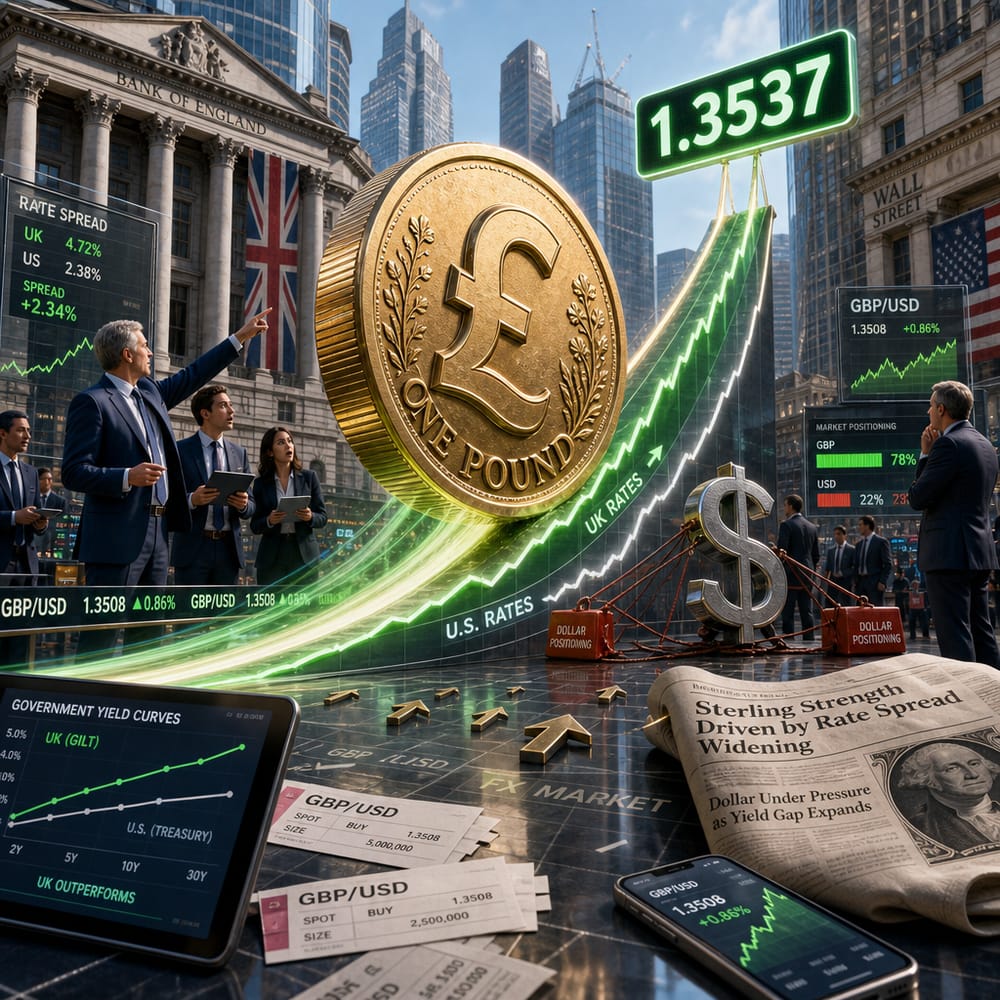
GBP/USD Nears 1.3537 on Rate Spread-Driven Rally
If you're looking for drama, don't look at Hollywood—gaze upon the foreign exchange market. It's where GBP/USD, the currency pairing that’s as British as fish and chips and as American as apple pie, is flirting with the 1.3537 level. But what's behind this sterling performance? Spoiler alert: it's not because the Queen's corgis have taken up day trading.
So, what fuels this currency caper? It’s a tale as old as time, or at least as old as the invention of central banking: interest rate spreads. Think of them as the juicy gossip that gets tongues wagging on the trading floor. Essentially, when the interest rates in one country start to look more enticing than those in another, that country's currency gets some love. And right now, it seems investors are swiping right on the pound.
To break it down, the UK's interest rate scene is playing the role of the dashing lead in this forex drama. With the Bank of England strutting its stuff with higher interest rates than the Federal Reserve, traders are eyeing the pound with a newfound sense of admiration. Higher rates in the UK mean investors can earn more by holding pounds, drawing them away from the comparatively less lucrative US dollars.
But there's more to this story than just interest rate differentials. Market dynamics have shifted, influenced by changes in investor sentiment and positioning. Picture it: traders, like kids rearranging their Halloween candy stash, are repositioning their portfolios, now seeing the pound as a sweet treat rather than an old toffee stuck at the bottom of the bag.
The impact of this rally isn't just confined to the cozy realm of currency traders sipping espresso in dimly lit financial offices. No, this could spill over into the wider economy. For the UK, a stronger pound might sound like a cause for celebration, but it's a double-edged sword. It can make British goods more expensive abroad, potentially bruising exporters who find their goods less competitive on international markets. On the flip side, a stronger pound can mean cheaper imports, which is great news for UK consumers looking to indulge in the latest tech gadgets or fashion trends from across the pond.
And let's not forget about inflation—the economic bogeyman everyone loves to hate. A robust pound could help dampen inflation pressures by lowering the cost of imported goods. However, with UK inflation rates already trying their best to outdo a bouncy castle, the Bank of England will be watching closely, ready to act if things start heating up too much.
Across the Atlantic, the implications are just as intriguing. The pressure is on the Fed to keep pace, and the US economy isn't immune to the ripple effects. A weaker dollar could boost US exports by making them cheaper abroad, a boon for American producers. However, it might also make imports pricier, nudging inflation upwards and potentially leading to a recalibration of monetary policy.
In the end, the GBP/USD rally is a reminder that currency markets are more than just numbers on a screen—they're a complex dance of geopolitical moves, economic data, and investor sentiment. For now, the pound’s rally against the dollar may be an exciting plot twist, but the financial story is far from over.
So, whether you're a seasoned forex aficionado or someone who just wants a little drama with their morning coffee, keep an eye on this currency pairing. It's got all the elements of a financial thriller—interest rate intrigue, market maneuvers, and economic stakes that could make even the calmest central banker break a sweat.
This article is for informational purposes only and is not investment advice. Always do your own research or consult a licensed financial professional before making investment decisions.
© Copyright 2024. All Rights Reserved.
© Copyright 2024. All Rights Reserved.