

GBP Faces Pressure from UK Housing Market
Tuesday, August 11, 2026
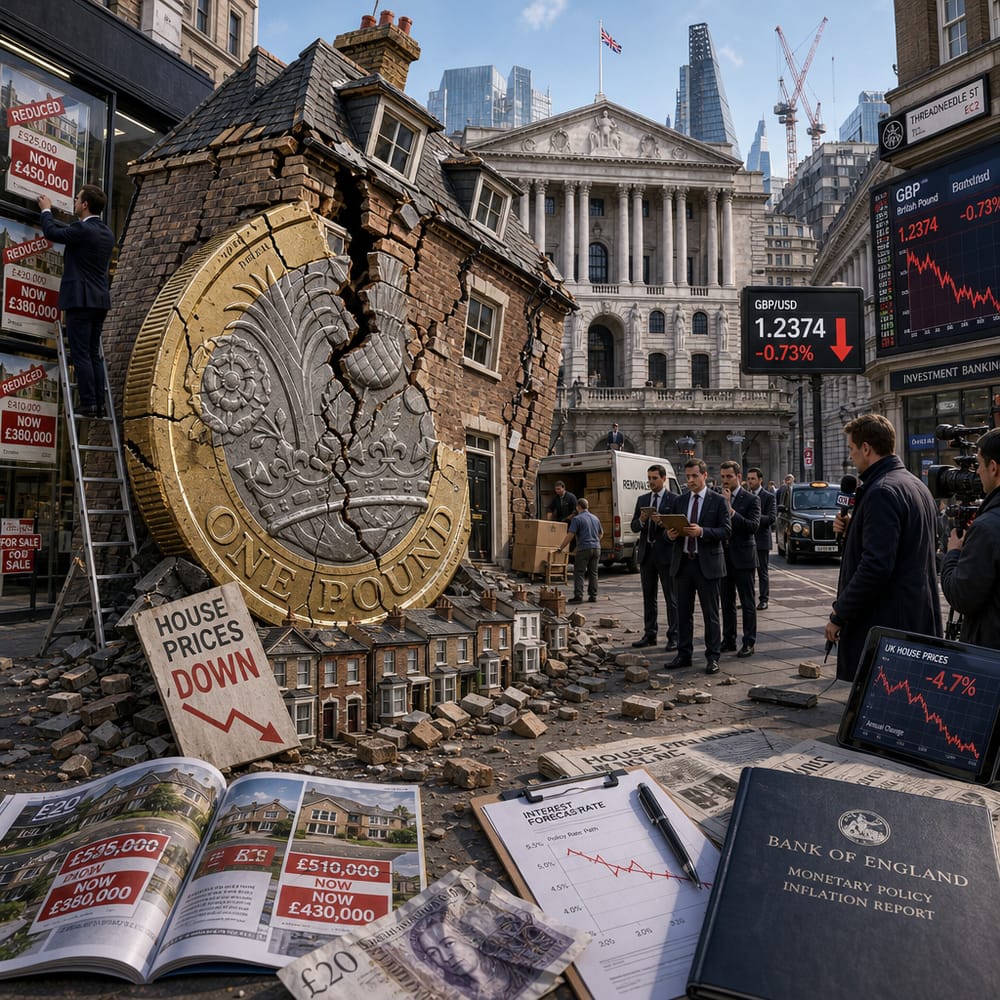
THE BRITISH POUND CATCHES A COLD FROM THE UK HOUSING MARKET
Well, folks, it looks like the British pound is feeling a little under the weather, and the culprit is none other than the UK's housing market. The recent data isn't just a wake-up call; it's a bullhorn announcing a continued decline in house prices. And just like when your neighbor's fence starts falling down, it's not an isolated issue — it's going to affect the whole block.
The health of the UK housing market is more than just numbers on a page. It's a crystal ball for consumer confidence and spending. When house prices drop, homeowners feel less wealthy, and all those remodeling plans and shopping sprees get put on hold. It's a domino effect that can lead to decreased consumer spending and a stall in economic activity. Think of it as the financial equivalent of a wet blanket thrown over a cozy economic fire.
Now, the burning question is: How is this house of cards going to impact the broader UK economy? For starters, the housing market is like the heart pumping life into various sectors, from construction to retail. If it starts beating irregularly, you can bet the rest of the economy will feel it. Don't be surprised if this downturn sends tremors through the UK's GDP figures.
And just when you thought it couldn't get more interesting, enter the Bank of England stage left. The BoE is stuck between a rock and a hard place, tasked with stabilizing the pound without giving the economy a coronary. One possible move could be adjusting interest rates to pep up the housing market. But here's the kicker: tinkering with interest rates is like performing high-stakes surgery. Get it wrong, and the patient's not better; they're worse.
So, what's going on with the pound itself? When the housing market sneezes, the pound catches a cold. The currency has felt pressure, and investors aren't exactly lining up to give it a warm hug. The BoE might have to deploy its arsenal of economic tools, but they need to be as precise as a laser. If not, they risk jolting the economy in the wrong direction — and no one wants a repeat of the financial hiccups of the past.
Let's dive into how the Bank of England might play its cards. They have a few options. One is lowering interest rates, which could make borrowing cheaper, encouraging spending and investing. But that's a dance with inflation that could go horribly wrong if consumer prices start heating up. Another option is quantitative easing – essentially, the central bank starts buying assets to inject money into the economy. Think of it as a dose of adrenaline designed to get those economic juices flowing.
However, here's the rub: these moves might stabilize things in the short term but lead to different challenges down the road. Inflation could become the boogeyman hiding under the bed, creeping up just when everyone's starting to relax. It's a classic case of damned if you do, damned if you don't.
So why does this matter to the everyday investor scrolling through their feed while sipping a morning coffee? Because the actions of the BoE and the performance of the GBP aren't just headlines. They shape investment environments. A volatile pound affects everything from your portfolio's international exposure to your vacation spending money.
In summary, the UK housing market is proving to be the overzealous party guest who’s overstayed their welcome, and the British pound is feeling it. The Bank of England has a delicate balancing act ahead, one that could send ripples far beyond the shores of the UK. So keep your eyes peeled; whether you're sipping a cup of tea or an espresso, this is one economic drama you don't want to miss.
This article is for informational purposes only and is not investment advice. Always do your own research or consult a licensed financial professional before making investment decisions.
© Copyright 2024. All Rights Reserved.
© Copyright 2024. All Rights Reserved.