

FTC Prepares to Crack Down on AI Deception Under Section 5
Monday, August 10, 2026
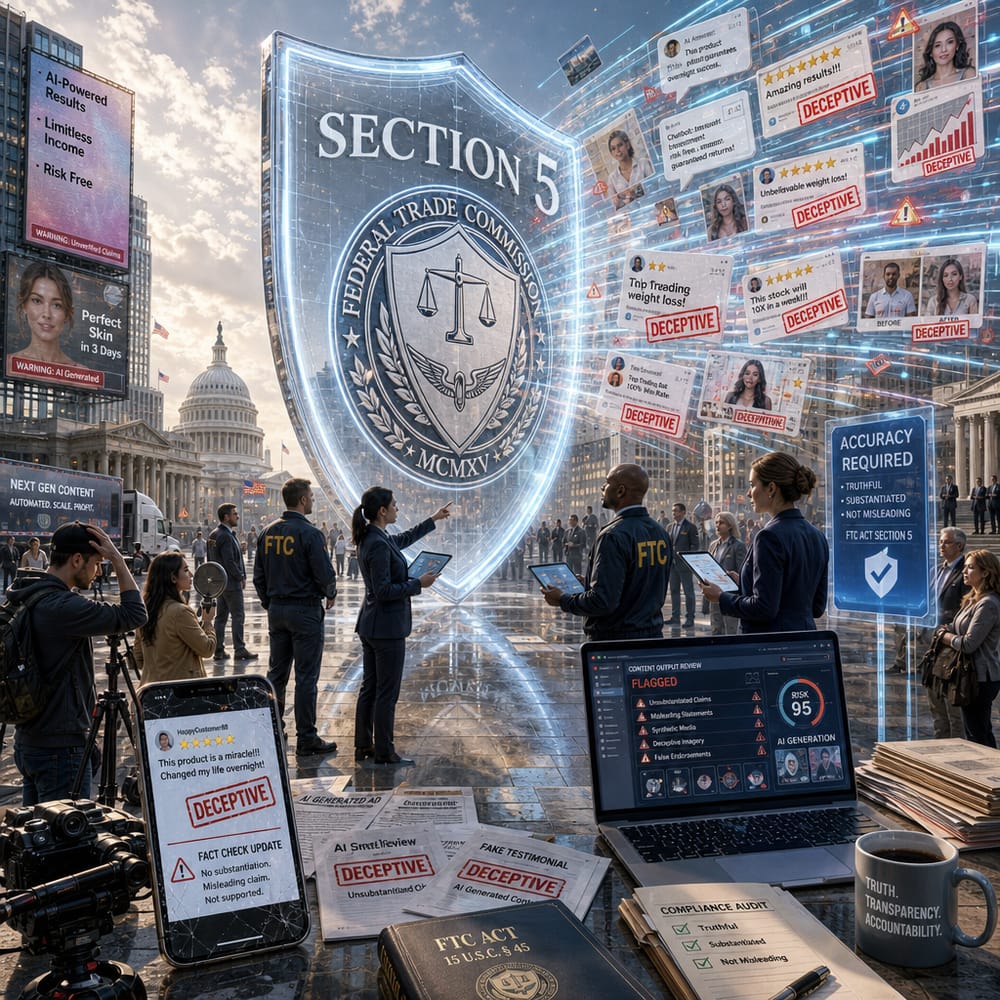
If your favorite AI chatbot suddenly starts spinning tales of conspiracy theories or just plain bad advice, you might have the Federal Trade Commission (FTC) to thank—or perhaps curse, depending on your perspective. That's because the FTC is flexing its regulatory muscles with the bold intention of cracking down on AI-generated deception, all under the mighty umbrella of Section 5 of the FTC Act. Buckle up, because this could seriously reshape the terrain for AI content creators.
THE AI WILD WEST
Imagine the internet as the Wild West, a digital frontier where artificial intelligence has galloped in like a gunslinger, dishing out everything from weather forecasts to stock tips. But not all digital gunslingers play fair. Some AI outputs can be misleading, or worse, downright deceptive. Enter the FTC, armed with a mandate to protect consumers from “unfair or deceptive acts or practices,” aiming to corral rogue AI systems into compliance.
Now, you might be wondering, just what makes an AI practice deceptive under the FTC Act? In plain terms, if an AI-generated content misleads consumers or suppresses the accuracy of a material fact, the FTC could have a bone to pick. If your chatbot convinces users that a faux cryptocurrency guarantees a 1000% return without a hitch, that’s the kind of digital snake oil the FTC is itching to get rid of.
CONTENT CREATORS BEWARE
So, what does this mean for AI content creators? Well, think of the FTC’s looming presence as a digital Sword of Damocles hanging over your keyboard. Suddenly, those creators who serve up AI-generated content—be it news, stock predictions, or even those cheeky chatbots—will need to tread carefully to avoid dropping into the FTC's crosshairs.
For many, the concern is whether the FTC's standards will morph into a bureaucratic quagmire that stifles creativity and innovation. It's the classic tightrope walk: balancing regulation to avoid consumer harm without quashing the entrepreneurial spirit that fuels AI advancements. While nobody’s eager for a digital Big Brother, some oversight might keep your news feed from becoming a veritable smorgasbord of misinformation.
AI'S FUTURE IN THE CROSSHAIRS
All this talk of regulation has more than a few industry insiders nervously clutching their portfolios, particularly those invested heavily in AI content creators. With tighter regulations, AI companies may find themselves thrust into a gauntlet of legal challenges, compliance costs, and the constant fear of an FTC crackdown.
But hold your horses—a little oversight might not spell doom and gloom for everyone. Remember, some savvy players in the AI arena will see this as an opportunity to differentiate themselves by pledging—and proving—greater transparency and accuracy in their outputs. So, if you’re invested in such companies or simply keen on the sector, keep an eye on who’s stepping up to the plate versus who’s dragging their feet.
INVESTOR STRATEGIES
For the streetsmart investor, this might just be the nudge to diversify into areas where uncertainty is less daunting. Whether it's rare earth companies like Sunrise Energy Metals, which just snagged a $400 million nod from the U.S. Department of Defense, or considering the ever-glittering allure of gold—now trading at a hefty $4,333.81 per ounce—there are plenty of options if AI stocks start feeling too risky.
In the end, as the FTC tightens its grip on AI deception, the landscape for content creators is sure to shift in response. Whether that leads to a more trustworthy digital experience or just a more regulated one remains to be seen. What’s clear, though, is that the AI party isn’t over; the bouncers have just arrived. As an investor or a consumer, the game isn’t about to end—it’s just changing the rules.
This article is for informational purposes only and is not investment advice. Always do your own research or consult a licensed financial professional before making investment decisions.
© Copyright 2024. All Rights Reserved.
© Copyright 2024. All Rights Reserved.