

Friday Rally Amid Bond Market Volatility
Monday, August 24, 2026
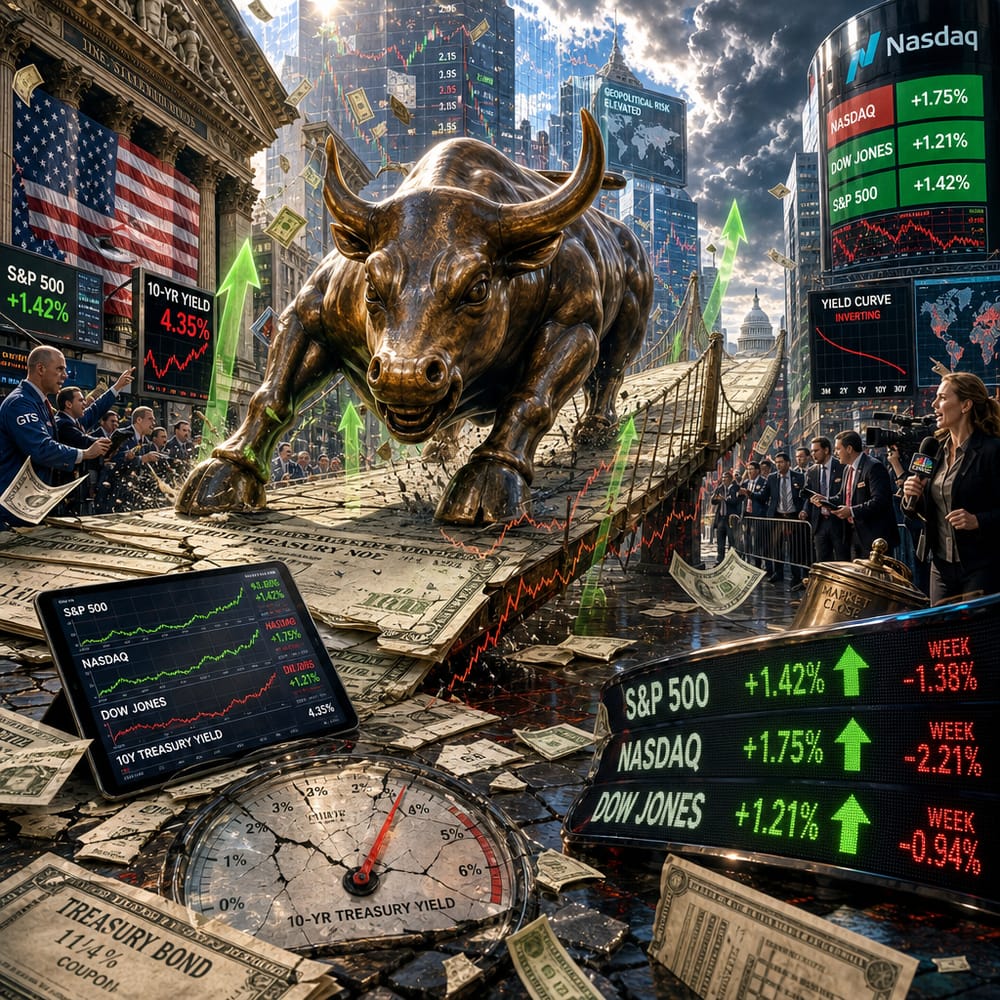
When the stock market feels like a roller coaster, it's best to keep both hands on the bar and try not to spill your coffee. Last Friday, Wall Street investors experienced that turbulent ride firsthand. Major indices like the S&P 500 and Nasdaq made a surprising climb as the trading week came to a close, only to be overshadowed by a week of unsettling market jitters. But what exactly led to this weekly whiplash?
First, let's dish out the good news. On Friday, the market saw a notable rally. Like a last-minute hero in a rom-com, upbeat economic data swooped in to save the day. Reports from the service sector, showing stronger-than-expected growth, were a breath of fresh air amid the sea of uncertainty. Investors happily hit the buy button on that news, driving the indices up. But before you pop the champagne, take note: a good Friday didn't make up for the other worries that had plagued the market all week.
Enter the bond market, the ever-present elephant in the room. Treasury yields were acting like a restless teenager, climbing to heights not seen in years. These rising yields have a knack for causing trouble. Higher yields mean higher borrowing costs, which can put a damper on corporate profits and consumer spending—bad news for stock prices. It’s a tough balance—a bit like trying to pat your head and rub your belly at the same time.
Treasury Secretary Scott Bessent attempted to cool things down by announcing a plan to expand bond buybacks. But let’s just say, in the world of finance, nothing is ever that simple. Investors were caught off guard, speculating how the Treasury, armed with nearly $1 trillion, plans to finance these buybacks. With short-term bills expected to foot the bill, the market flinched a bit. Sometimes, easing long-term pain means dealing with short-term headaches.
And let’s not forget the world stage, where geopolitical tensions were adding extra spice—some might say too much. The U.S. slapped hefty tariffs on Canadian imports, sparking threats of retaliation from our northern neighbors. Trade wars, much like actual wars, tend to make markets jittery. Meanwhile, the U.S. and Iran continue to play an economic game of chess, with escalating threats that could disrupt global trade routes. With this kind of geopolitical drama, it’s easy to see why investors might be skittish.
So, what’s a retail investor to do amid all this chaos? Keep your eyes on the fundamentals—companies with strong balance sheets and resilient business models will weather these storms better than most.
Friday's rally was a reminder that the market can still find reasons to smile, even if they're fleeting. But for the most part, the broader picture painted a week filled with nervous energy. Macroeconomic uncertainties, like unpredictable bond yields and geopolitical tensions, hung over the markets like a dark cloud. It's a delicate dance between riding the highs of positive economic news and navigating the lows of global uncertainty.
As we move into the next week, be prepared for the unpredictability. Watch those Treasury yields like a hawk, keep an ear to the ground for any new geopolitical developments, and remember: in the world of investing, it's all about playing the long game. Stay informed, stay curious, and don’t be afraid to hold on tight—it might be a bumpy ride.
This article is for informational purposes only and is not investment advice. Always do your own research or consult a licensed financial professional before making investment decisions.
© Copyright 2024. All Rights Reserved.
© Copyright 2024. All Rights Reserved.