

Fresh Surge in U.S. Inflation Data Fuels Dollar Strength, Rekindles Fed Rate-Hike Pricing
Wednesday, October 07, 2026
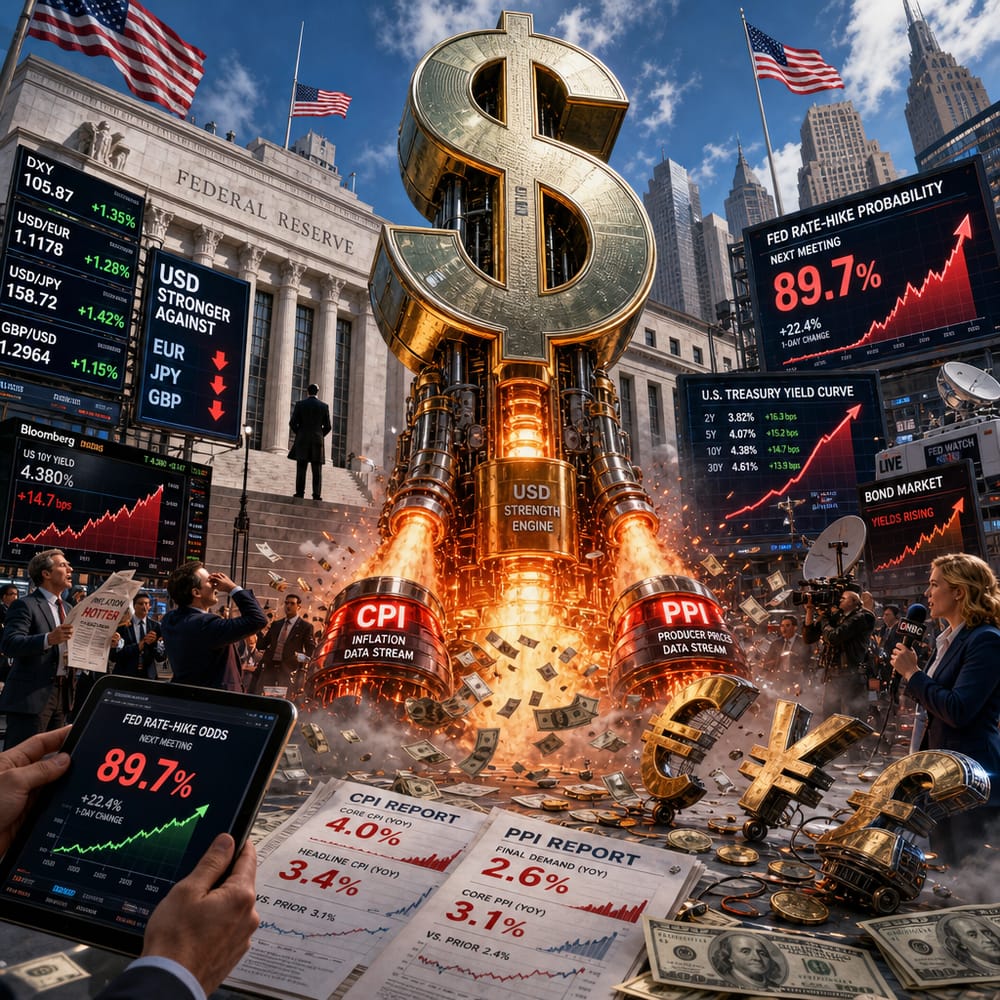
U.S. Inflation Surges: The Dollar's Dance and the Fed's Twirl
So, let’s talk inflation. Not the stuff that makes your grocery bill look like you just bought a used car, but the surprise spike in U.S. core inflation that just played market DJ, spinning the dollar to new heights. Yep, recent data came in hotter than your favorite jalapeño, and it's got traders scrambling like there’s a Black Friday sale on currency futures.
What's cooking in the economic kitchen? The core Consumer Price Index (CPI)—that’s the figure the Fed loves because it strips out food and energy prices—revealed a glow warmer than expected. Same goes for producer prices, the costs that companies pay for materials and services. These spicy numbers have flicked open financial calculators everywhere, and now, the odds of another Fed rate hike are sitting at a cool 90%. And they haven’t even sent out an official save-the-date!
Here's the crux: Higher inflation often means the Federal Reserve may crank up interest rates to cool things down. In plain English, the Fed’s not giving up its role as the strict school principal just yet. With this new inflation data, suddenly the dollar's got pep in its step, and other currencies like the Euro, Yen, and Pound are left awkwardly dancing to their own offbeat tunes.
The implications for the almighty greenback are straightforward and global. A stronger dollar means your dollars go further abroad—like when that vacation to Paris suddenly feels more like a budget getaway rather than a luxury splurge. But if you’re a holder of other currencies watching the exchange rates, it's like seeing your fluffy soufflé deflate.
Now, what does a stronger dollar mean for the Federal Reserve? It puts them under the spotlight, demanding an encore of rate hikes. The Fed has been using interest rate hikes like a Swiss army knife—to tackle inflation, to guide economic growth, and to adjust the pace of the economy. More hikes could be on the menu, unless inflation decides to take a quieter seat in the corner.
But here’s the kicker: while the U.S. dollar is hitting high notes, the currencies across the pond and beyond are caught in a divergence trap—picture them as partygoers who've lost rhythm in a line dance. The Euro, Japanese Yen, and British Pound are feeling the pinch. The Euro, weighed down by its own economic woes, might find its vacation destinations a bit pricier. The Yen, already sluggish with Japan’s low-yield policies, may soon feel like it’s stuck in a treadmill session it didn’t sign up for. And the Pound, with Brexit still whispering like a persistent ghost, could find itself on the back foot, which is not the best place for a currency to be.
So, dear reader, the stakes are high. The markets are recalibrating faster than a GPS after a wrong turn. Traders are adjusting FX positions like dance partners at a club, and they’re watching the Fed like hawks, waiting for signs of further rate hikes.
One thing's for sure—this inflation data is not just a blip. It’s a seismic shift, and it’s reshaping the global financial landscape. For everyday investors, it's a cue to keep tabs on currency fluctuations, interest rate chatter, and how these factors might just sway your dollars' global dance.
As this inflation tango continues, keep your eyes peeled on this economic spectacle. Who would’ve thought numbers could be this riveting?
This article is for informational purposes only and is not investment advice. Always do your own research or consult a licensed financial professional before making investment decisions.
© Copyright 2024. All Rights Reserved.
© Copyright 2024. All Rights Reserved.