

France's Diesel Reserve Release and Its Impact on Energy Stocks
Thursday, October 08, 2026
FRANCE'S DIESEL RESERVE RELEASE AND ITS IMPACT ON ENERGY STOCKS
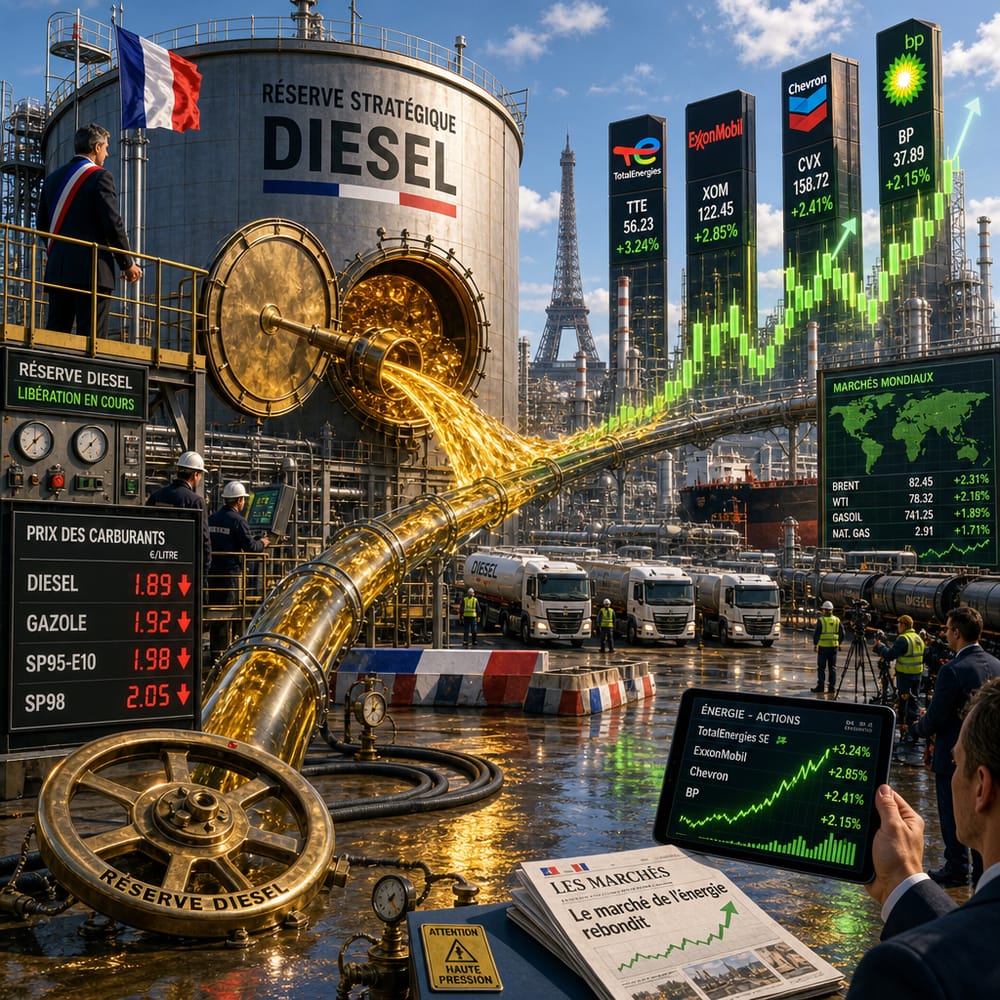
In a world where fuel prices seem to have a mind of their own, France has decided to throw a curveball. By releasing 10 million barrels of diesel from its strategic reserves, the French government isn't just playing politics; they're playing chess with the global oil market. But what does that mean for all of us retail investors with a few bucks riding on energy stocks? Buckle up, because where there's diesel, there's drama.
First off, why is France even doing this? Picture this: streets filled with protestors, the air thick with dissatisfaction over rising living costs and underfunded education. Prime Minister Sebastien Lecornu is looking for a valve to release some of that public pressure. Enter the diesel reserve. The release is supposed to lower fuel costs at the pump, which sounds like music to the ears of anyone with a grudge against their gas gauge. But let's not kid ourselves; this move isn’t just about keeping the streets peaceful.
This fuel injection into the European market could ripple across global oil prices. With the diesel supply pedal to the metal, you'd expect prices to take a dip. But here's the catch: the geopolitical landscape is a roller coaster right now, with U.S.-Iran tensions and Ukrainian attacks on Russian refineries keeping oil prices on their toes. So, will this release be a light drizzle in the Sahara? Or a thunderstorm of change? The jury's still out.
Now, let's talk stocks. Energy bigwigs like TotalEnergies SE, ExxonMobil, Chevron, and BP are no strangers to riding the waves of fuel price fluctuations. But who's best positioned to surf this particular swell? TotalEnergies, sitting snug in France's backyard, could potentially ride this wave better than its peers, thanks to its proximity and supply chain agility. Then again, ExxonMobil and Chevron, with their vast global reach, could leverage lower diesel prices to optimize downstream operations – that's oil industry talk for turning crude into your car's BFF.
Yet, where there's opportunity, there's risk. Investors need to keep their eyes peeled for the potential fallout. If the move successfully stabilizes diesel prices, we might see a short-term boost in energy stocks, particularly for companies with European ties. But play the long game, and the implications become murkier. If the release fails to lower prices significantly, or if geopolitical tensions flare up like a summer campfire, we could see volatility burn our returns.
Moreover, the whole gambit revolves around supply and demand dynamics that are already under pressure from other geopolitical events. The U.S. preparing for a potential military engagement with Iran could throw oil markets into a frenzy, and not the good kind. A situation like that could easily overshadow France's diesel strategy, turning what looks like a knight's move into a pawn's plight.
So what's an investor to do? It's a classic conundrum: risk versus reward. Keep a keen eye on how this release plays out over the next few weeks. Watch for any shifts in oil prices and market reactions to geopolitical events, because those could be the canaries in the coal mine.
And if you're feeling bold? Consider diversifying your energy portfolio. It's like not putting all your cookies in one jar just in case someone decides to tip it over. Look into energy firms that offer a mix of fossil fuel and renewable energy assets, because we all know the world is slowly but surely moving toward a greener horizon. And hey, the unpredictability of oil prices might just be the nudge you need to explore those green pastures.
In the end, France's diesel reserve release is more than just an economic strategy; it's a high-stakes poker game with every investor sitting at the table. Whether you're holding the winning hand or bluffing your way through, one thing's for sure: the energy market is anything but a bore. So, keep your portfolios close and your trading apps closer, because this saga is just getting started.
This article is for informational purposes only and is not investment advice. Always do your own research or consult a licensed financial professional before making investment decisions.
© Copyright 2024. All Rights Reserved.
© Copyright 2024. All Rights Reserved.