

Former Google Engineer’s Trade-Secrets Conviction Partially Overturned
Friday, August 21, 2026
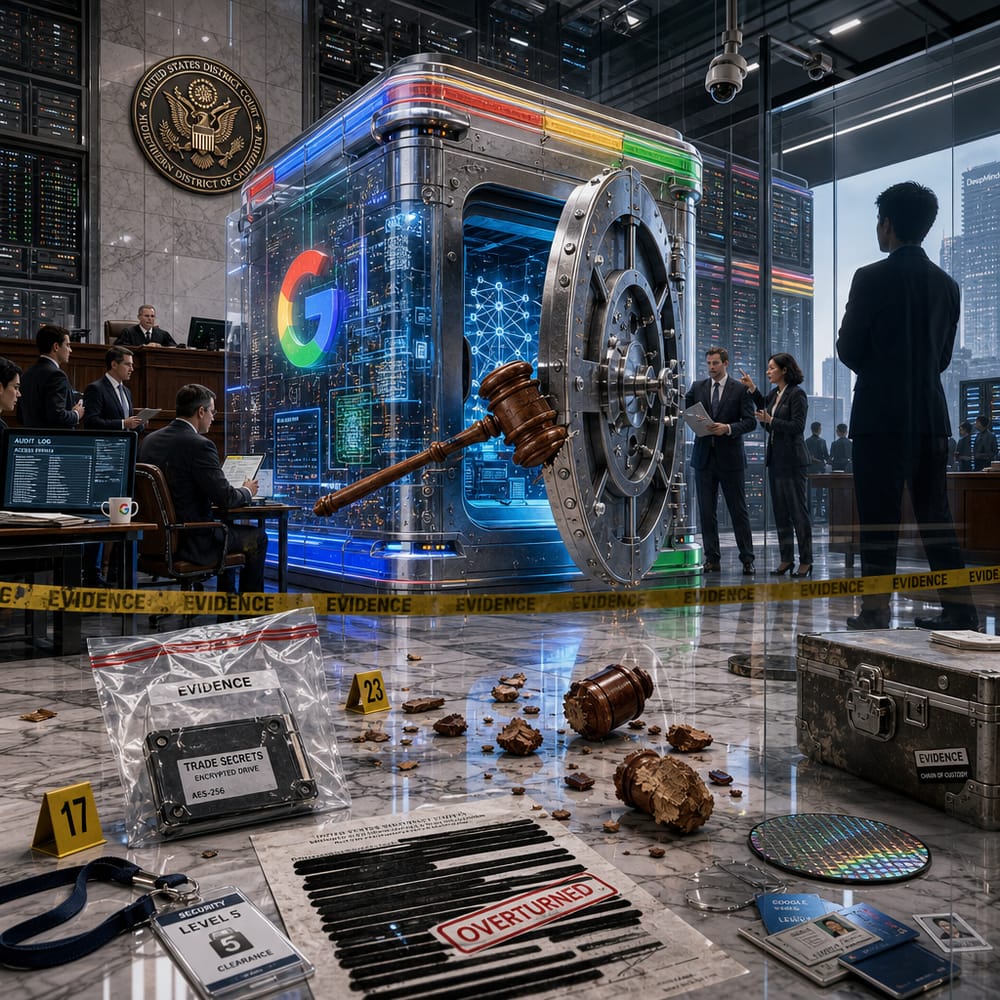
FORMER GOOGLE ENGINEER'S TRADE-SECRET DRAMA GETS A REWRITE
If you thought courtroom dramas were reserved for TV, think again. In an unexpected turn that rivals any plot twist, Linwei Ding, a former Google whiz, has had his conviction on trade-secret theft partially overturned. Ding was initially convicted for allegedly sneaking sensitive AI secrets over to Chinese firms. The courtroom verdict struck a nerve, not just with legal buffs, but also with tech giants like Google and anyone keeping an eye on U.S.-China relations. So, what gives? Let’s break it down.
THE PLOT TWIST: WHY THE OVERTURN?
You might be wondering, what prompted this legal backflip? According to insiders, the judge cited “insufficient evidence” for some of the charges. In plain English: the prosecution’s case had a few holes that were too big to ignore. During the trial, questions were raised about the evidence’s integrity and whether it truly pointed to Ding being the mastermind behind the alleged heist. The ruling has essentially sent a signal: airtight cases are a must when dealing with something as complex as AI trade secrets.
WHAT THIS MEANS FOR GOOGLE
For Google, this is a mixed bag. While the tech giant can breathe a sigh of relief that their vault of secrets isn’t as vulnerable as the case initially painted, it shines a relentless spotlight on their IP protection strategies. In Silicon Valley, where innovation races at breakneck speed, keeping secrets under wraps is a full-time job. Google might need to step up its security game, maybe even investing in more robust internal controls or employee vetting processes.
Google’s been a household name for decades, but even the big players can’t rest easy. Think of this as a wake-up call for tech behemoths everywhere: Guard your secrets like a dragon hoarding gold, because someone’s always trying to slip past the gates.
ECHOES IN THE TECH WORLD
Now, let’s zoom out. This case doesn’t just impact Google; it sends ripples across the entire tech landscape. Intellectual property is the lifeblood of tech firms, and this ruling might just change how companies approach their security protocols. Companies across the board may start doubling down on their paranoia level, with more frequent audits and tighter surveillance on data access.
And let’s not forget startups, which often walk a tightrope between innovation and espionage. They might find themselves upping their ante, ensuring their bright ideas don’t become someone else’s payday.
U.S.-CHINA TECH RELATIONS: THE BIGGER PICTURE
This ruling doesn’t happen in a vacuum. It lands smack dab in the middle of ongoing tensions between the U.S. and China, especially in the tech realm. With trade barriers, cybersecurity skirmishes, and IP theft accusations flying back and forth, the courtroom decision adds yet another layer of complexity.
For investors with eyes on the East, this could mean recalibrating strategies. China’s market, with its billion-plus consumers and rapid tech adoption, remains an alluring but hazardous frontier. U.S. firms might find themselves on tenterhooks, weighing the risks of potential IP theft against the tantalizing lure of expansion.
BOTTOM LINE: WHAT RETAIL INVESTORS SHOULD WATCH
If you’re a retail investor, don’t brush this off as just another tech squabble. This case is a peek into the future of tech security and international business dynamics. Keep an eye on companies with heavy exposure to China, and watch how they manage their intellectual property strategies. With AI and tech sectors set to explode, navigating not just stock performance but also geopolitical undercurrents could turn your portfolio’s performance from ‘meh’ to ‘wow’.
As for Linwei Ding, his legal saga might still have a few twisty turns ahead. But for now, it’s a reminder that in the world of tech, secrets are worth their weight in gold, and keeping them is the hardest part. So, next time you think of trade secrets, remember: it’s not just about bytes and bots, it’s about the very battle lines of the future.
This article is for informational purposes only and is not investment advice. Always do your own research or consult a licensed financial professional before making investment decisions.
© Copyright 2024. All Rights Reserved.
© Copyright 2024. All Rights Reserved.