

Ford’s Lincoln Production Shift: Long-Term Auto Supplier and EV Implications
Wednesday, August 12, 2026
FORD'S LINCOLN PRODUCTION SHIFT: WHAT IT MEANS FOR U.S. AUTO SUPPLIERS
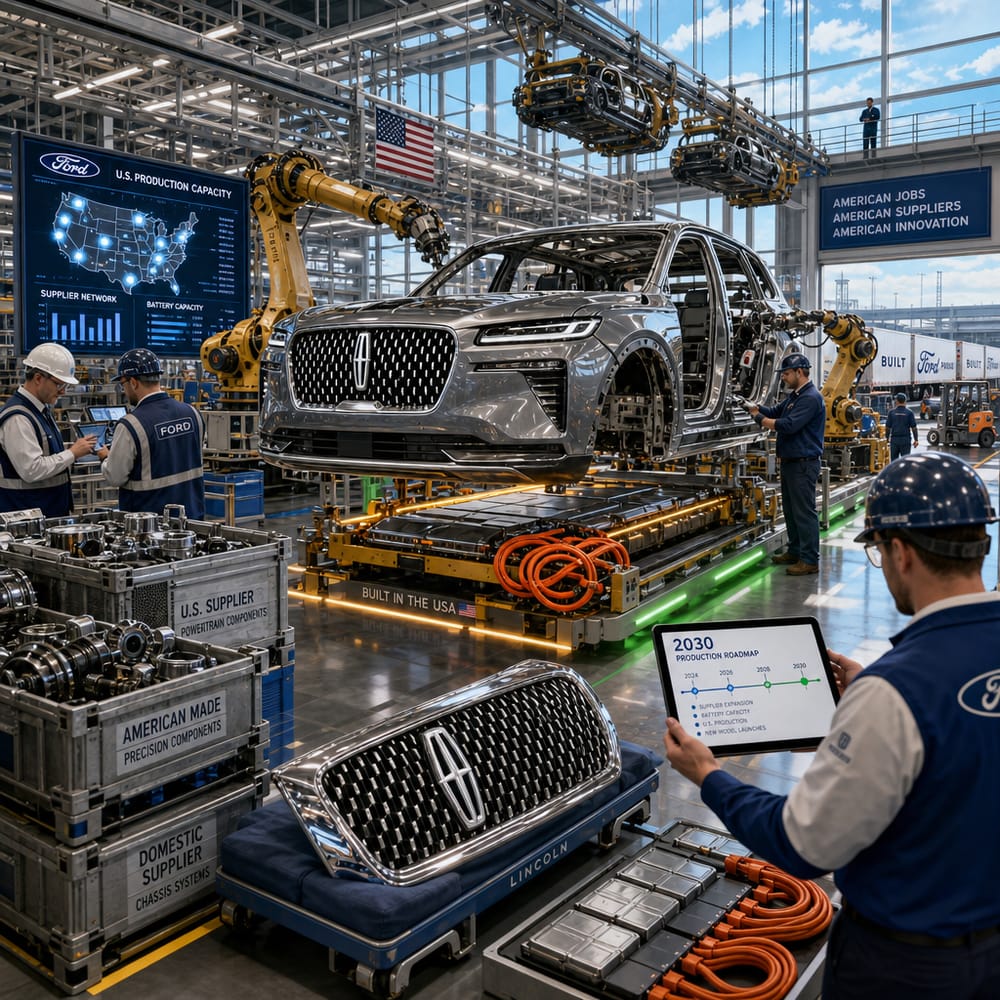
Prepare to rev your engines, folks! Ford just dropped a bombshell of a plan, and it's all about bringing the Lincoln production home. That's right. By 2030, Ford is shifting gears to pump out Lincoln vehicles stateside. This isn't just some drive down memory lane; it's a turbocharged strategy to boost domestic auto suppliers and revamp the U.S. auto industry.
Now, before you start picturing a parade of Lincoln Navigators cruising through Times Square, let’s dig into why this maneuver might shake up more than just your local dealership’s lot.
THE ROLL CALL: WHO'S BENEFITING?
Here’s the deal: Ford's decision to ramp up U.S. production could be music to the ears of domestic auto suppliers. Companies like BorgWarner, Lear Corporation, and American Axle & Manufacturing could find themselves riding shotgun on this journey. Why, you ask? Because with increased production in the U.S., these suppliers could see a demand spike for everything from powertrains to seating and beyond. It’s like winning the lottery for these guys — except instead of cash, they get more orders and potentially fatter margins.
But wait, there’s more! Smaller, specialized suppliers who focus on niche vehicle components might also find themselves in the spotlight. Ford’s pivot to the U.S. production line could open the door for these companies to showcase their innovations, all while creating a ripple effect of job opportunities.
FORD'S VALUATION: SHIFTING GEARS IN THE MARKET
Now, let’s talk money — Ford’s money, to be precise. Ford’s decision to bring Lincoln production home could revamp its market perception. Investors typically love a good home-cooked plan, especially one that touts job creation and a nod to American manufacturing.
But keep those checkbooks in your pockets for now. While this move could enhance Ford's standing as America's automotive kingpin, it won't necessarily translate to an automatic uptick in their shares. Investors will be watching how effectively Ford executes this ambitious plan. From facility upgrades to logistics, the devil is in the details — and Ford needs to steer clear of any production potholes to keep investors happy.
BIG PICTURE: THE AUTO INDUSTRY'S NEW LANDSCAPE
Let's zoom out to get the broader view. What does this mean for the U.S. auto industry? Simply put, this move could turbocharge local manufacturing, potentially setting a new industry standard. More domestic production means a robust supply chain, reduced dependency on overseas manufacturing, and, yes, that warm fuzzy feeling from knowing your car was made right here in the good ol’ U.S. of A.
Moreover, with Ford phasing out imports from China, there’s a chance for a tighter integration of suppliers, creating a more resilient and responsive supply network. This is a big deal, considering how the global auto industry has been plagued by supply chain disruptions over the past few years.
But there’s a flip side. The shift might also trigger some competitive shenanigans. Other auto giants could see Ford’s move as a challenge and might rev up their domestic manufacturing plans as well, leading to a full-throttle race to dominate the U.S. market.
THE ROAD AHEAD
So, what’s the takeaway here? Ford’s decision isn’t just a story about cars; it’s a narrative about strategy, economy, and innovation. It underscores how a legacy brand can reinvent its playbook to adapt to changing landscapes and consumer expectations.
Whether you’re an investor eyeing auto stocks, a supplier poised to cash in, or just a car enthusiast engrossed in the automotive saga, Ford's Lincoln production shift is a signal to watch — a possible harbinger of a new era in U.S. manufacturing.
Get ready, America. The ride is just beginning. Buckle up and enjoy the journey.
This article is for informational purposes only and is not investment advice. Always do your own research or consult a licensed financial professional before making investment decisions.
© Copyright 2024. All Rights Reserved.
© Copyright 2024. All Rights Reserved.