

Ford's July Sales Decline: A Deeper Look
Tuesday, August 04, 2026
FORD'S JULY SALES DECLINE: A DEEPER LOOK
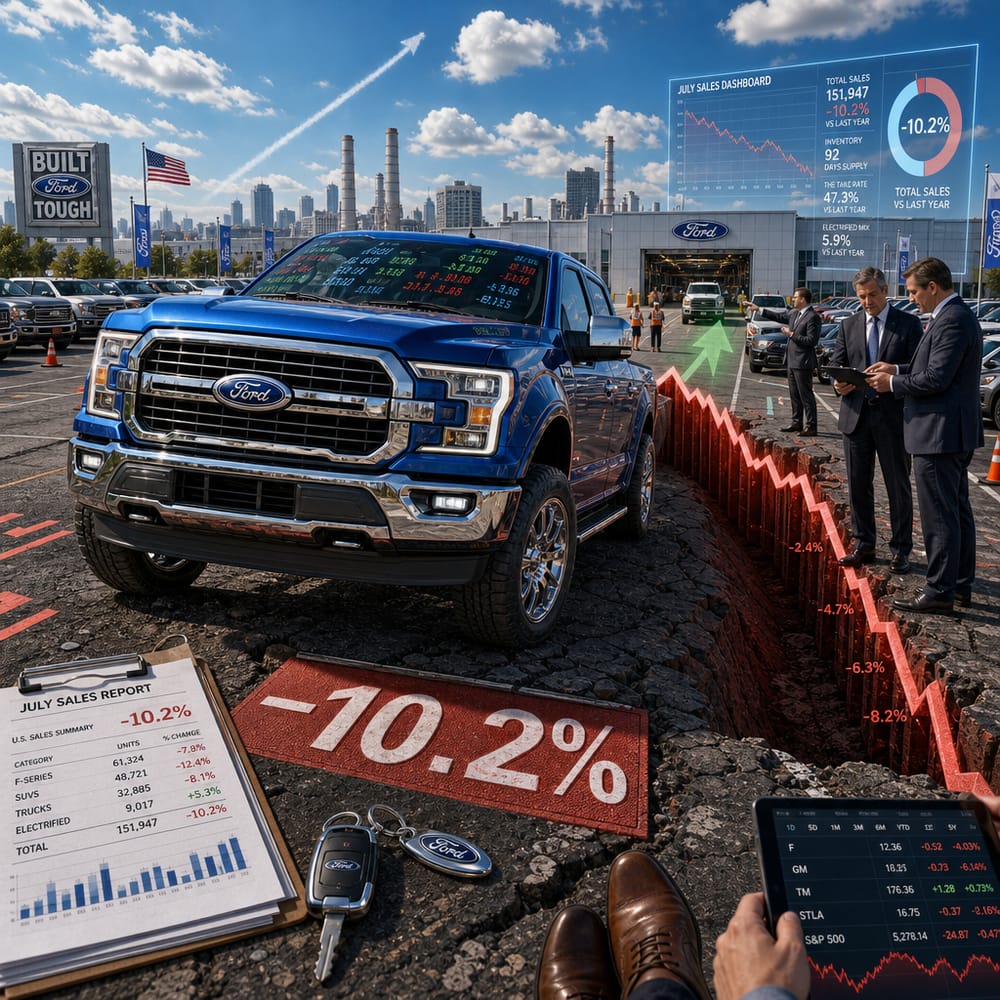
Ford’s July sales took a nosedive, dropping by 10.2%, but don’t grab your tissues just yet. This isn’t just a tale of woe but a calculated move by the motoring giant. You might be asking: "How is a sales decline ever good news?" Well, Ford seems to have a plan, and they’re pretty optimistic about it. Buckle up as we take a deeper dive into why Ford is cruising through this sales slump with a confident grin.
Ford's dip in sales headlines can lead you to think the company has hit a rough patch. But, let’s put those brakes on. According to Rob Kaffl, Ford's director of U.S. sales, this decline wasn’t a shocker or an unwelcome surprise. Instead, it was part of Ford’s strategy to revamp and refocus its fleet. They’re playing chess when others are playing checkers.
One of the major reasons behind this sales dip is Ford’s decision to phase out the Ford Escape and Lincoln Corsair. These aren’t just any vehicles; they were key players in Ford’s lineup. But Ford is channeling its inner Marie Kondo and tidying up its model range to make way for new, exciting introductions by the end of the decade. It’s like cleaning out your closet to make room for this season’s hottest trends.
Another factor in the slump is Ford's strategic pullback from low-margin rental fleet volume. Translation: Ford is stepping away from selling lots of cars to rental companies at dirt-cheap prices. Sure, it means selling fewer cars in the short term, but the move allows Ford to focus on higher-margin vehicles and newer models that could rev up profitability. Ford's like that friend who's decided to stop selling lemonade and focus on the big bucks from a gourmet burger food truck instead.
So, how exactly is Ford planning to steer through this sales slump? The automaker is gearing up for an onslaught of fresh product launches which they expect to turbocharge their lineup. Ford is betting big on new technologies and electrification — think electric vehicles (EVs) and advanced driver-assistance systems (ADAS). The success of the Ford F-150 Lightning, the electric version of America’s favorite truck, shows they might be onto something. EVs aren’t just the future; they’re speeding towards us in the fast lane, and Ford intends to be ready.
As for the rest of the year, Ford is eyeing up some serious opportunities. They’re building momentum with their new models and technological advancements. By focusing on innovation and cutting-edge products, Ford aims to be not just a participant but a leader in the automotive evolution. They’re hoping this strategy will shift the narrative from slowing sales to soaring success.
In the grand scheme of things, understanding Ford's sales trends isn’t just about numbers on a spreadsheet. It’s about grasping where Ford is headed in the market. For investors, knowing Ford’s game plan means anticipating potential shifts in their stock value and market position. Ford’s current strategy, if successful, could pave the way for higher margins and increased market share in the future.
So, while Ford’s July sales might have dropped, the company is revving its engines for a more promising tomorrow. They’re waving goodbye to old models and welcoming innovation with open arms. For the retail investor watching Ford’s journey, it’s not just about the cars they sell today but the vision they hold for the roads ahead.
In the fast-evolving world of automotive giants, Ford’s strategy demonstrates the importance of not just adapting but innovating to stay ahead. They’re not just riding the wave of change; they’re aiming to be the ones creating it.
This article is for informational purposes only and is not investment advice. Always do your own research or consult a licensed financial professional before making investment decisions.
© Copyright 2024. All Rights Reserved.
© Copyright 2024. All Rights Reserved.