

Ford (F) Rallies on Big‑Truck Strategy; Peer GM in Focus
Saturday, August 15, 2026
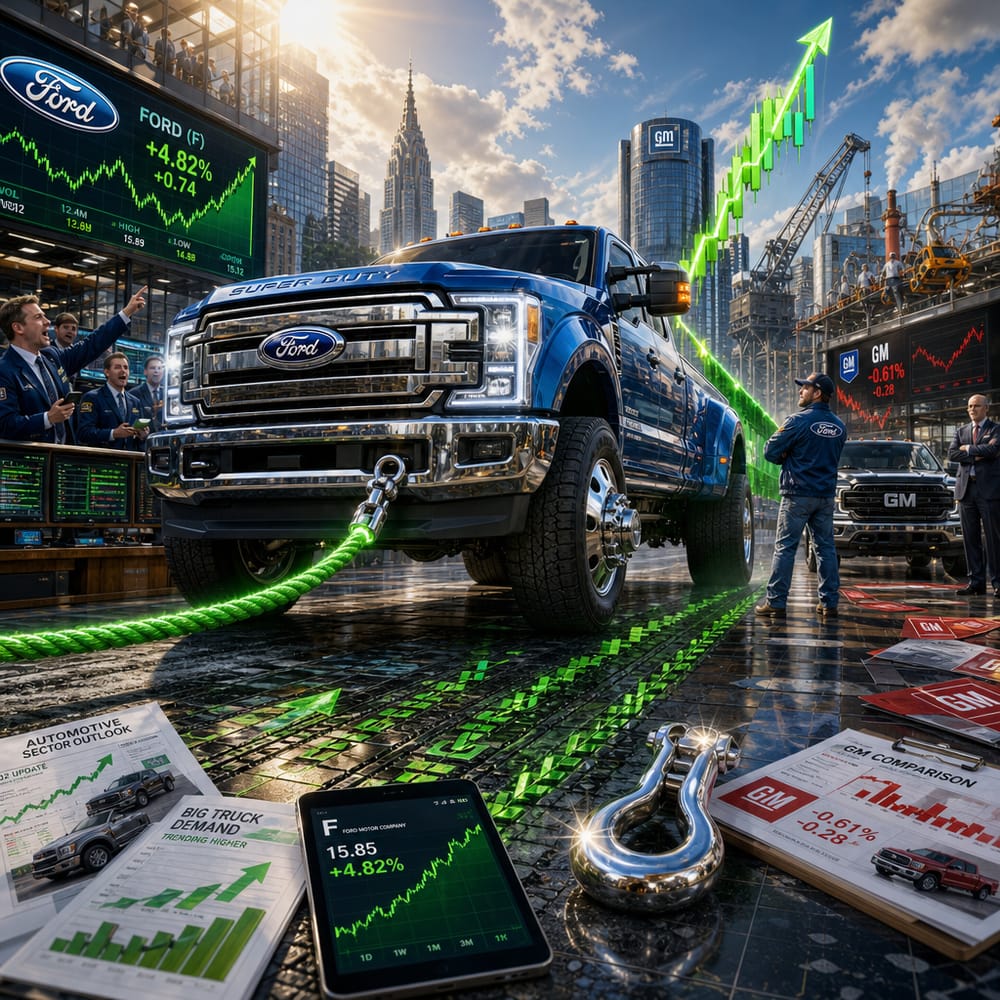
WHEN FORD'S TRUCKS HIT PAYDIRT, GM STARTS SWEATING BULLETS
When Ford Motor Company decided to place all its chips on big trucks, it wasn't just rolling the dice—it was upending the entire board game. In a move that would make any Las Vegas magician proud, Ford has conjured up a market rally, pulling stock prices along for a joyride like a souped-up F-150 screaming down an open highway.
You see, Ford's strategy to invest heavily in big trucks and SUVs seems to be a happy accident that makes one wonder if they hired a psychic instead of a market analyst. There's a certain magic happening here and Wall Street is taking notice. Meanwhile, General Motors, the other giant in the auto arena, is left asking itself whether it's time to recalibrate its compass.
FORD VERSUS GM: THE TRUCK SHOWDOWN
Ford's big-truck strategy is a bold bet in the world of hyper-competitive automobile manufacturing. What sets them apart from GM, you ask? Quite simply, focus and execution. While GM has kept its eyes on expanding its portfolio with electric vehicles (EVs) and diversifying its offerings, Ford has decided to double down on what they know best and, so far, it seems to be hitting all the right notes.
With the market reception for Ford’s trucks roaring louder than a twin-turbo V8, GM should be feeling a tad nervous. After all, there's nothing like your rival cruising past in the highway's fast lane to make you re-examine your own vehicle’s horsepower.
THE THINGS MARGINS ARE MADE OF
For Ford, this truck-heavy strategy isn't just about pumping out vehicles that guzzle gas at a rate that would make environmentalists cringe. It's a move designed to boost those sweet, sweet profit margins. Bigger vehicles often mean bigger profits, and with inflation weighing down on every industry, every penny counts.
But what are the implications for margins and guidance across the automotive sector? If Ford's truck-centric gamble pays off, it's likely to spark a broader shift. Companies might start fretting about whether their current strategies are robust enough to keep pace in a market that's ever more obsessed with size. Meanwhile, analysts are keeping a keen eye on Ford’s next earnings report, eager to see if this big-truck strategy translates into even bigger bank.
FROM PICKUP LANE TO DRIVEWAY: A SHIFT IN CONSUMER TASTES?
And here's where it gets really interesting. If Ford's strategy pays off, it could signal a wider shift in consumer preferences. Are we seeing the beginning of a vehicular size renaissance? In a world that's been grappling with the practicalities of smaller, more efficient vehicles, could Ford's success reignite America's love for the big and the bold?
To be sure, the American romance with the mighty truck is nothing new. But if the trend revs up, it may cause a ripple effect, encouraging other automakers to follow Ford's tire tracks.
THE BROADER PICTURE
So, what's the takeaway for the everyday investor with a fondness for Detroit steel? It might be time to reconsider how vehicle preferences impact the sector. Ford’s approach is a classic strategy of sticking to what you know best and refining it until it shines brighter than a freshly polished grille.
For GM, the focus might need to shift towards addressing these emerging consumer trends. The company must decide how to calibrate its balance between maintaining a diverse lineup and not missing out on profitable opportunities.
Meanwhile, as Ford rides high on its current strategy, it remains a question of how long the road stretches before the next bend. Will they maintain momentum, or will the landscape shift yet again?
In the fast-paced world of auto manufacturing, today's headline-maker can quickly become tomorrow's cautionary tale. For now, Ford is making tracks, and GM, along with the rest of the sector, might want to pay attention. The automotive road ahead is long, and the turns are unpredictable. Buckle up—this race is far from over.
This article is for informational purposes only and is not investment advice. Always do your own research or consult a licensed financial professional before making investment decisions.
© Copyright 2024. All Rights Reserved.
© Copyright 2024. All Rights Reserved.