

FOMC Minutes Reveal Internal Division Over Inflation and Future Rate Path
Saturday, August 15, 2026
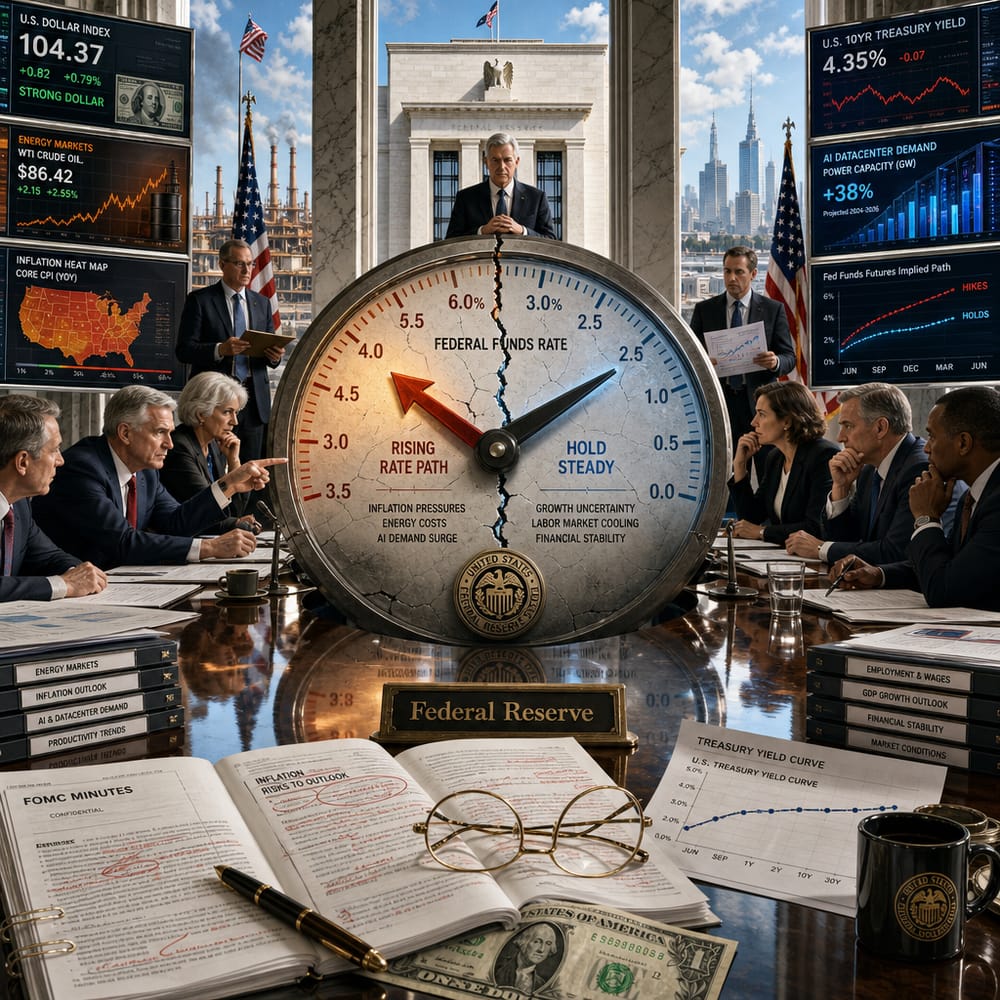
FED'S INFLATION DEBATE: BATTLE OF THE MINDS
Forget about the drama of a reality TV finale; the real cliffhanger is happening in the hallowed halls of the Federal Reserve. The minutes from the Federal Open Market Committee (FOMC) meeting read like a thriller, with inflation as the villain and interest rates as the key to salvation—or doom. So, what’s the fuss about?
THE SPLIT DECISION
In one corner, you have Fed policymakers nervous about inflation's relentless march. They're hearing the echo of AI-driven tech booms and energy price spikes and are ready to keep hiking interest rates to throw a wet blanket on the smoldering inflation fire. Their mantra? Patience is overrated when your enemy is rising prices.
But in the opposite corner, the doves of the Fed are clinging to their seats, warning against slamming the brakes on the economy too hard. They argue that sky-high rates could stifle growth and send the economy skidding into a recession. This internal brawl boils down to one existential question: Is inflation still the Grim Reaper that warrants aggressive rate hikes, or is it time to pause and let things cool naturally?
WHY IT'S A BIG DEAL
This isn't just a cerebral battle among eggheads in suits. The outcome could affect how much you pay for everything from your mortgage to your car loan, and even whether your stocks soar or stumble. The federal funds rate, essentially the cost for banks to borrow short-term funds, is the tip of the iceberg. It ripples through to the U.S. dollar, impacting everything from import prices to the foreign exchange market.
THE PRICE OF DIVISION
If the hawks win out, expect rates to climb higher, making borrowing more expensive and possibly slowing economic growth. This could cool the real estate market and make consumer loans pricier. Conversely, if the Fed pumps the brakes, we could see a more stable market environment, but possibly at the risk of inflation creeping back up if left unchecked.
The trickiest part? Getting it right. Tightening too much or too little both come with big risks. Like Goldilocks with porridge, the Fed needs to find the rate that's "just right."
WHAT THE MARKET THINKS
Wall Street is gripping its armrests. Investors typically hate uncertainty more than a toddler hates bedtime. The Fed's indecision has left the markets jittery, making the U.S. dollar as unpredictable as a soap opera plot. Some traders are banking on continued rate hikes, betting against U.S. Treasury bonds, while others are scooping up stocks at lower prices in anticipation of a Fed pivot.
In this chaos, tech stocks, especially those in AI, are under the spotlight. The AI sector is a double-edged sword: while it fuels economic growth, it's also a big driver of inflation worries. Everybody’s watching to see if AI's potential outweighs its price hikes.
WHAT'S NEXT?
Buckle up because the Fed’s decision-making process is like a slow-cooked pot roast—it takes time, but the results are pivotal. Keep an eye on upcoming economic data releases and Fed speeches—they're the breadcrumbs leading to the Fed's next move.
The future of the U.S. economy may hang in this balance, a delicate dance between taming inflation and nurturing growth. Whether you're an investor, homeowner, or just someone who doesn’t want their grocery bill to skyrocket, the Fed's next steps will matter to you.
So, keep your eyes peeled and your portfolio diversified. With the Fed’s internal skirmish resembling a chess game where every move counts, you don’t want to be caught unprepared when the next big play is made.
This article is for informational purposes only and is not investment advice. Always do your own research or consult a licensed financial professional before making investment decisions.
© Copyright 2024. All Rights Reserved.
© Copyright 2024. All Rights Reserved.