

FOMC Minutes Reveal Intensified Hawkish Fractures
Monday, August 24, 2026
FOMC Minutes Reveal Intensified Hawkish Fractures
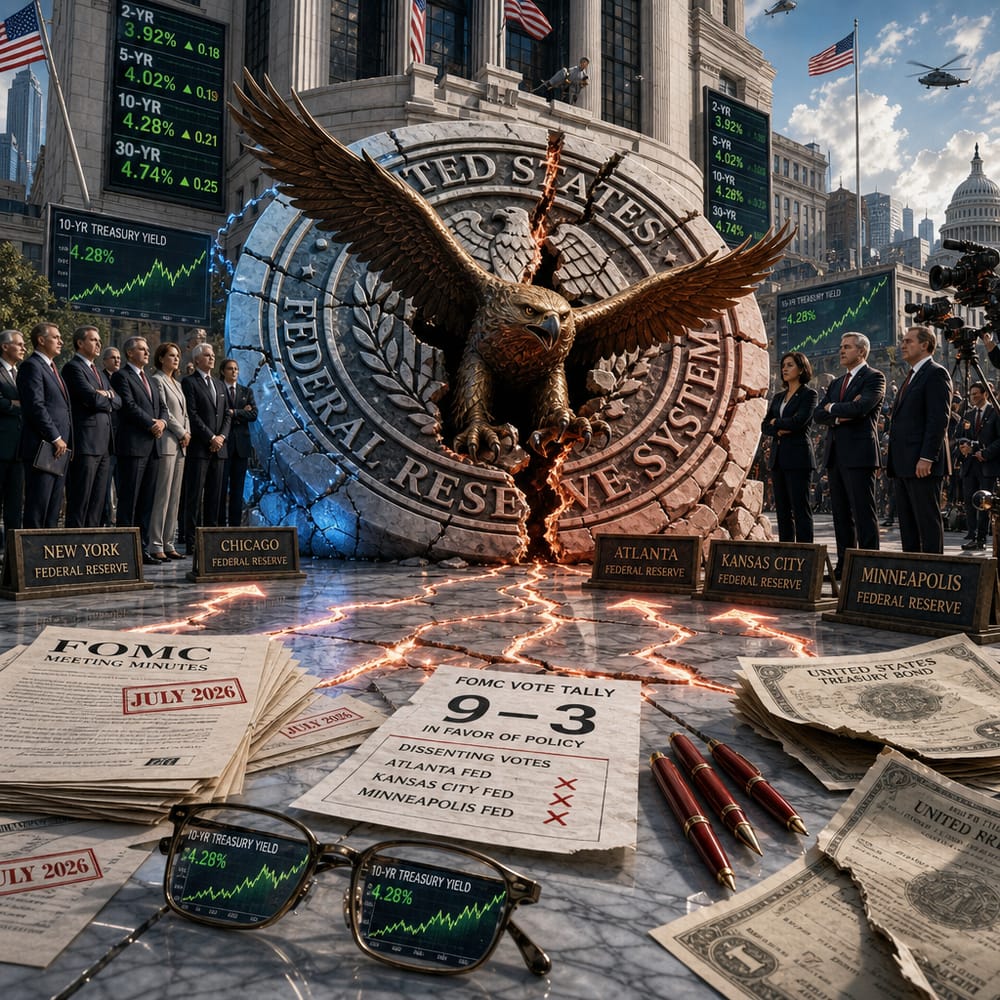
Well, well, well—the Federal Reserve just had a family dinner, and it looks like Cousin Larry didn't get along with Aunt Martha. The July 2026 meeting minutes have dropped, and boy, do they paint a picture of some family drama. The vote on interest rates? 9-3. And those three dissenters aren't just whispering at the kids' table; they want an immediate rate hike. So, grab your popcorn, because the Hawks and Doves are at it again.
Why does this matter to you, the average investor who's just trying to figure out if it's finally time to buy that vacation home or stick with ramen noodles a little longer? Well, this dissent could be a signal that the Fed's current "wait and see" stance might not be as stable as we thought. If inflation keeps doing its Energizer Bunny impression—going and going and going—we might be looking at a policy shift sooner rather than later.
But let's talk about what a "hawkish" stance means in Fed-speak. Think of it like this: Hawks are like those friends who are always telling you to save more and spend less, even when you're eyeing that fancy new gadget. They want higher interest rates to keep inflation in check. Doves, on the other hand, are all about keeping the party going with low rates to encourage spending and borrowing.
Now, with three regional Fed heads—let's call them the Larry, Moe, and Curly of monetary policy—pushing for a rate hike, it shows there's some serious concern about runaway inflation. If these hawks get their way, you might see rates climbing, which would mean borrowing costs go up—bad news if you're planning on taking out a loan or renewing that adjustable-rate mortgage. On the flip side, savings accounts might finally give you more than just lint and disappointment in return.
So, what's the market's reaction? Well, it's kind of like when you find out your favorite pizza joint is closed for renovations. Uncool, and now you have to rethink dinner plans. Investors are recalibrating their expectations for future policy moves, and this might just turn into a rollercoaster ride for bond yields. When the Fed signals a potential rate hike, bond yields often rise because investors start demanding higher returns for holding onto those long-term securities. As of now, the 10-year Treasury yield has been flirting with lower levels, but anything can change if the hawks start calling the shots.
And let's not forget the ripple effects on stocks. A shift towards a more hawkish Fed could mean rocky times for equities, particularly growth stocks that thrive in a low-interest-rate environment. Your tech darlings might feel the pinch because higher rates mean higher borrowing costs, and that's not exactly music to Silicon Valley's ears.
But don't go stuffing your cash under the mattress just yet. The Fed isn't exactly a one-note band. They have a toolkit bigger than your dad's garage, and they're not afraid to use it. The key question here is whether this dissent is just a blip or the start of a bigger, more contentious debate within the Fed ranks. We know that any signs of lasting inflation could bring more of the hawks out of the woodwork, eager to flex their rate-raising muscles.
In the meantime, keep an eye on the upcoming Fed meetings. They'll be the arena where the hawks and doves continue their tug-of-war. For investors, it's a classic case of "Don’t fight the Fed," meaning watch what they do and be ready to adjust your portfolio accordingly.
As always, diversification is your friend. Spread your investments across different asset classes; a well-balanced portfolio will help you ride out these policy-induced waves with a bit more ease. And remember, in the realm of investing—like at any family gathering—patience and adaptability often win the day.
So there you have it, folks. The Fed's got some internal squabbles, and it might just shake things up down the line. Whether you're Team Hawk or Team Dove, one thing's for sure: the coming months will be anything but boring.
This article is for informational purposes only and is not investment advice. Always do your own research or consult a licensed financial professional before making investment decisions.
© Copyright 2024. All Rights Reserved.
© Copyright 2024. All Rights Reserved.