

FOMC Minutes Reveal Divided Views on Rate Policy
Tuesday, August 18, 2026
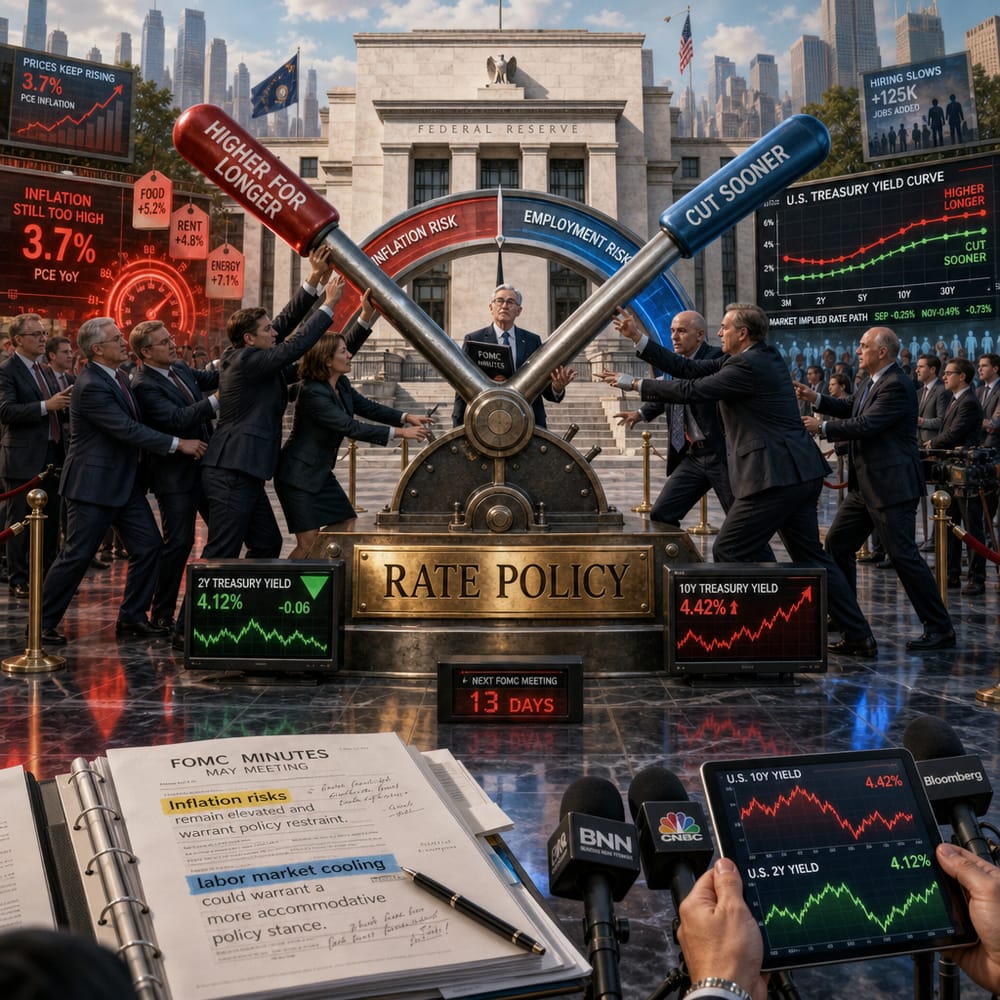
The Federal Reserve’s latest meeting minutes are out, and they’re about as unified as a cat herding convention. The Federal Open Market Committee (FOMC) members are split like a banana over the next steps for interest rates. On one side, some members are waving red flags about inflation. On the other, a faction worries about job growth hitting the skids. Think of it like a financial tug-of-war, but with the fate of the economy hanging in the balance.
In the blue corner, we have the inflation hawks. These folks are eyeing those scary 30-year Treasury yields, which recently soared to 5.33%—a chilling 19-year high. They see inflation lurking in the shadows, ready to pounce and devour our purchasing power. For them, letting up on rate hikes is like feeding a gremlin after midnight. They believe keeping rates high is the only way to keep inflation in check, despite the pressure it puts on Uncle Sam’s wallet, thanks to a national debt that’s ballooning like a kid who found the candy stash.
In the red corner, the employment doves are advocating for a softer touch. They fret that if the Fed continues its hawkish path, the labor market might start resembling a deflated balloon. Jobs could taper off, and as Home Depot’s CFO might agree, it’s not the time for a “frozen market” when it comes to employment. After all, consumers are already hesitant about diving into big spending projects, and adding job insecurity to the mix might just freeze everything over.
So, what does this internal Fed drama mean for you and your portfolio? The split could introduce a whole lot of uncertainty into monetary policy, and the markets hate uncertainty almost as much as a teenager hates a spotty Wi-Fi connection. If the Fed can’t decide on a clear path, it might leave investors scratching their heads about where interest rates are heading next.
For now, market players are bracing themselves for potential volatility. Stocks have been jittery, with futures taking a nosedive in recent days. The bond market, meanwhile, is experiencing a global rout, as governments scramble to handle the fallout. With borrowing costs bumping up against multi-decade highs, businesses and consumers alike could find themselves tightening their belts.
At the end of the day, a divided FOMC spells one thing quite clearly: uncertainty. For investors, that means staying nimble and ready to adapt to a potentially rocky road ahead. The Fed’s next move could sway markets in either direction, and being caught off guard is never a good look for your investment portfolio.
For those with a keen eye on interest rates, the figures speak volumes. The two-year Treasury note yield, a canary in the coal mine for Fed rate moves, is inching upwards. This isn't mere market noise; it’s a signal that the short-term interest rates, which affect everything from car loans to credit card rates, might be on the rise. And if inflation hawks have their way, this could mean more to come.
The implications for the broader economy are just as significant. If the Fed tightens too much, it risks stifling growth. But if the doves prevail and rates stay low, inflation might rear its ugly head again, potentially eating away at economic gains.
In the end, while the FOMC members squabble over the thermostat, the markets are left to sweat in anticipation. Investors should keep their eyes peeled for future announcements from the Fed, as well as other economic indicators that might give clues about what lies ahead.
In this financial tug-of-war, the champions of inflation control and the guardians of job growth must find a middle ground. Markets, portfolios, and maybe even your retirement plan might just depend on it. Until then, stay sharp, stay informed, and maybe, just maybe, keep a close watch on those Treasury yields. They might just be the crystal ball we all need right now.
This article is for informational purposes only and is not investment advice. Always do your own research or consult a licensed financial professional before making investment decisions.
© Copyright 2024. All Rights Reserved.
© Copyright 2024. All Rights Reserved.