

FOMC Minutes: Rate Hike Prospects if Inflation Doesn’t Ease
Sunday, August 30, 2026
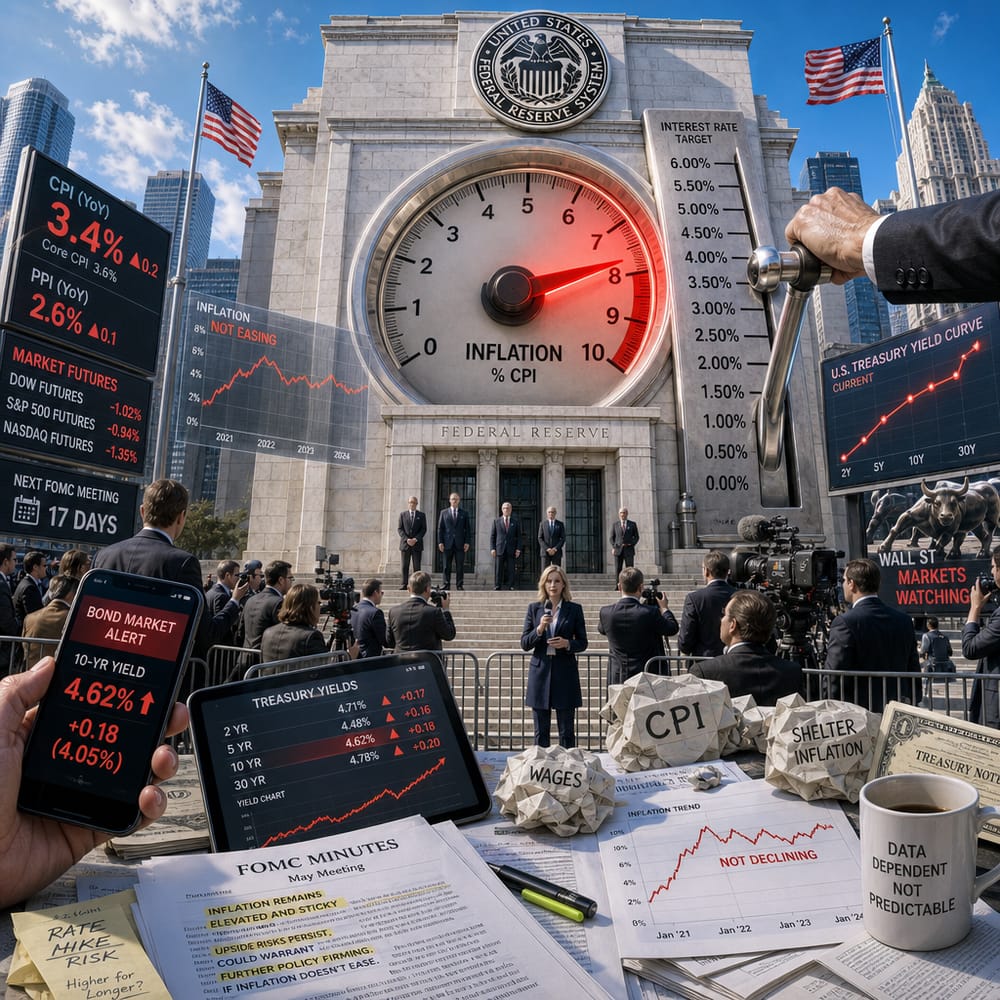
THE FED’S HIGH-STAKES GAME: WILL RATE HIKES RETURN IF INFLATION STAYS HOT?
Imagine you’re playing a high-stakes poker game where the Federal Reserve holds the cards, and the stakes are nothing less than the entire U.S. economy. With the Federal Open Market Committee’s (FOMC) latest minutes now revealed, it's clear the Fed isn’t bluffing. If inflation continues its stubborn stand, those interest rates we’ve all been grumbling about could hike even higher.
WHAT THE FED'S MINUTES REVEAL
The FOMC minutes are like peeking behind the magician’s curtain—what’s the Fed really thinking when it comes to inflation? Spoiler: It's not good news. The minutes underscore a collective concern within the Fed about inflation rates that refuse to simmer down. While they haven’t outright committed to turning the interest rate dial yet again, they sure left it on the table as an option. It’s like they’re keeping a fire extinguisher handy, just in case.
Fed Chairman Kevin Warsh has already called inflation “concerning.” Why should you care? Because this means the Fed might decide that the only way to cool things down is to hike up interest rates. And that’s an action that could ripple across markets like a boulder tossed in a pond.
THE MARKET’S TAKE
So, how does Wall Street react to this looming possibility? Picture jittery investors clinging to their coffee mugs, eyes glued to their screens. If there’s one thing markets hate, it’s uncertainty. And the Fed’s current poker face is causing some sweaty palms on the trading floors. Higher interest rates typically mean higher borrowing costs, which can slow down consumer spending and business investments. In other words, not exactly a tailwind for the stock market.
But here's the kicker—some sectors might secretly be rooting for these changes. Financial institutions, for example, tend to benefit from higher rates because they can charge more for loans. On the flip side, sectors like real estate might find themselves in a bit of a pickle, as higher rates can dampen home-buying enthusiasm faster than a cold shower.
ECONOMIC RIPPLE EFFECTS
Beyond the stock market, what happens if the Fed decides to pull the rate hike trigger? First, you'd likely see your credit card interest rates tick up a notch, making those monthly payments sting just a little bit more. Mortgages could get pricier too, and suddenly, that charming house on the corner seems a tad less affordable.
But there’s a broader horizon to consider. Higher rates could slow down the economy’s overall growth. This might lead to a decrease in employment opportunities, as businesses tighten their belts. It’s a classic tightrope walk for the Fed—taming inflation without tripping the economy into a recession.
WHAT'S NEXT?
So, what’s the big picture here? Should you be stuffing your mattress with cash or rushing to invest before rates rise? The truth is, no one can predict with absolute certainty—after all, we’re in unprecedented economic times.
However, the prudent investor might want to revisit that good old diversified portfolio strategy. Keep an eye on those sectors like finance that might gain from rate hikes, and evaluate any interest-sensitive investments you hold.
As for the Fed, they’ve got the unenviable job of making the right call at the right time. If inflation dares to defy their efforts, the rate hikes might just be their ace in the hole. Until then, we’ll all be watching the Fed’s next move with bated breath. In this high-stakes game, everyone’s waiting to see if the Fed will play the hand they’ve hinted at or fold under the pressure. Either way, the next chapter in this economic saga promises to be anything but dull.
This article is for informational purposes only and is not investment advice. Always do your own research or consult a licensed financial professional before making investment decisions.
© Copyright 2024. All Rights Reserved.
© Copyright 2024. All Rights Reserved.