

FOMC July Minutes and Liquidity Risks
Friday, August 21, 2026
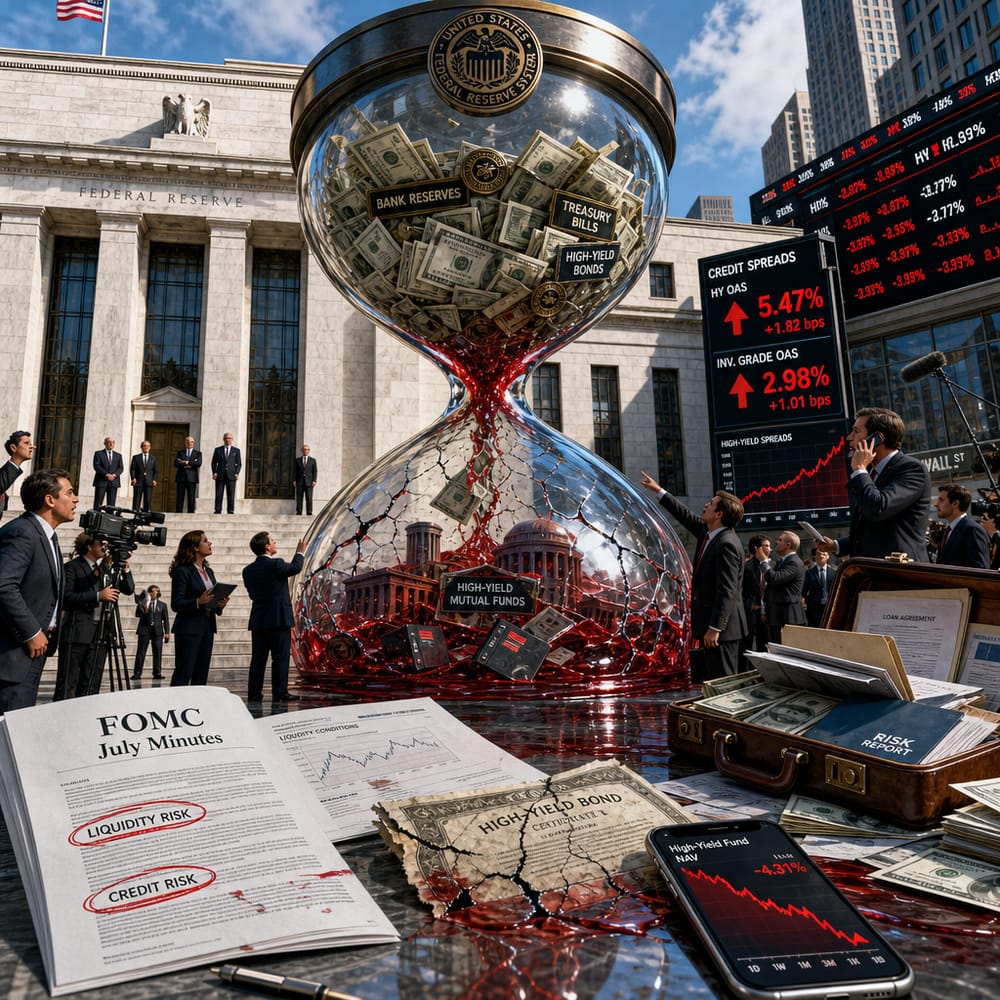
THE WARNING BELLS FROM THE FED: LIQUIDITY RISKS IN FOCUS
Imagine you're on a roller coaster. It's the kind where thrills are guaranteed, and the ride’s so wild you can’t predict the next drop, turn, or loop. That's kind of what the financial markets felt like last week, as the Federal Reserve's FOMC minutes dropped a bombshell: potential liquidity risks lurking in the shadows of our banking system and high-yield mutual funds. As retail investors, we might not be in the boardroom with Jay Powell, but understanding these risks is crucial. It could impact everything from the stocks you hold to the health of the economy.
So, what exactly did the Fed spotlight in the minutes? Let's dive into the nitty-gritty without getting lost in financial mumbo jumbo.
THE LIQUIDITY WARNING
The Federal Reserve's crystal ball might be a little hazy at times, but when they start pointing out liquidity and credit risks, the financial world listens. At the heart of the Fed's concern is liquidity—the ability to quickly buy or sell assets without causing a drastic change in the asset’s price. It’s like being able to sell your collection of rare Beanie Babies without tanking the market (if only!).
The warning specifically highlights that banks and high-yield mutual funds could be sitting ducks if liquidity dries up. Banks play a colossal role in our financial system, and high-yield mutual funds, also known as "junk bonds," offer mouth-watering returns but come with a fittingly risky profile. When liquidity is squeezed, these assets become difficult to offload, potentially sparking a chain reaction of financial woes.
Could this be the Fed's way of foreshadowing a policy shift? Perhaps. When central bankers bark, the market tends to bite, albeit nervously at times.
HOW WILL THIS INFLUENCE FED POLICY?
The million-dollar question: what might the Fed do about it? Well, the Fed could take its foot off the pedal on interest rate hikes. Higher rates can tighten liquidity, making it scarcer than a parking spot at the mall on Black Friday. By holding or even lowering rates, the Fed could inject some much-needed lubrication into the financial system, keeping the wheels spinning.
Here’s the catch: the Fed is also fighting inflation, which remains as stubborn as your Uncle Joe at Thanksgiving dinner. Balancing inflation control with maintaining liquidity is like juggling flaming swords—doable but risky. Any misjudgment could lead to unintended side effects, like overheating the economy or spurring more inflation.
A POTENTIAL SYSTEMIC RISK
Let's talk about systemic risk. Imagine if one snowflake triggered an avalanche, taking down not just the snowman but the whole ski village. That's the nightmare scenario. If liquidity dries up, banks and high-yield mutual funds could face massive sell-offs, impacting the broader economy. It’s enough to give any investor pause, because when the financial giants topple, smaller investors often get squashed in the fallout.
For high-yield mutual funds, the risk is particularly hairy. These funds are tantalizing for their high returns, but they’re a bit like investing in your buddy's “sure thing” startup. Great rewards if it works, but a massive headache if it doesn’t. If liquidity issues force these funds to sell at fire-sale prices, it could lead to significant losses and impact the broader financial markets, causing ripple effects you don’t want to feel.
WHAT SHOULD YOU DO?
So, what's a retail investor to do amid these ominous clouds? First, don’t panic. Market corrections happen, and the best strategy is often a calm and calculated one. Diversify your portfolio to spread the risk—don’t put all your eggs in one basket, or in this case, one high-yield bond fund.
Second, keep an eye on the Fed's next moves. If they signal a pause or reversal on rate hikes, it might be a red flag that liquidity concerns are more pressing than we think.
Lastly, stay informed. In the ever-twisting plot that is the financial market, knowledge is the best asset you can have. Keep your ear to the ground, or better yet, your eyes on the latest updates from credible financial news sources.
Remember, the ride might be bumpy, but with a little foresight, you can navigate through the loops and turns, and maybe even come out ahead. Buckle up and enjoy the ride—it’s what makes investing a thrilling adventure.
This article is for informational purposes only and is not investment advice. Always do your own research or consult a licensed financial professional before making investment decisions.
© Copyright 2024. All Rights Reserved.
© Copyright 2024. All Rights Reserved.