

Fifty Days of Cover: The Oil Number Wall Street Should Be Watching
Sunday, June 21, 2026
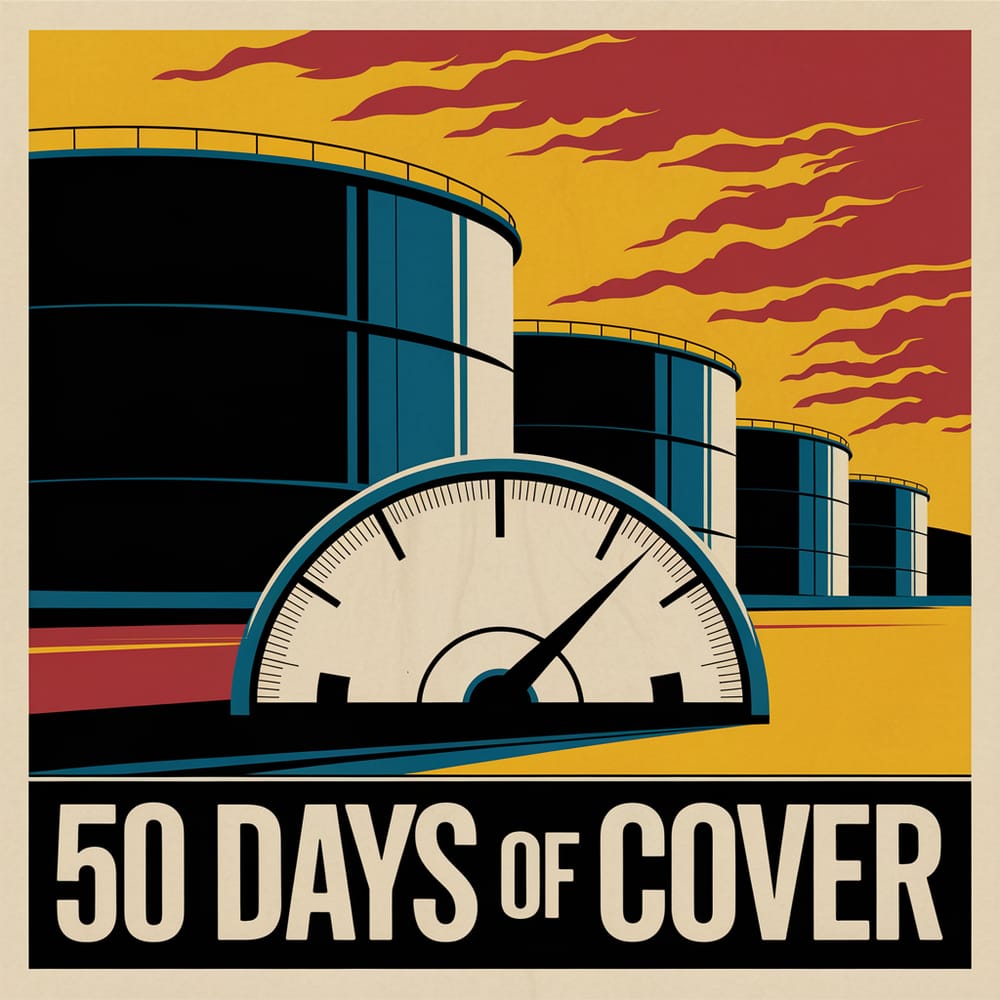
There's a number buried in the energy reports that almost nobody on Main Street is talking about, and it may matter more than the daily swing in crude prices. OECD commercial oil inventories have slipped to roughly 50 days of forward demand cover — near the low end of the past decade's range. In plain English, the world's safety cushion of stored oil is getting thin at exactly the wrong moment.
Why Inventory Days Matter
"Days of cover" measures how long stored oil would last if every barrel of new supply suddenly stopped. A fat cushion — say, 60-plus days — means the market can absorb a shock without panicking. A thin one means there's little margin for error. When inventories are low, every supply scare hits prices harder and faster, because there's no buffer to lean on.
That's the real story behind oil's recent whipsaw between the high $70s and $107. It isn't just headlines driving the chop — it's that a thin inventory base amplifies every headline. The same Strait of Hormuz threat that might have been a footnote in a well-supplied market becomes a price spike when the cushion is this slim.
How We Got Here
Years of disciplined OPEC+ production management, underinvestment in new supply, and steady global demand have quietly drained the surplus that built up earlier in the decade. Refiners have leaned on stocks rather than rebuilding them, and the Middle East tension premium has made traders reluctant to hold extra barrels at elevated prices. The result is a market running closer to "just in time" than it has in years.
What It Means for Your Money
A thin inventory cushion is a double-edged sword. On the bullish side for energy investors, it means oil prices have a firm floor and plenty of upside if any real supply disruption hits — good news for energy stocks, which have been one of just two sectors carrying this market. On the cautious side, it means more volatility for everyone: higher gas prices can resurface as an inflation risk, which feeds straight back into the Fed's hawkish stance.
For most investors, the takeaway isn't to trade crude futures. It's to understand that energy exposure right now carries both a tailwind and a turbulence warning. If you own energy names, recognize you're being paid for taking on real headline risk.
The Bottom Line
Fifty days of cover doesn't make headlines the way a $10 oil move does, but it's the quiet variable that makes those moves possible. As long as the cushion stays thin, expect oil — and the energy stocks tied to it — to keep trading with a hair trigger. Watch the inventory data, not just the price.
This article is for informational purposes only and is not investment advice. Always do your own research before making investment decisions.
© Copyright 2024. All Rights Reserved.
© Copyright 2024. All Rights Reserved.