

Fidelity Ethereum ETF Introduces Staking Payments
Friday, August 14, 2026
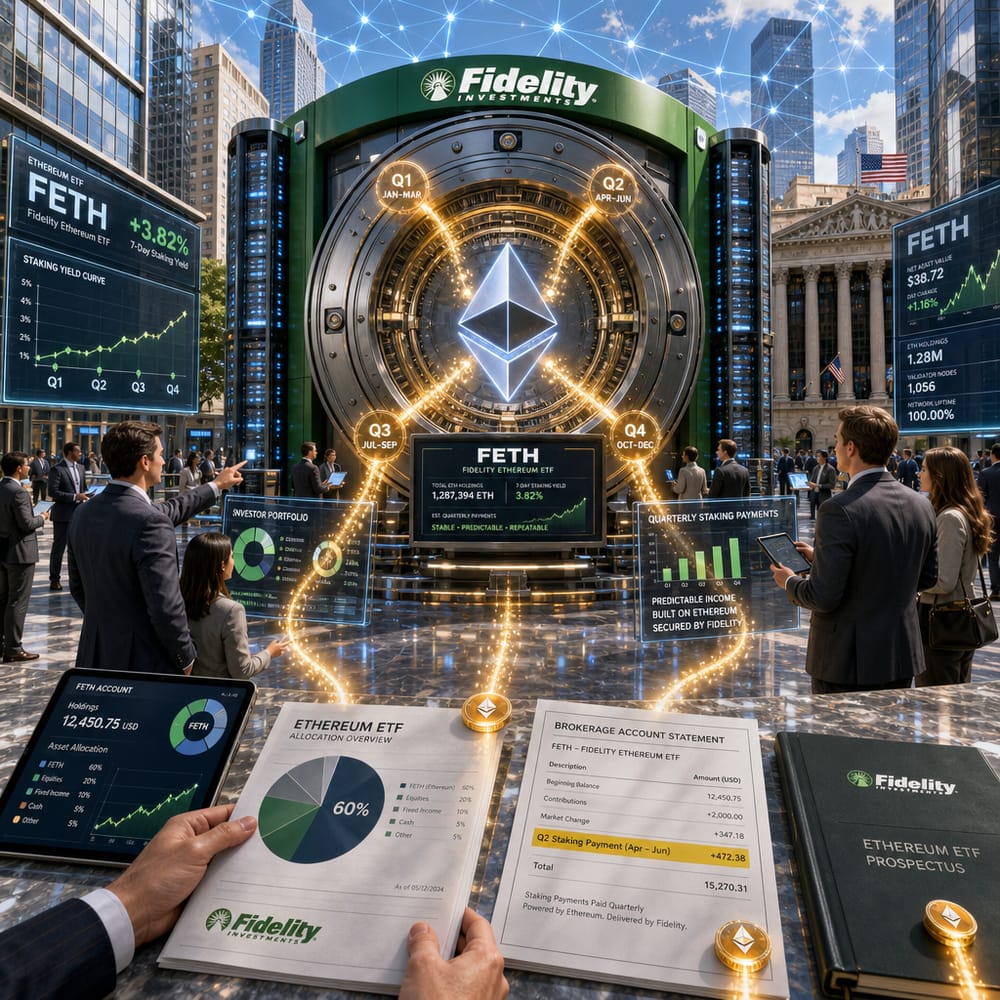
FIDELITY ETHEREUM ETF INTRODUCES STAKING PAYMENTS
Get ready to redefine "passive income" because Fidelity just rolled out a feature in its Ethereum ETF (symbol: FETH) that might have crypto enthusiasts doing backflips—or at least scrolling a little slower. You see, Fidelity's Ethereum ETF is now offering quarterly staking payments, which means this isn't your typical ETF. It's like giving your investment a chance to sip on a refreshing cocktail while lounging and earning some side cash.
So, what's the deal with staking, and why should you care? Imagine this: you're a landlord who collects rent without ever leaving your couch. That's essentially what staking is in the crypto world. By staking, investors lock up a portion of their Ethereum holdings to support the operations of the blockchain network. In return, they earn rewards—like collecting rent on digital real estate. Fidelity's twist is to channel these rewards directly to ETF investors like a quarterly dividend. Talk about making your money hustle!
Now, you might be wondering how this magic trick works within an ETF. Picture the ETF as a massive potluck where everyone brings their Ethereum to the table. Fidelity takes the pooled Ethereum, stakes it, and then distributes the staking rewards to the ETF's shareholders. No need to fiddle with crypto wallets or memorize private keys. Fidelity handles the nitty-gritty, so you don't have to worry about accidentally sending your digital assets into the void.
The potential benefits of this new feature could be music to investors' ears. First off, staking payments could add a new layer of appeal to owning the ETF, luring income-focused investors who might have been wary of the volatile crypto market. It's like adding a cherry on top of your Ethereum sundae. Plus, with these rewards, the ETF could potentially offer better yields than its non-staking counterparts, making it a tempting choice for those looking to squeeze a little more juice out of their investments.
However, let's not sweep the risks under the digital rug. Crypto's known for its roller-coaster-like volatility, and even Ethereum isn't immune to the occasional dive. While staking can be lucrative, it also introduces risks related to network security and Ethereum's market value fluctuations. Plus, the mechanics of staking within an ETF structure are still relatively fresh, and investors should tread cautiously, armed with due diligence and a healthy dose of skepticism.
The real kicker here? Fidelity's move could set off a trend among other crypto ETFs, sparking a staking revolution. Imagine a world where more asset managers jump on the staking bandwagon, offering similar income-generating features. Such a shift could attract more investors into the crypto ETF space, boosting liquidity and market participation. It's like a domino effect—one ETF leads the charge, potentially changing the game for everyone else.
Now, you might be thinking, "What about other types of crypto investments?" Fidelity's move opens up a world of possibilities. If staking within an ETF proves successful, it could pave the way for new crypto products and innovations, like ETFs that include Bitcoin or even diversified crypto portfolios. It's a budding space, ripe for exploration, and Fidelity is showing that there's more to crypto ETFs than just hopping on the price rollercoaster.
In a nutshell, Fidelity's Ethereum ETF with staking payments is like investing in a two-for-one deal. You're getting exposure to Ethereum's price movements and the added perk of potentially consistent income. Of course, every glittering opportunity comes with its set of risks, but for those willing to take the plunge, this could be the start of a rewarding journey in the ever-evolving crypto landscape.
So, whether you're a seasoned crypto enthusiast or a curious newcomer, keep an eye on how this plays out. The world of Ethereum, staking, and ETFs might just be getting more exciting—and rewarding—than ever before.
This article is for informational purposes only and is not investment advice. Always do your own research or consult a licensed financial professional before making investment decisions.
© Copyright 2024. All Rights Reserved.
© Copyright 2024. All Rights Reserved.