

Federal Reserve Weighs Holding Steady After Cooling Inflation Data
Thursday, August 13, 2026
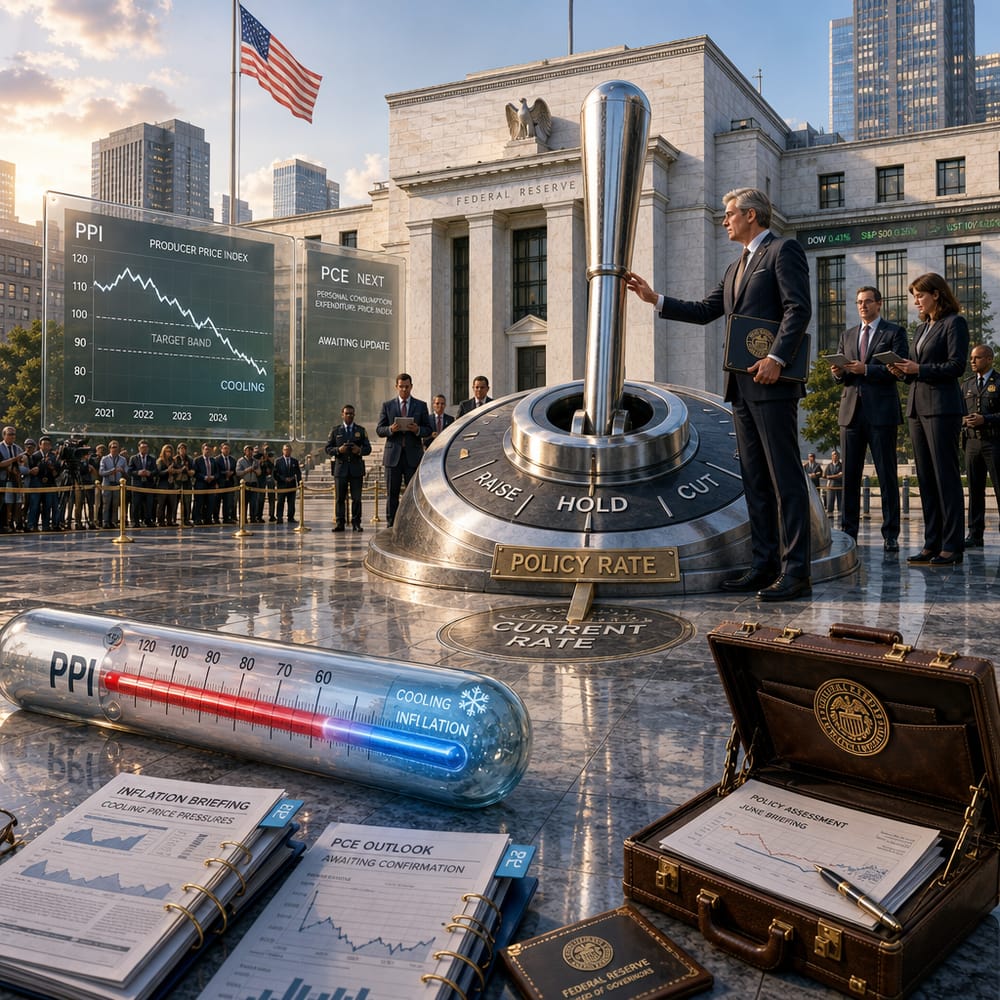
FEDERAL RESERVE WEIGHS HOLDING STEADY AFTER COOLING INFLATION DATA
Hold onto your hats, folks—it's not every day that you get a whiff of stability from the Federal Reserve. Thanks to some surprisingly downbeat inflation data, the U.S. central bank might just decide to keep interest rates as-is for a while longer, a move that could have a domino effect across the economy and financial markets.
The latest producer price index (PPI) stats dropped jaws on Wall Street by showing virtually no movement in wholesale prices for July. Yes, you read that right: nada, zilch, zero. Financial wizards were expecting a 0.2% rise, but it turns out wholesale goods decided to take a nap instead. This collective yawn from the industrial sector is being seen by Fed officials as a green light—or at least a yellow light—to pump the brakes on rate hikes.
So, what’s driving the Fed to consider slowing their roll? The recent data showing stagnating inflation has given the central bank some breathing room. After all, the inflation monster that roared to life earlier this year, fueled by the Iran war and President Trump’s tariff escapades, seems to be settling down for a nap. In economic terms, that's what the Fed calls "more leeway."
But what does this mean for the average Joe and Jane investor scrolling their phones right now? Well, if the Fed keeps the current interest rates steady, it could encourage more borrowing and spending. Picture the economy as a giant party, and the Fed as the DJ. A steady rate could mean there’s more room on the dance floor for everyone to enjoy, but it could also mean the punch bowl might not get refilled as quickly as some might hope.
Let’s get real for a sec. If the Fed maintains the current rate, it might just give the economy a much-needed shot in the arm. Increased borrowing could lead to more investments, more jobs, and ultimately more dollar bills in your pocket. On the flip side, this could also mean that inflation might sneak back in sooner or later, leading to higher prices at your local coffee shop or gas station.
But here’s the wild card: holding rates steady isn't without its risks. One, if inflation does rear its ugly head again, the Fed might have to slam the brakes harder later, which could bring the economy to a screeching halt. Two, if we’re too comfortable with steady rates, we might just lull ourselves into a false sense of security, only to be startled later when inflation decides to throw a surprise party.
Still, the markets have been optimistic. Stock futures rose and Treasury yields fell following the PPI report, as traders bet on the Fed opting for a steady path. But remember, this is the financial world; it’s as predictable as a cat on a sugar high.
So, what should you watch out for? Keep an eye peeled for the upcoming PCE data (that’s Personal Consumption Expenditures in econ-speak). If it follows the current trend of easing inflation, the Fed chair might just decide to keep that “hold” button pressed. And if that happens, expect a ripple effect across stocks, bonds, and your favorite commodities.
In the game of economic chess, the Fed’s potential decision to pause is like a knight staying put instead of making a daring leap. It’s a move that could keep the economy in check, but it's also a wait-and-see game that keeps everyone guessing.
Bottom line: the Federal Reserve seems to be savoring this rare moment of calm, but don't get too comfortable. In the thrilling, ever-twisting saga of U.S. economics, the next chapter could be anything but predictable. Stay tuned, keep your eyes on those data points, and maybe, just maybe, you’ll come out ahead in this economic whirlpool.
This article is for informational purposes only and is not investment advice. Always do your own research or consult a licensed financial professional before making investment decisions.
© Copyright 2024. All Rights Reserved.
© Copyright 2024. All Rights Reserved.