

Federal Reserve Signals: Further Interest-Rate Hikes “Over Time,” Likely December Move
Tuesday, November 24, 2026
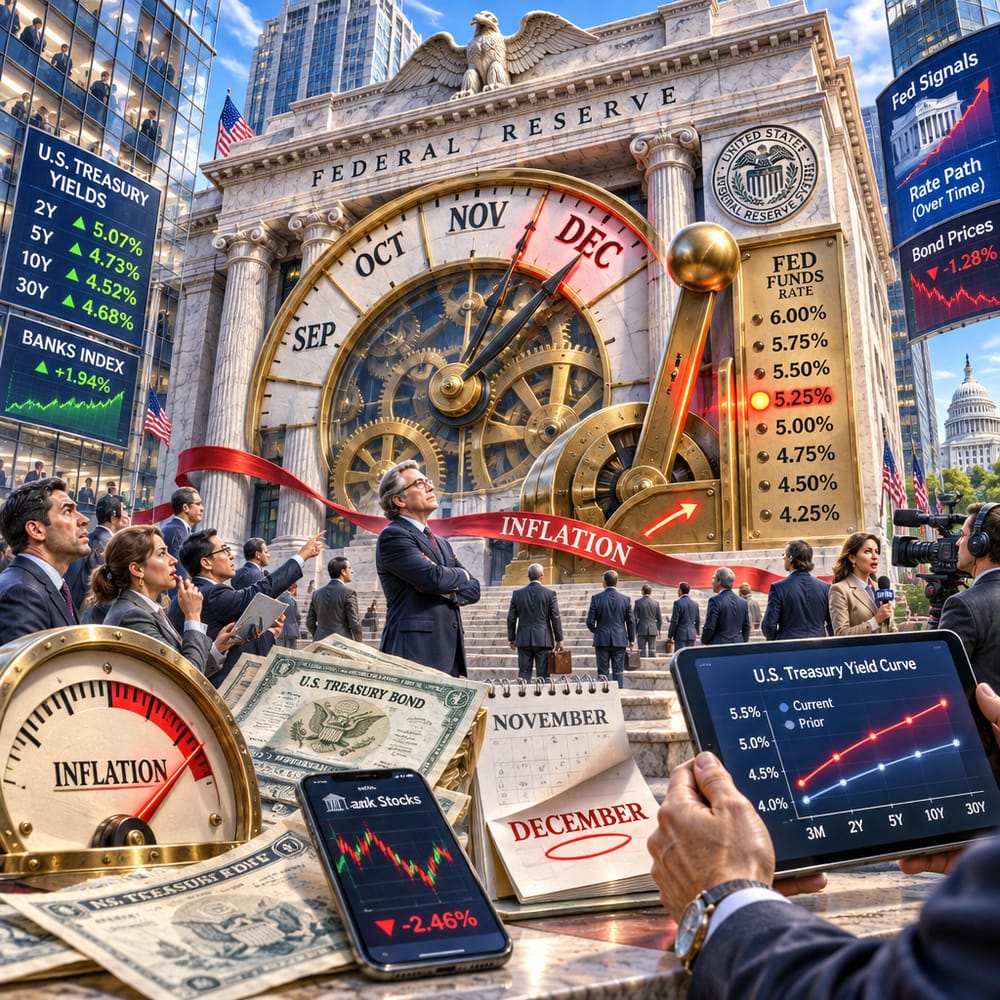
FEDERAL RESERVE SIGNALS: FURTHER INTEREST-RATE HIKES “OVER TIME,” LIKELY DECEMBER MOVE
If you thought you could finally exhale after the latest interest rate saga, hold that thought a little longer. The Federal Reserve, in its infinite wisdom, has signaled more rate hikes on the horizon. But before you start bracing yourself for a financial rollercoaster, the Fed's approach is a slow walk, not a sprint.
New York Fed President John Williams, the man with the monetary plan, recently hinted that the Fed has more work to do to tame the inflation beast. But don't panic just yet—Williams suggests this will happen "over time." So, while the Fed isn't exactly slamming on the brakes, it’s definitely tapping them cautiously, hoping to avoid an economic pile-up.
WHY IT MATTERS
Now, why should you care about the Fed’s careful choreography? Well, understanding the Fed's movements is like having a map to navigate the ever-turbulent waters of the market. When the Fed talks, the markets listen—and react. For anyone with a stake in stocks, bonds, or even a savings account, these signals are your financial weather forecast. Knowing whether to pack an umbrella or sunglasses can make all the difference in your portfolio preparedness.
MARKET VOLATILITY: WILL IT CALM OR EXPLODE?
With every word out of the Fed, market volatility hangs in the balance. Does the Fed's cautious tone mean smooth sailing ahead, or are we due for stormy seas? Historically, even a whisper of a rate hike can send shockwaves through the markets, leaving investors biting their nails. But a slow, methodical approach could help soothe the markets.
For the stock market, particularly, this might mean a bit of a seesaw effect. Picture a cautious bull tiptoeing around Wall Street. Investors could initially pull back, fearful of the unknown, but might then regain confidence if the Fed’s strategy appears to be working. And in the world of bonds, higher interest rates typically mean higher yields on U.S. Treasury bonds. That's music to the ears of investors looking for safer havens as they potentially move away from riskier assets.
IMPACT ON STOCKS, BONDS, AND YOUR WALLET
So, what sectors should you be watching with hawk-like intensity? The financial sector is always a front-runner when rates are on the rise. Banks, which make money on the gap between the interest they pay for deposits and the interest they earn on loans, tend to benefit from upticks in interest rates. So, financial sector stocks could see some action.
Meanwhile, the bond markets might just become the belle of the ball for income-focused investors. As bond yields rise, their attractiveness increases, especially for those hesitant to brave the choppy waters of the stock market. So, if you're more of a steady-as-she-goes investor, U.S. Treasury bonds might be calling your name.
And let’s not forget about the impact on your personal finances. Higher rates could mean higher borrowing costs. So if you're thinking of buying a home, refinancing, or even splurging on that new car, the cost of borrowing could nibble away at your wallet like a voracious mouse on a block of cheese.
NAVIGATING THE "GRADUAL" RATE HIKE SEASON
Now, let's address the million-dollar question: What should you do with all this information? Well, first, don't make any knee-jerk decisions. Remember, the Fed’s rate hike plan is gradual, not a sudden leap into chaos. It's crucial to keep your portfolio diversified. That means spreading the risk and rewards across different asset classes, so you’re not putting all your financial eggs into one basket.
Secondly, keep an eye on the Fed's next moves like a hawk. After all, markets move on anticipation as much as action. Use the Fed's signals as your guide, but don’t let them be your only guide—consider other economic indicators and global events that could sway markets.
Lastly, consult with your financial advisor. If you're not sure how to adjust your investments in light of potential rate hikes, a professional can help you chart a course through the interest rate jungle without getting lost.
In the grand dance of economics, the Fed might be leading, but it's up to you to follow with grace. So keep your ear to the ground, your portfolio diversified, and your wits about you. Remember, investing is as much about strategy as it is about staying informed, and when it comes to your money, there’s no such thing as too much information.
This article is for informational purposes only and is not investment advice. Always do your own research or consult a licensed financial professional before making investment decisions.
© Copyright 2024. All Rights Reserved.
© Copyright 2024. All Rights Reserved.