

Federal Reserve Signals Another Rate Hike Before Year-End
Sunday, September 27, 2026
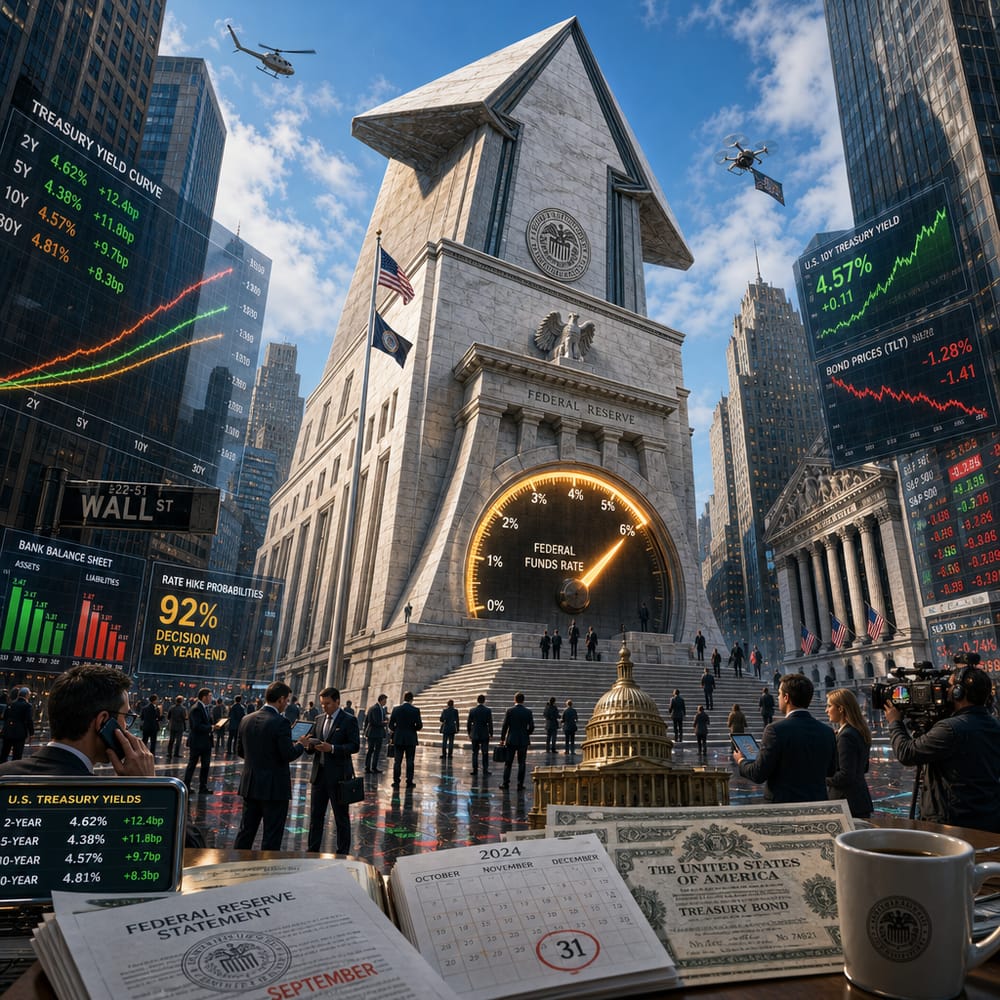
FEDERAL RESERVE SIGNALS ANOTHER RATE HIKE BEFORE YEAR-END
If you thought the Federal Reserve was done playing the rate hike game this year, think again. Like an encore you weren’t expecting at a concert, the Fed has hinted it may treat us all to another bump in interest rates before we can pop the champagne on New Year’s Eve.
In September, the Fed unanimously decided to raise its benchmark rate, the federal funds rate—the big cheese that influences borrowing costs across the entire U.S. economy. Now, they're signaling they might crank it up once more before the year’s end. So, why the friskiness with rates, and what does it mean for us regular folks?
THE FED’S FIGHT AGAINST THE I-WORD
Let’s talk about inflation. Yes, the dreaded I-word. Like that one stubborn stain on your favorite shirt that just won’t budge, inflation has been hanging around longer than anyone would like. The Fed’s primary weapon against this pesky price surge is the good ol’ interest rate hike. By making borrowing more expensive, they aim to cool down spending, which in turn can help keep prices in check. But, could this be messing with the economy's thermostat a bit too much?
CONSUMER BORROWING COSTS: BRACE YOURSELVES
If you’re thinking about buying a new car, or maybe refinancing your mortgage, you might want to sit down for this. A rate hike means you could be dishing out more for car loans, mortgages, and any other credit products. It’s like booking a flight last minute—you're going to pay a premium. While it's an attempt to slow down inflation, it also means more out of pocket for consumers on everyday purchases.
This potential hike could also be a wet blanket for those eyeing their credit card bills. Rising rates mean higher interest on outstanding balances—consider this your reminder to finally pay those off!
THE RIPPLE EFFECT ON MARKETS
You can bet your bottom dollar that the stock and bond markets are keeping a close eye on the Fed’s next move. Higher interest rates can send bond yields soaring, as we've seen recently with the 10-year Treasury yield peaking at levels not seen since 2007. Higher yields mean lower bond prices, turning fixed-income assets into a bit of a heart-stopping rollercoaster ride.
For the stock market, it’s a mixed bag. Companies facing higher borrowing costs may see their profit margins pinched, leading to cautious investors and nervous stock prices. Some sectors, like utilities and real estate, which often rely on high levels of debt, might feel the heat a bit more. On the flip side, banks and financial institutions usually celebrate higher rates with a little happy dance, as they can charge more for loans.
HAWKISH TURN OR A NECESSARY TWEAK?
The Fed’s signals of another potential rate hike are quite the plot twist from what investors were expecting. Earlier this year, the buzz was more about pausing or potentially cutting rates. But like a cat with nine lives, the Fed’s hawkish stance has made a comeback, reflecting persistent inflationary pressures.
This move is also a test of the Fed’s credibility. They’re walking a tightrope—one wrong step, and they risk either stoking inflation further or dampening economic growth. Either way, it’s a high-stakes bet.
KEEPING AN EYE ON THE CRYSTAL BALL
As the year-end approaches, all eyes will be on the Fed's crystal ball—and their next moves. It’s a delicate balance they’re trying to strike, and only time will tell if this rate hike encore will be the finale that brings the house down, or the one that sends everyone scrambling for the exits. Until then, buckle up, stay informed, and perhaps hold off on any big-ticket borrowing.
Stay sharp, savvy readers, because this is one economic soap opera you’ll want to follow closely.
This article is for informational purposes only and is not investment advice. Always do your own research or consult a licensed financial professional before making investment decisions.
© Copyright 2024. All Rights Reserved.
© Copyright 2024. All Rights Reserved.