

Federal Reserve's Steady Stance Amid Dissent
Saturday, August 15, 2026
THE FEDERAL RESERVE'S STEADY STANCE AMID DISSENT: WHAT IT MEANS FOR YOUR PORTFOLIO
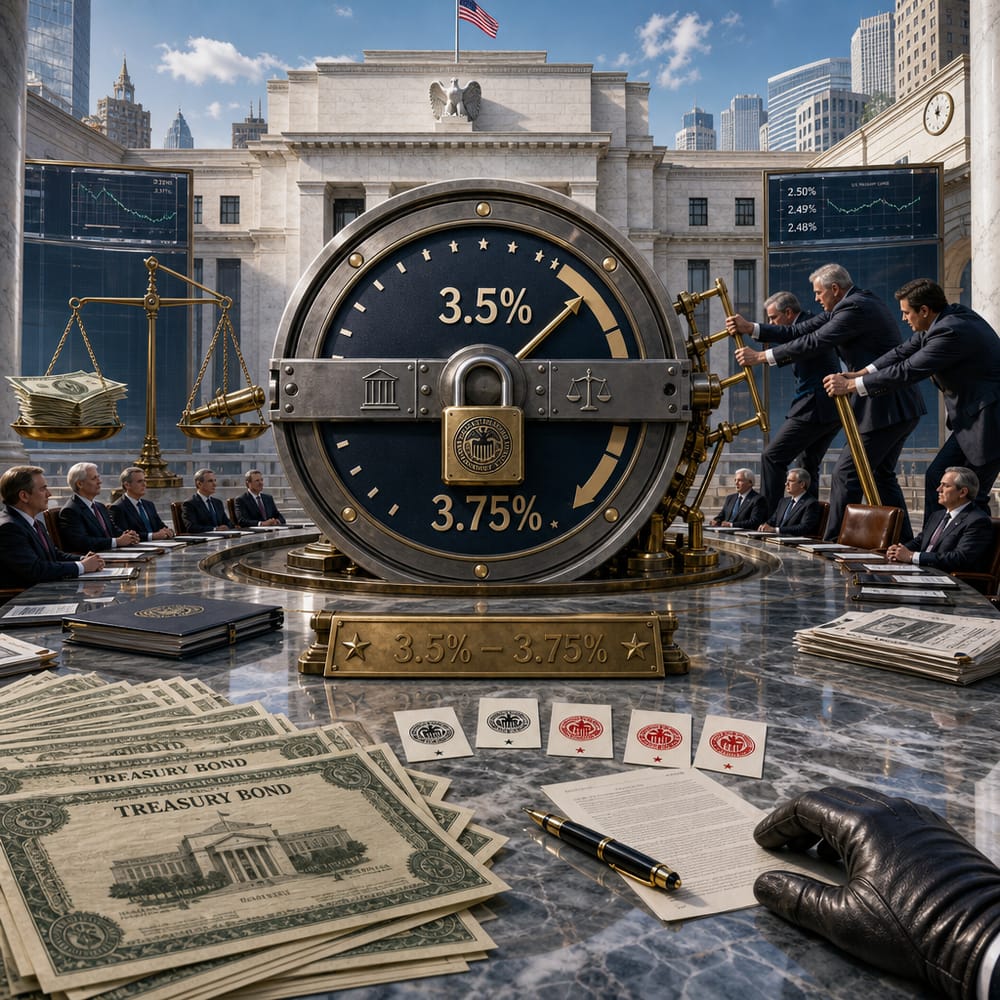
Imagine a high-stakes poker game where three players are ready to raise the stakes, but the dealer insists on playing it cool. Welcome to the Federal Reserve's latest meeting, where the central bank decided to keep interest rates steady at 3.5%–3.75%, despite three officials itching for a hike.
If you’re thinking, "Why should I care?"—well, this isn’t just some wonky Wall Street board game. It’s a drama with real consequences, starring your savings account, your mortgage, and your investments.
THE FED GETS A LITTLE SPICY
First, let’s set the scene. The Federal Reserve, America’s chief financial watchdog, has the power to raise or lower interest rates to keep inflation in check and the economy humming. Think of it as the thermostat for our financial climate. Right now, it’s sticking to a lukewarm setting—a move not everyone agrees with.
Three of the Fed’s officials played the part of dissenters at the latest meeting, arguing for rate hikes. Their reason? They’re like the folks who add hot sauce to their food even when everyone else is sweating. These officials are wary that if rates remain too low for too long, inflation—currently the inflation monster lurking under the economy’s bed—might jump out and bite.
But the rest of the Fed, led by Chair Jerome Powell, seems more like the cautious types, preferring to watch and wait. Their argument? Let’s not fix what ain’t (yet) broken. Inflation has been easing up, and they’d like to ensure the economy isn’t stifled by higher borrowing costs.
WHAT DOES THIS ALL MEAN?
Here’s the lowdown: dissent within the Fed introduces uncertainty. And if there’s one thing markets hate, it’s not knowing what’s coming next.
When the Fed’s decision-makers aren’t on the same page, it’s like watching a band play slightly off-key: it’s noticeable, and it can make investors jittery. Markets love forward guidance, which is industry speak for knowing what to expect next. But with mixed messages, it’s harder for your average Joe or Jill on Wall Street to predict where things are headed.
If more officials join the dissenters and push for rate hikes, we could see this reflected sooner rather than later. Higher rates mean higher costs for loans and mortgages. Not great news if you’re planning to buy a house or finance a new business venture anytime soon.
AND THE PLOT THICKENS
The Fed’s decision is more than just an internal squabble. It’s a signal watched by investors worldwide. Treasury bonds, which are as close to a “safe” investment as you can get, tend to move in tandem with interest rates. If the Fed hints at future hikes, bond prices could drop, making them less appealing.
Plus, it’s a mixed bag for the stock market. On one hand, lower rates can keep the stock party going because companies have access to cheaper capital. But if inflation becomes the talk of the town again due to lower rates, it could be the hangover nobody ordered.
YOUR ACTION PLAN
So, what’s a savvy investor like you supposed to do with all this drama? Here’s the scoop:
1. Stay Informed: Keep an ear to the ground for any shift in the Fed’s tone. If more officials start swaying toward rate hikes, it could signal a change of heart is brewing.
2. Reassess Your Bonds: If you’re heavy on bonds, consider how future rate hikes may erode their value. Diversification is your friend here.
3. Watch the Inflation Data: Inflation indicators like the Consumer Price Index (CPI) are your best friend right now. Rising inflation may push the Fed toward more aggressive rate hikes.
4. Don’t Panic: Investing is about playing the long game. Remember, markets have seen their fair share of Fed drama before and lived to tell the tale.
In the grand theater of economic policy, the Fed’s current act is one of cautious contemplation amid a chorus of dissent. It’s a balancing act that demands attention from anyone with skin in the financial game. So grab your popcorn, and stay tuned—this show’s not over yet.
This article is for informational purposes only and is not investment advice. Always do your own research or consult a licensed financial professional before making investment decisions.
© Copyright 2024. All Rights Reserved.
© Copyright 2024. All Rights Reserved.