

Federal Reserve's Recent Speeches: Policy Direction Insights
Friday, September 25, 2026
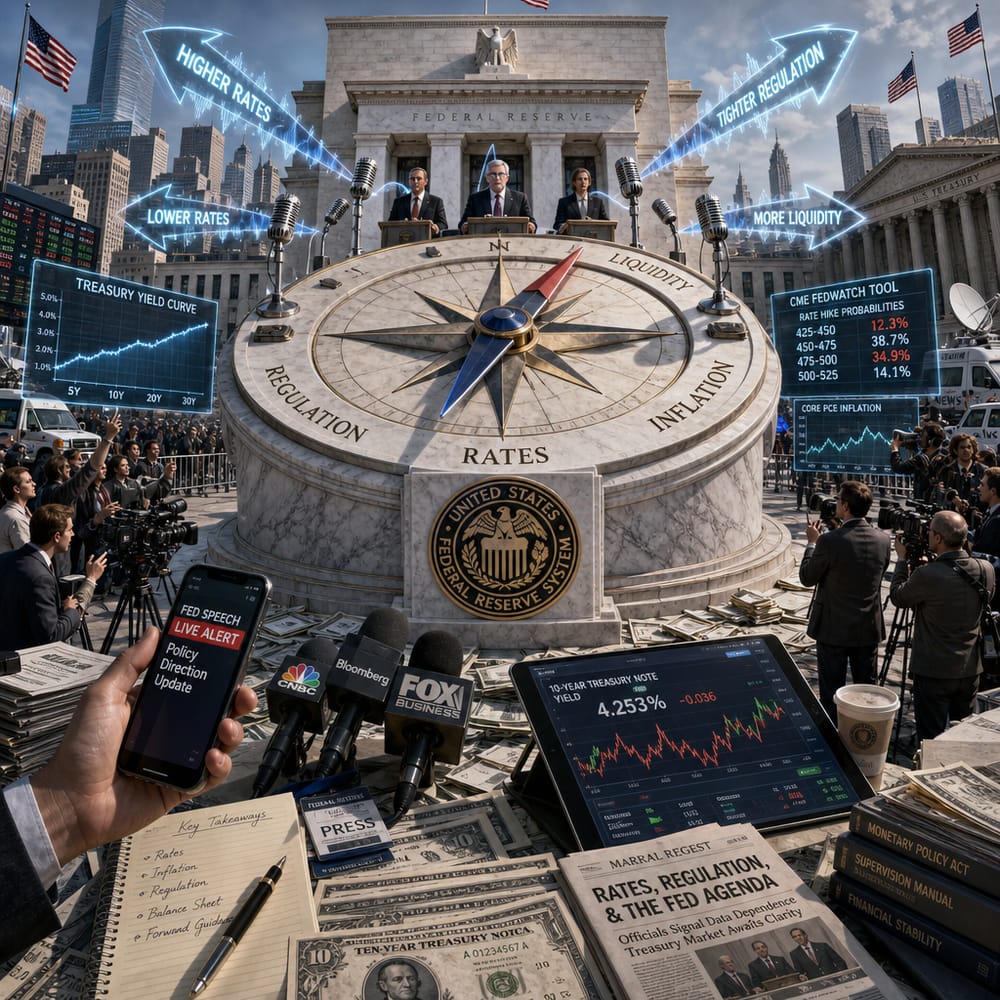
THE FED SPEAKS: WHAT TO MAKE OF THEIR LATEST SIGNALS
When the Federal Reserve speaks, the markets listen—or at least, they try to. If only the Fed's language wasn't as baffling as an SAT question, we'd all be financial geniuses by now. Recently, the Fed has been cranking up its public engagement with a series of speeches that have left investors furiously decoding what might come next. So, what's the takeaway from this flurry of verbal activity, and how should you, dear retail investor, adjust your sails?
THE WORDS BEHIND THE ACTIONS
The latest chatter from the Fed's top brass has been anything but faint whispers. They're practically shouting their concerns—primarily about inflation and the ongoing labor market tightness. Federal Reserve Governor Michael Barr, in particular, has been making waves with his hawkish tone, suggesting the Fed is nowhere near done with its rate hikes. In simple terms, a hawk is someone who believes in keeping interest rates high to curb inflation, even if it means slowing down economic growth. So, brace yourself for a rocky ride, as the Fed seems pretty determined to keep inflation in check, come what may.
WHAT DOES THIS MEAN FOR FUTURE POLICY?
Thanks to Barr's candid speeches and the Fed's other public engagements, it's clear the central bank is putting all its chips on the table to combat inflation. Futures trading indicates a rising expectation that the Fed might press the hike button again—possibly as soon as October. In the game of monetary policy, this is like the central bank saying, "We're all in." But does this mean more hikes are coming down the pipeline like a never-ending assembly line? The answer, as always, is a solid maybe. With the Fed, it's wise to expect the unexpected.
REGULATORY RUMBLES ON THE HORIZON
The Fed's recent focus hasn't just been on interest rates and inflation—they're also casting an eye towards regulatory shifts. If you've been eyeing the U.S. Treasury market, you might want to take note. The Fed's increased concern with financial stability suggests that regulatory changes could be in the cards. These might include tighter regulations on large financial institutions or shifts in the oversight of treasury markets to prevent future instability. Nobody wants a repeat of the 2008 financial crisis, after all.
WHAT'S THE INVESTOR TO DO?
If you're feeling jittery about your investments, you're not alone. With bond yields soaring to levels unseen since 2007 and the frenzy of activity from the Fed, the financial landscape is as turbulent as it is unpredictable. For those heavily invested in bonds, it's crucial to keep a weather eye on these yields. Rising yields can lead to falling bond prices, which might make fixed-income investments less attractive in the short term.
For stock market enthusiasts, particularly those with an eye on the U.S. Treasury market, the message is to stay vigilant. High bond yields often signal a riskier environment for stocks, especially for those companies reliant on cheap borrowing. But it also means greater returns for those willing to play the long game.
THE BOTTOM LINE
The Fed's recent speeches are a clear message: they're serious about keeping inflation in check, even if it means turning the screws tighter on interest rates. The market won't be immune to these moves, so the best course of action is to stay informed and be ready to pivot as the situation develops.
In an era where every Fed word carries significant weight, understanding their speeches could be the key to outsmarting the market—or at least keeping your investments afloat. So, keep your tea leaves handy, stay tuned, and remember: in the world of finance, fortune often favors the well-briefed.
This article is for informational purposes only and is not investment advice. Always do your own research or consult a licensed financial professional before making investment decisions.
© Copyright 2024. All Rights Reserved.
© Copyright 2024. All Rights Reserved.