

Federal Reserve's Inflation Concerns Prompt Calls for More Rate Hikes
Monday, November 23, 2026
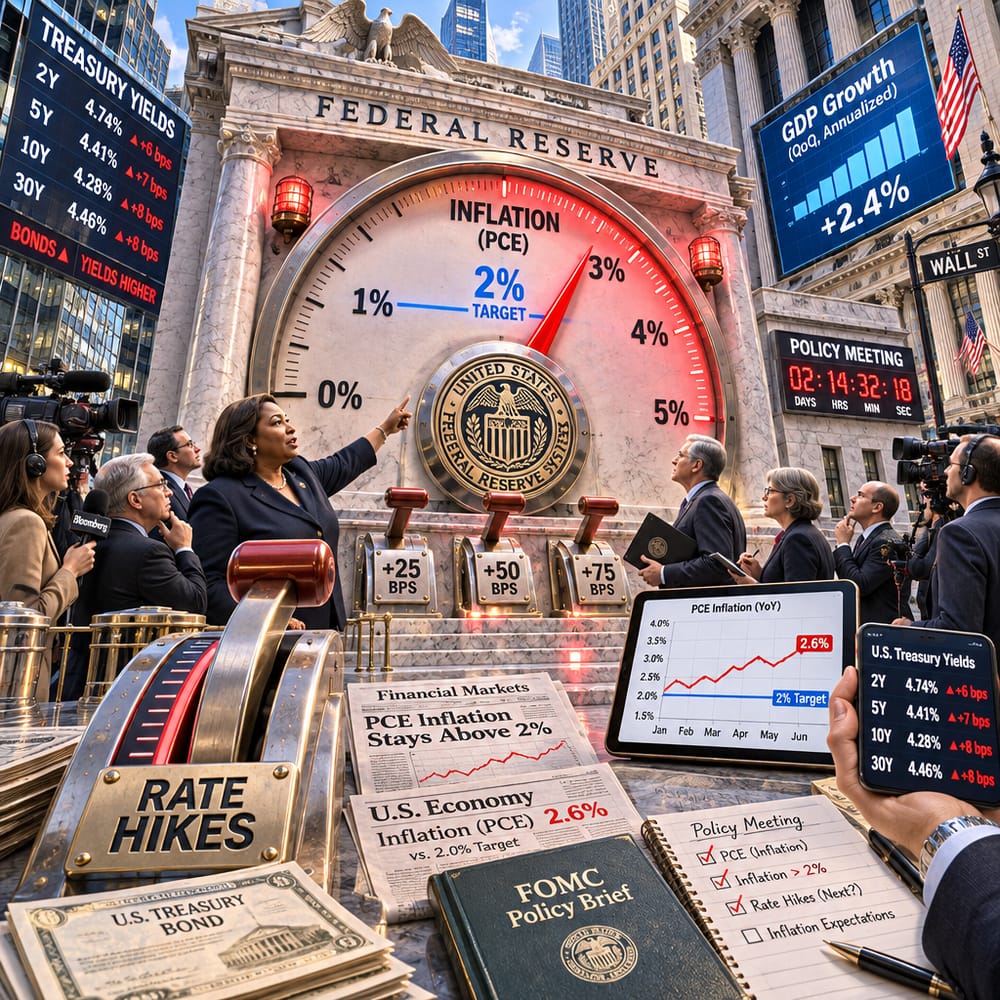
FEDERAL RESERVE'S INFLATION JUGGLING ACT: WILL MORE RATE HIKES MEAN ECONOMIC WHIPLASH?
If there’s one thing the Federal Reserve loves more than a piping hot cup of espresso, it’s the sweet symphony of inflation hitting that golden 2% mark. But right now, the Fed is hearing some pretty sour notes. With inflation still dancing above their target, folks at the top are eyeing the rate hike button like a kid looking at a cookie jar. You know it’s just a matter of time before they go for it.
Fed Governor Michelle Cook recently sounded the alarm, stressing that we’re not out of the inflation woods yet. It’s like we’re on a seemingly never-ending hike up Mount Inflation, and the Fed is ready to grab its hiking boots once more. But what does this mean for everyday folks like you and me who just want to know if we can still afford avocado toast in 2027?
RATE HIKES: A DOUBLE-EDGED SWORD
First, let’s break down what a rate hike actually does. The Fed controls the federal funds rate, which influences borrowing costs for banks. When they hike rates, borrowing becomes pricier for everyone from big corporations to your Aunt Susan eyeing a new car. Higher rates mean higher interest on your loans, and suddenly, that house with the white picket fence feels more like a distant dream.
But, in theory, higher rates cool down spending, which cools down inflation. It’s like putting the brakes on an overheated economy. Yet, if you pump those brakes too hard, you risk skidding the economy into a recession. So, it’s a tightrope walk, and the Fed is trying to stay balanced.
THE RIPPLE EFFECT ON YOUR WALLET
Further rate hikes could mean your credit card debt might feel a bit heavier. With average credit card interest rates already north of 20%, a hike could see these creeping even higher. And let’s not forget mortgages. If you’re thinking of buying a home, you might be in for a surprise when you see those monthly payments. Every extra point in interest translates into a heftier bill, often pushing potential buyers to reconsider or scale down their dreams.
Now, imagine businesses feeling the squeeze too. Higher rates mean more expensive loans for expanding operations or investing in new tech. Some might hold off, which could chill out hiring and affect wage growth. For consumers, persistent inflation means money doesn’t stretch as far, leading them to tighten belts and spend less on dining out or that new gadget they’ve been eyeing.
THE TRICKLE-DOWN TO MARKET SHAKES
What about the stock market? Rate hikes don’t just stop at your wallet; they send ripples across financial markets. High-growth sectors like tech, which have been riding high on borrowed funds, might feel the pinch. Companies that spend big on innovation and expansion could see their stocks wobble as investors reassess the risks.
Consider this: When Nvidia’s stock danced up by 31% recently, it wasn’t just about their CEO’s return; it was a testament to investor optimism. But factor in anticipated rate hikes, and you might see the enthusiasm taper. Investors could start looking at safer bets; think bonds, which become more attractive as their yields rise. This shift could steer money away from stocks, triggering volatility.
THE BIGGER PICTURE
Yet, here’s the kicker: the Fed’s dilemma goes beyond just inflation. The U.S. has been juggling slowing GDP growth, global economic jitters, and geopolitical uncertainties. It’s like playing a financial version of whack-a-mole where each problem pops up just as you think you’ve nailed another.
Persistent inflation pressures the Fed into a corner, pushing it towards more aggressive measures. But, with each hike, they must ask: Are we solving the inflation problem or setting ourselves up for a different beast — slowing economic growth?
WHAT’S NEXT?
The coming months will be crucial as the Federal Reserve decides whether to go for another hike or hold its fire. For investors and consumers alike, it’s a time for vigilance. Keep an eye on inflation trends, Fed meetings, and economic indicators like unemployment rates and consumer spending. It’s all part of understanding whether we’re heading for stability, or if we’ll be bracing for a bit of financial turbulence.
So, as we sip our overpriced lattes contemplating the Fed’s next move, remember: in the world of finance, nothing is ever set in stone. Stay informed, stay nimble, and maybe, just maybe, you’ll find yourself ahead of the curve on this economic rollercoaster.
This article is for informational purposes only and is not investment advice. Always do your own research or consult a licensed financial professional before making investment decisions.
© Copyright 2024. All Rights Reserved.
© Copyright 2024. All Rights Reserved.