

Federal Reserve's Anticipated Rate Hike
Friday, October 09, 2026
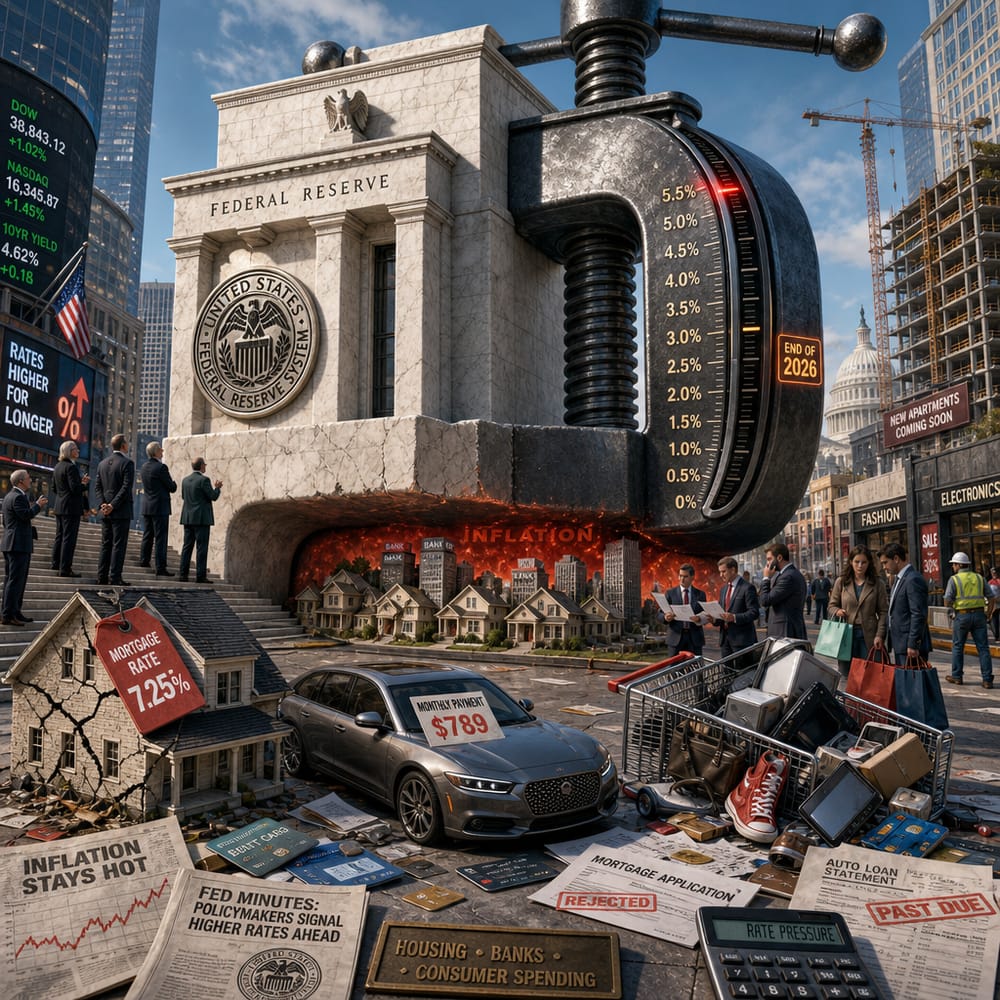
THE FED'S RATE HIKES ARE BACK: WHAT COULD IT MEAN FOR YOU?
Hold onto your hats, folks, because the Federal Reserve's rate hike regimen isn't over. Like an uninvited guest at a party, they're planning to hang around until the end of 2026. The Fed’s recent meeting minutes revealed a clear plan to raise interest rates, aiming to get inflation back in line. Now, I know what you're thinking: “But why should I care?” Well, let's dive into how this could be the plot twist that shakes up your financial world.
PREPPING FOR IMPACT
First up, let's tackle how the markets are gearing up for this potential rate hike. Think of it as a heavyweight boxing match—some sectors are already bobbing and weaving, while others are nervously watching from the sidelines. Interest-rate-sensitive sectors like housing and banks are particularly on edge. As investors start to price in higher rates, the stock market could see its usual rollercoaster of volatility. In times like these, it's all about staying alert and agile.
HOUSE SHOPPING? THINK AGAIN
If you’re in the market for a new home, you might want to think twice—or at least prepare for sticker shock. Mortgage rates, which have been playing nice for a while, might soon become the party pooper. As the Fed raises rates, borrowing costs will shoot up. This means pricier monthly payments and potentially putting your dreams of that white-picket-fence abode on hold. Yikes!
But the hurt isn’t just for new buyers. Existing homeowners eyeing a refinance might find the once-inviting rates now resemble a distant mirage. It's a domino effect that hits wallets hard and sends ripples through the economy.
BORROWER BEWARE
And it's not just about mortgages. Personal loans, credit cards, auto loans—if it involves borrowing money, it's likely to feel the pinch. Higher interest rates mean higher costs for carrying debt. For consumers already battling inflation, this isn’t great news. So, if you've been thinking about consolidating debt or making big purchases on credit, you may want to act sooner rather than later.
SPENDING SPREE ON PAUSE?
American consumers—our reliable economic engine—might also hit the brakes. If borrowing gets costlier and debt becomes a heavier burden, consumer spending could take a hit. This isn't just about what you and I buy; it’s about the big picture. When we tighten our belts, businesses feel it too, potentially slowing down economic growth. It’s like a nationwide game of financial dominos.
BANKS GET A BOOST
On the flip side, there are sectors likely to benefit from a rate hike. Banks, with their vaults full of loans, are rubbing their hands with glee. Higher interest rates mean banks can charge more for loans than they pay out in deposit interest, padding their profit margins. So, if you’re holding bank stocks, you might just have something to smile about.
CONSUMER DISCRETIONARY: A MIXED BAG
For consumer discretionary sectors, the outcome is murkier. When borrowing costs rise, and consumer spending tightens, these non-essential businesses might face a chill. But it's not all doom and gloom—a stronger economic backdrop from controlling inflation could provide some balance. It’s a bit of an economic seesaw, and time will tell which way it tips.
WHAT NOW?
So, what’s the move for retail investors like you and me? The key is staying informed and flexible. Diversification is your best friend right now—spread your investments across sectors, think long-term, and keep an eye on companies with strong balance sheets that can weather economic shifts. And remember, volatility isn’t always a villain; it can also bring opportunities.
The Fed’s interest rate hikes are a bit like the weather: we can’t control them, but we can certainly prepare for them. Buckle up, keep your financial strategies nimble, and let’s see where this economic ride takes us.
This article is for informational purposes only and is not investment advice. Always do your own research or consult a licensed financial professional before making investment decisions.
© Copyright 2024. All Rights Reserved.
© Copyright 2024. All Rights Reserved.