

Federal Reserve Officials Split—Rate Set to Stay, But Divided Votes Signal Hawkish Lean
Tuesday, August 18, 2026
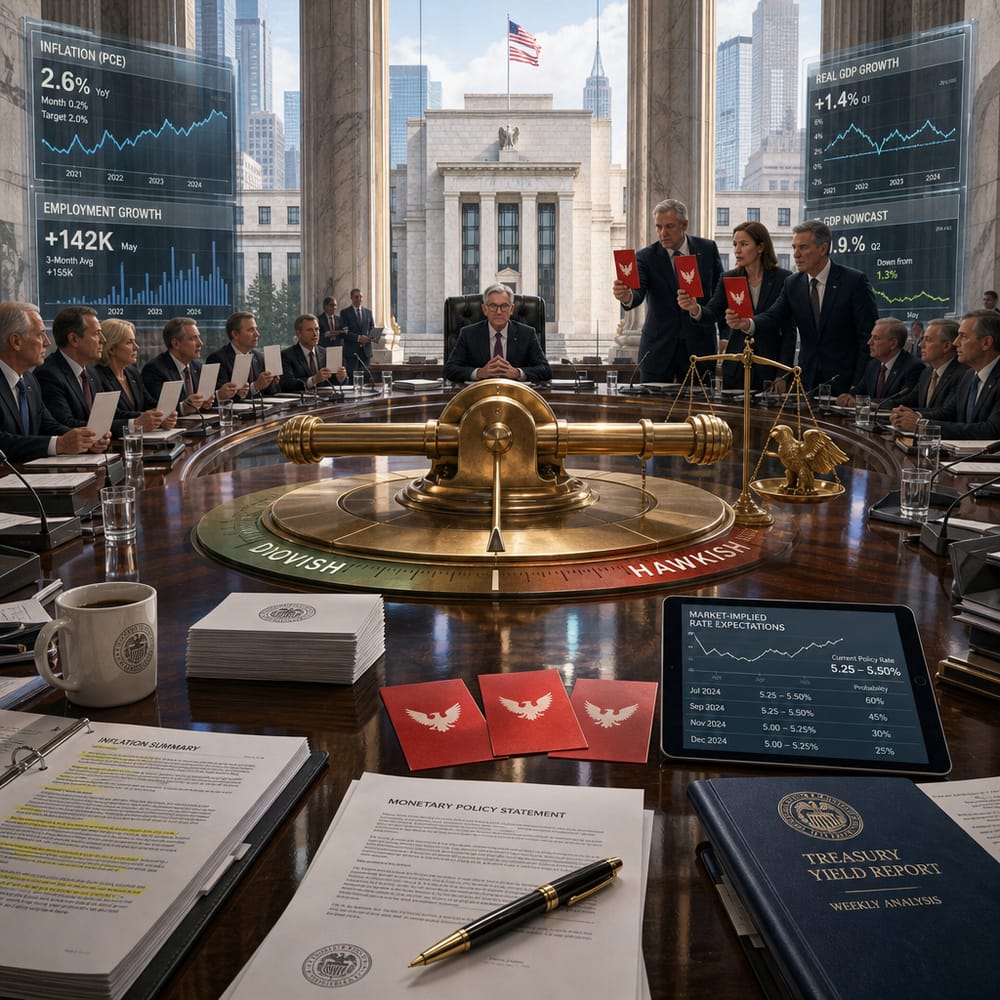
FEDERAL RESERVE OFFICIALS SPLIT—RATE SET TO STAY, BUT DIVIDED VOTES SIGNAL HAWKISH LEAN
In the high-stakes poker game of U.S. monetary policy, the Federal Reserve just flashed a hand that’s got everyone guessing. The central bank decided to keep interest rates steady, but here’s the kicker: three officials dissented, pushing for a rate hike. That’s not just an office spat—it’s a potential sign of stormy seas ahead for the economy.
It’s unusual for Fed decisions to be this contentious. Usually, they project the kind of unity that would make a boy band jealous. So when three officials break ranks, it’s like seeing Tony Stark and Captain America squaring off: sparks are flying, and you know something big is brewing. But what does this high drama in the halls of the Federal Reserve mean for us mere mortals with mortgages, savings accounts, and stock portfolios? Let’s dive into the tea leaves left by the Fed’s split decision.
WHAT’S BEHIND THE FED’S INTERNAL DISSENT?
When the Fed’s voting members can’t agree on the direction of interest rates, it’s a clue that some of them are seeing signs that inflation might rear its ugly head again. A decision to keep rates unchanged, despite these hawkish murmurs, means that while the majority still sees inflation as contained, a vocal minority is worried we might be sleeping on a ticking inflationary time bomb.
Historically, when there’s dissent within the Fed, it often precedes a shift in policy. Think of it as the Fed’s version of a canary in a coal mine. Back in the mid-1990s, for example, similar disagreements foreshadowed rate hikes. Could we be on the cusp of a sequel to that economic drama? If inflation pressures mount, those dissenting voices may soon carry the day. A rate hike could then become more than just a hypothetical—it could be a harsh reality.
HOW COULD THIS AFFECT ECONOMIC GROWTH AND MARKET DYNAMICS?
Brace yourselves: if the hawkish faction within the Fed gains more influence, borrowing costs could rise sooner than you think. Higher rates generally mean it costs more to borrow money. For businesses, that could mean tighter budgets and slower hiring sprees. For consumers, it might translate to steeper mortgage rates and pricier car loans. The spigot of cheap money might no longer gush like a waterfall—it could be dialed back to a careful trickle.
In the stock market, the ripple effects could be just as dramatic. Typically, when interest rates rise, stocks take a hit because investors can earn more from less risky assets like bonds. The era of easy money has fueled unprecedented highs in the stock market. But if rates go up, expect some market players to hit the brakes—and perhaps even run for cover.
WHAT ARE THE HISTORICAL PRECEDENTS FOR SUCH DISSENT?
The Fed’s not exactly known for its drama, but when it happens, it’s a narrative worth noting. In 1994, the Fed faced a similar disagreement that led to rate hikes, catching many by surprise and sending shockwaves through the markets. Fast forward to 2026, and we’re seeing echoes of that era. The key takeaway? When Fed members disagree, it’s often a precursor to policy changes that can reshape the economic landscape.
Moreover, internal dissent can signal growing fears about the economy’s future performance. For example, if some officials believe inflation is heating up, they may push for preemptive rate hikes to cool things down. If the majority eventually agrees, we could see interest rates rise—potentially putting the brakes on economic growth.
WHAT SHOULD INVESTORS DO NOW?
So, what’s an investor to do in the face of such murky waters? Firstly, consider diversification. Spreading investments across different asset classes can help mitigate the risk of rising rates. Look at high-yield savings accounts, which are already offering solid returns and could become even more attractive if the Fed raises rates.
Keep an eye on sectors that could benefit from higher rates, like financials. Banks and insurance companies, for example, often do better when rates rise because they can charge more for loans. On the flip side, be cautious with sectors like utilities, which often carry high debt and could struggle with higher borrowing costs.
In this era of uncertainty, information is your best ally. Pay close attention to the Fed’s upcoming meetings and any signals from its members. And remember: in the ever-evolving soap opera of economic policy, today’s dissent is tomorrow’s headline.
The bottom line? The Fed’s decision to hold rates steady, despite internal dissent, is a wake-up call. Keep your eyes peeled and your strategies flexible—because when the Fed’s tea leaves start swirling, you don’t want to be caught flat-footed.
This article is for informational purposes only and is not investment advice. Always do your own research or consult a licensed financial professional before making investment decisions.
© Copyright 2024. All Rights Reserved.
© Copyright 2024. All Rights Reserved.