

Federal Reserve Implements GENIUS Act Procedures for Stablecoin Certification
Thursday, October 01, 2026
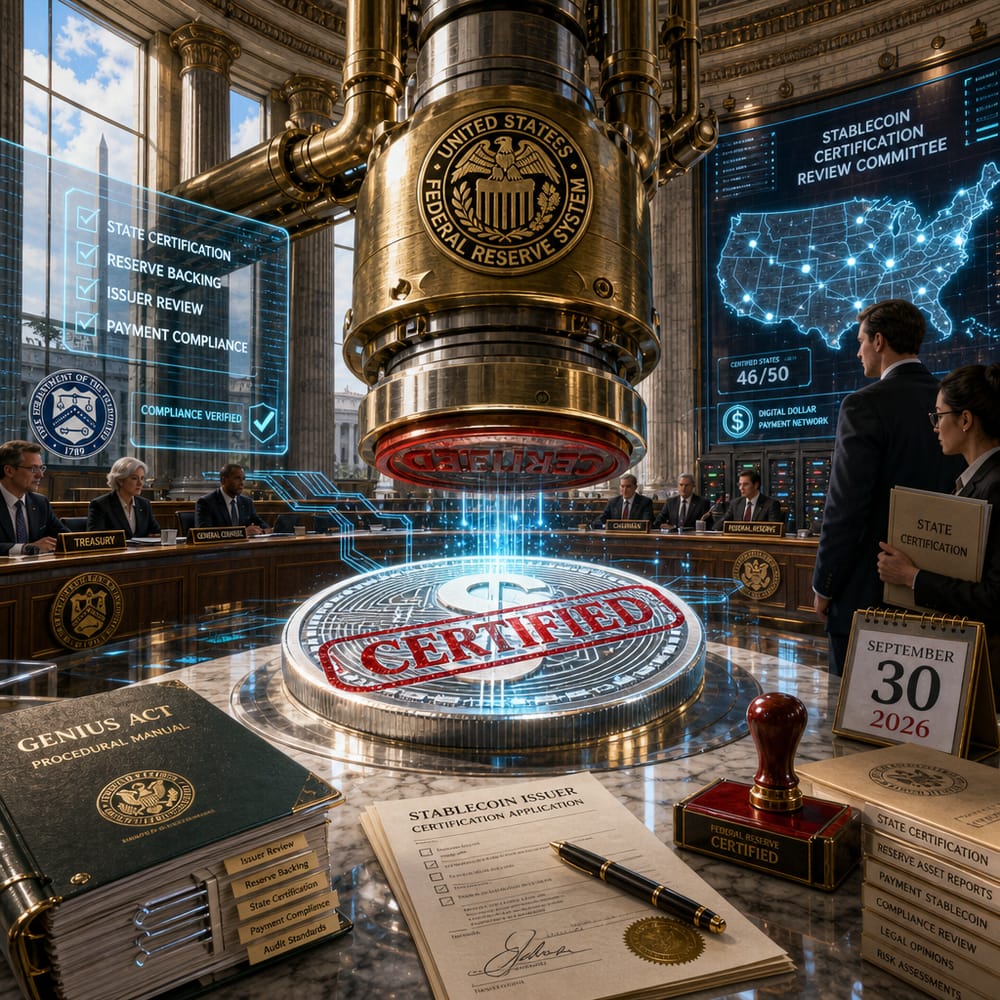
FEDERAL RESERVE IMPLEMENTS GENIUS ACT PROCEDURES FOR STABLECOIN CERTIFICATION
Picture this: a Wild West city where the sheriff just rolled in. The town? The U.S. stablecoin market. The sheriff? None other than the GENIUS Act, and it's laying down the law. Effective September 30, 2026, the U.S. Treasury’s Stablecoin Certification Review Committee issued interim procedures for the state-level certification of stablecoin issuers. Cue the dramatic music, folks, because the stablecoin showdown is about to begin.
The GENIUS Act — no, it's not just the name of your favorite detective drama — stands for the “Guardrails and Examination for New Issuer Underlying Standards.” It seems our friends in the Treasury decided the crypto cowboys needed some rules. This is Uncle Sam’s first real attempt at wrangling the stablecoin corral with a regulatory lasso, and it’s a move that could have investors clutching their digital wallets.
So, what's the buzz all about? For starters, stablecoin issuers must now jump through a series of flaming hoops to get certified by the state. This includes submitting a detailed risk management framework and regular audits. And no, these aren’t the kind of audits where you can sneak a peek at your neighbor’s test paper. Issuers will also need to maintain sufficient reserves, essentially ensuring they have enough greenbacks to back their digital coins. Think of it as making sure your chihuahua's bark matches its bite.
But why does this matter? In the Wild West of cryptocurrencies, stablecoins have been the trusty steed—promising stability in a market that's more volatile than a teenager's dating life. They’re pegged to traditional currencies, making them the go-to for investors looking to dodge the rollercoaster of Bitcoin and Ethereum. But without proper regulation, the risk of these stablecoins going haywire is as high as a tumbleweed blowing through a ghost town.
The GENIUS Act is poised to tighten the reins on issuers, which could bolster investor confidence and attract traditional money that's been watching the crypto parade with a raised eyebrow. If issuers play by the rules, stablecoins could morph from the awkward cousin at the family gathering to the star of the show.
Naturally, the crypto industry has its own thoughts as the deadline for feedback looms on November 30. Issuers and investors are expected to pen their opinions, drop some hot takes, and maybe even throw in a meme or two. Will they embrace the sheriff, or will there be a jailbreak of creativity to navigate around these new regulations?
The implications for the stablecoin market are significant. On one hand, tighter regulations could mean fewer fly-by-night operators, reducing risks for investors. On the other hand, the costs of compliance might deter smaller players from entering the market, potentially stifling innovation. It’s a classic case of biting into a regulation sandwich; the taste could be sweet, sour, or somewhere in between.
And what about the investors? As regulations shape up, they might find stablecoins becoming a safer bet, inviting a more diversified portfolio. However, they'll need to keep their ears to the ground and their fingers ready to type as regulatory changes continue to ripple through the market.
The GENIUS Act’s procedural debut is the first step in what could be a stablecoin renaissance, or at least a much-needed clean-up of the saloon. The stakes are high, and both issuers and investors will need to saddle up and prepare for whatever twists the market may throw at them next.
In the end, whether you're a crypto enthusiast, a cautious investor, or just someone who likes a good showdown, the unfolding drama of stablecoin regulation is one to watch. As the clock ticks down to September 30, 2026, all eyes are on the GENIUS Act and its potential to bring order to the crypto frontier. So, keep your popcorn ready and stay tuned—because in this town, the stablecoin saga is just getting started.
This article is for informational purposes only and is not investment advice. Always do your own research or consult a licensed financial professional before making investment decisions.
© Copyright 2024. All Rights Reserved.
© Copyright 2024. All Rights Reserved.