

Federal Reserve Holds Rates Steady Amid Internal Dissent
Saturday, August 15, 2026
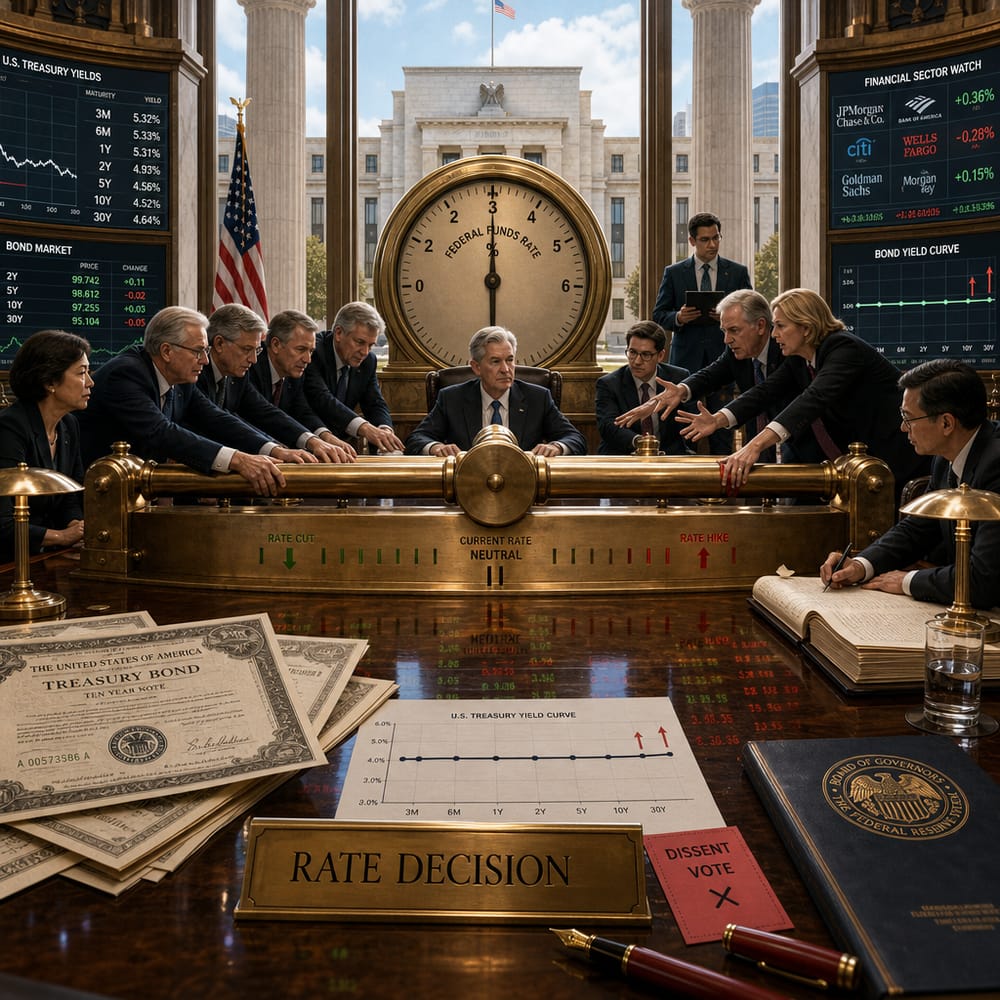
FEDERAL RESERVE HOLDS RATES STEADY AMID INTERNAL DISSENT
Welcome to the latest chapter of the Federal Reserve’s gripping saga — the kind of drama that the folks at HBO wish they could script. In a twist that has everyone from Wall Street tycoons to your retired neighbor clutching their investment portfolios a little tighter, the Fed decided to keep rates where they are. But wait, don’t get too comfy. Behind the scenes, there's a raucous debate brewing faster than your morning coffee.
Why you ask? Some of the Fed members are itching to hike those rates. Yes, the same rates that influence everything from your savings account balance to the interest on your car loan. This internal rumbling of dissent has all the hallmarks of a boardroom thriller, complete with intrigue, suspense, and a potentially earth-shattering impact on your financial world.
So, what’s got the Fed’s feathers ruffled?
Let’s dive into the dissenters' camp. These members argue that inflation is like an unruly party guest — overstaying its welcome and setting the stage for some serious economic hangovers. They feel a rate hike is like an eviction notice, a firm nudge to get things under control. They’re worried that if they don’t act now, we could get caught in a financial whirlpool that would make even the most seasoned sailor queasy.
THE IMPACT ON MORTGAGE RATES
While the Fed plays the role of reluctant rate-hiker, you might be asking, “What does this mean for my mortgage?” If you’re in the market for a new home or looking to refinance, all eyes should be on those mortgage rates. With the Fed holding steady, we can likely expect mortgage rates to remain relatively stable for the time being.
Translation: If you’re pondering whether to dive into a house purchase, now is not the worst time to cannonball into the pool. But remember, markets are like a fickle cat — just because it's calm now doesn’t mean it won’t scratch you tomorrow. Keep an eye on future Fed moves.
MARKET EXPECTATIONS FOR FUTURE RATE HIKES
Today’s decision doesn’t mean we’re in the clear, though. The market is already buzzing with speculation about what tomorrow might bring. Investors, analysts, and your finance-obsessed uncle are all trying to decipher the Fed’s game plan.
If inflation continues its unruly path, more of these internal dissenters might gain traction, leading to an eventual rate hike. The markets, always eager to overreact, could become a rollercoaster that leaves investors with their portfolios feeling a bit queasy.
This Fed drama could have significant implications for rate-sensitive assets like bonds and financial sector stocks. If rates rise, bond prices typically fall, making things interesting for anyone invested in fixed income. On the flip side, financial stocks might actually appreciate a rate hike, as banks could benefit from higher interest margins.
THE BALANCING ACT
The Fed is walking a tightrope, juggling inflation concerns with the economy’s need for growth. Too much of a rate hike could stifle economic growth, while too little might allow inflation to run rampant. It’s a delicate dance, and Jerome Powell and his team are doing their best Fred Astaire impression, trying to keep everything in step.
So what’s a retail investor to do? Stay informed, stay nimble, and maybe consider diversifying that portfolio if you haven’t already. Rate changes can have ripple effects across different investment types, so being prepared is your best defense.
In conclusion, while the Fed's decision to hold rates might seem like a momentary calm in the storm, it's worth keeping your weather eye on the horizon. Internal dissent suggests that change could come swiftly, and being caught unprepared could leave you drenched. Keep that umbrella (and investment strategy) handy. After all, in the world of finance, the next storm is often just a meeting away.
This article is for informational purposes only and is not investment advice. Always do your own research or consult a licensed financial professional before making investment decisions.
© Copyright 2024. All Rights Reserved.
© Copyright 2024. All Rights Reserved.