

Federal Judge Rules Pentagon Blacklisting of Anthropic 'Illegal and Baseless'
Sunday, August 30, 2026
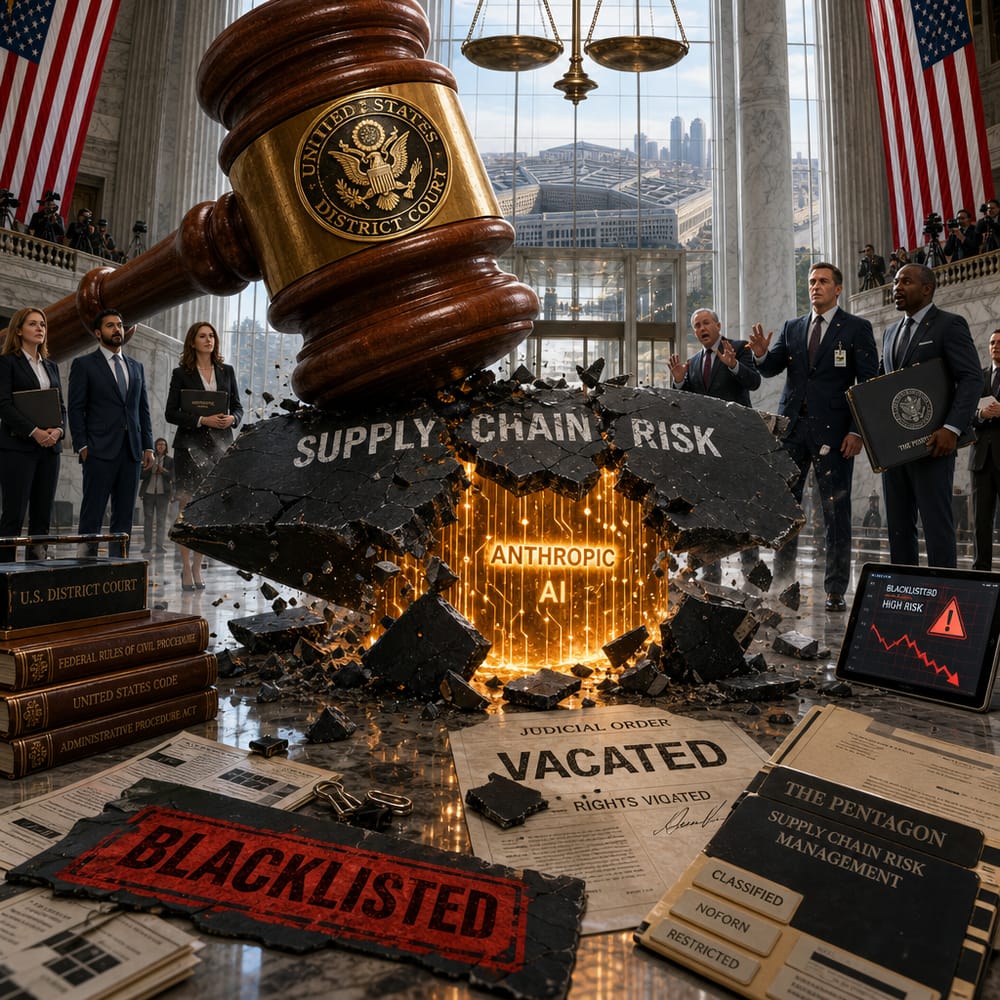
ANTHROPIC, PENTAGON, AND A JUDGE WALK INTO A COURTROOM...
Here’s a plot twist for your Monday morning: Anthropic, one of the stars in the AI firmament, just tagged a win against the Pentagon. Yes, you read that right. A federal judge ruled that the Pentagon’s decision to blacklist AI darling Anthropic as a "supply chain risk" was, drumroll please, "illegal and baseless." The ruling not only clears Anthropic’s name but also sets off a chain reaction that could ripple through the entire AI industry.
So, what happened? In this heavyweight legal bout, the federal judge took a solid stance by vacating the Pentagon's blacklist, stating it trampled on Anthropic’s rights without a valid reason. Apparently, "trust us, we’re the government" wasn’t going to cut it this time. The legal grounds? The Pentagon failed to provide sufficient evidence or follow due process — essentially labeling Anthropic as a threat without a fair trial.
IMPACT ON THE AI LANDSCAPE
This ruling isn't just Anthropic's golden ticket back to the Pentagon's good graces; it might be the canary in the coal mine for other AI companies. If the Pentagon can’t pull a fast one on Anthropic, other AI innovators might feel a little less jittery about the specter of being arbitrarily cut off from lucrative government contracts. Cue the potential gold rush of AI companies lining up for Uncle Sam's business, now a tad less worried about being ghosted like an awkward first date.
And then there’s national security — always the elephant in the room. Balancing innovation with security concerns is the classic tightrope walk. Tossing AI into the mix makes it a high-wire act in a windstorm. The court's ruling could push the government to rethink how it sizes up AI companies in its quest to arm itself with the best tech without putting national security at risk.
PENTAGON’S GAME FACE
Now, you might be wondering, how did the Pentagon react to this judicial smackdown? Predictably, with a poker face. In the wake of the ruling, the Pentagon has been tight-lipped, indicating they’re reviewing the decision and mulling over their next moves. It’s like they’ve got the playbook open but haven’t decided whether to punt or go for the touchdown just yet.
Yet, the precedent is set. The Pentagon will likely have to sharpen its pencils and dot its I's a bit more meticulously next time it tries to blacklist a cutting-edge company. Meanwhile, Anthropic is presumably popping champagne, and its competitors are watching closely.
WHAT'S NEXT FOR ANTHROPIC?
With the dust settling, Anthropic stands to not only regain access to government contracts but could also see a boost in its stock as investors re-evaluate the potential windfalls from government deals. AI stocks are already having a moment, with tech sector sentiment riding high. The ruling might just add more fuel to this fire.
Investors should keep an eye on how Anthropic leverages this turnaround. With a green light back to government projects, this could mean a pipeline of secure revenue and a hearty endorsement that they’re not just stable but trusted players in the field.
FINAL THOUGHTS
This courtroom drama isn’t just a tale of one AI company skating past a government hurdle. It's a reflection of the growing pains that come with integrating bleeding-edge technology with stodgy government processes. For now, Anthropic's courtroom win is a triumph for corporate rights against bureaucratic overreach, and it marks a chapter that could redefine how we think about national security in the age of AI.
Whether this ushers in a new era of collaboration or a reevaluation of risks is a story still being penned. One thing’s for sure, though: if AI companies were feeling skittish about government scrutiny, they’ve got one heck of a precedent to point to now. Stay tuned, because in the world of AI, the plot can always thicken.
This article is for informational purposes only and is not investment advice. Always do your own research or consult a licensed financial professional before making investment decisions.
© Copyright 2024. All Rights Reserved.
© Copyright 2024. All Rights Reserved.