

Federal Funds Rate Remains Steady at 3.50–3.75% as Of August 21
Sunday, August 23, 2026
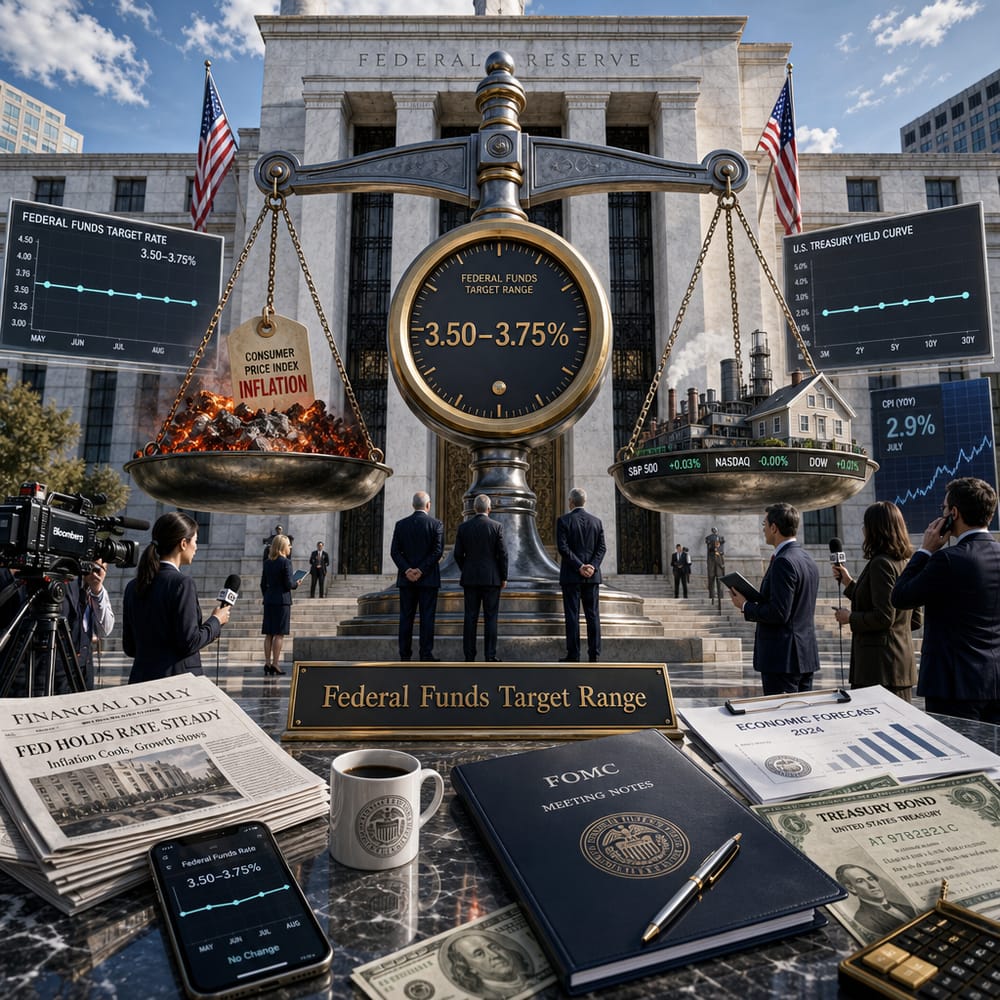
THE FED'S STEADY HAND: WHY INTEREST RATES AREN'T BUDGING
Hold onto your hats, financial navigators! In a world where change is the only constant, the Federal Reserve has decided to play the cool, calm, and collected card by keeping the federal funds rate snugly parked between 3.50% and 3.75%. That's right, the Fed's not hitting the accelerator or slamming the brakes—it's like they're the chillest driver on the highway to economic stability. But why, you ask, is the Fed donning its best poker face? Let's dig into this financial pièce de résistance.
The Federal Reserve's decision to keep rates steady is kind of like watching a tightrope walker: you hold your breath, hoping they maintain their balance without falling into the chasm of inflation or recession. Inflation, the not-so-friendly ghost every economy dreads, has been lurking around, casting a shadow over growth. And while it's not the terrifying specter it was a few years back, it hasn't completely disappeared either. The Fed's peppered its conversations with hints of "inflation moderation," but they're not breaking out the confetti just yet.
Now, here's the juicy part: the market wasn’t exactly betting on this status quo. Many whispering voices anticipated a rate hike or maybe even a cut. But Jerome Powell and the Fed have their reasons. They're like the wise sage in the corner, sipping their tea, watching the inflation dragon, and waiting for the perfect moment to act.
Why steady as she goes? Well, imagine the economy as a delicate souffle—the perfect blend of ingredients is crucial. The Fed's mantra seems to be "patience." By keeping rates unchanged, they're providing breathing room to assess whether previous hikes have baked enough caution into the economy, curbing inflation without stifling growth. It's a balancing act, folks, and they're walking this tightrope with finesse.
Here's the kicker: this move aligns with a cautious optimism—a teeter-totter between the desire for economic growth and the need to maintain control over inflation. The market might've expected a nudge, but the Fed’s in it for the long game. They’re like that friend who doesn't text back immediately because they're crafting the perfect response—careful, deliberate, and maybe a tad enigmatic.
But what does this mean for you, the retail investor, glancing at your phone between sips of morning coffee or bites of lunch? The Fed’s steady stance is a signpost: expect a consistent borrowing climate and a bit of predictability in an otherwise topsy-turvy market world. Interest rates on mortgages, loans, and savings accounts might not see drastic changes in the short term, but that doesn't mean you should snooze at the wheel.
In the broad tapestry of sectors, the Fed's decision creates a ripple effect. Housing markets breathe a sigh of relief, while tech and growth sectors can keep dreaming big without choking on high borrowing costs. It's like watching an orchestra where the conductor opts for a familiar tune instead of a surprise symphony.
So, in the grand scheme of economic symphonies, the Fed has chosen to hum a familiar tune—one of stability and careful foresight. Will this decision stand the test of time? That’s the million-dollar question. For now, though, we’re left with a scene unfolding slowly, a meticulous pace set by the Fed as they eye the economic landscape with a watchful gaze.
To sum it up, the Federal Reserve's strategy isn't just about numbers; it's about reading the room, understanding the nuanced dance of markets, and making sure that the economic souffle doesn’t collapse. So keep your eyes peeled, investors, and stay sharp—because in this financial theater, the plot could thicken at any moment.
This article is for informational purposes only and is not investment advice. Always do your own research or consult a licensed financial professional before making investment decisions.
© Copyright 2024. All Rights Reserved.
© Copyright 2024. All Rights Reserved.