

Fed Watch: Weak Jobs Print Shifts Odds for Next Move
Tuesday, August 11, 2026
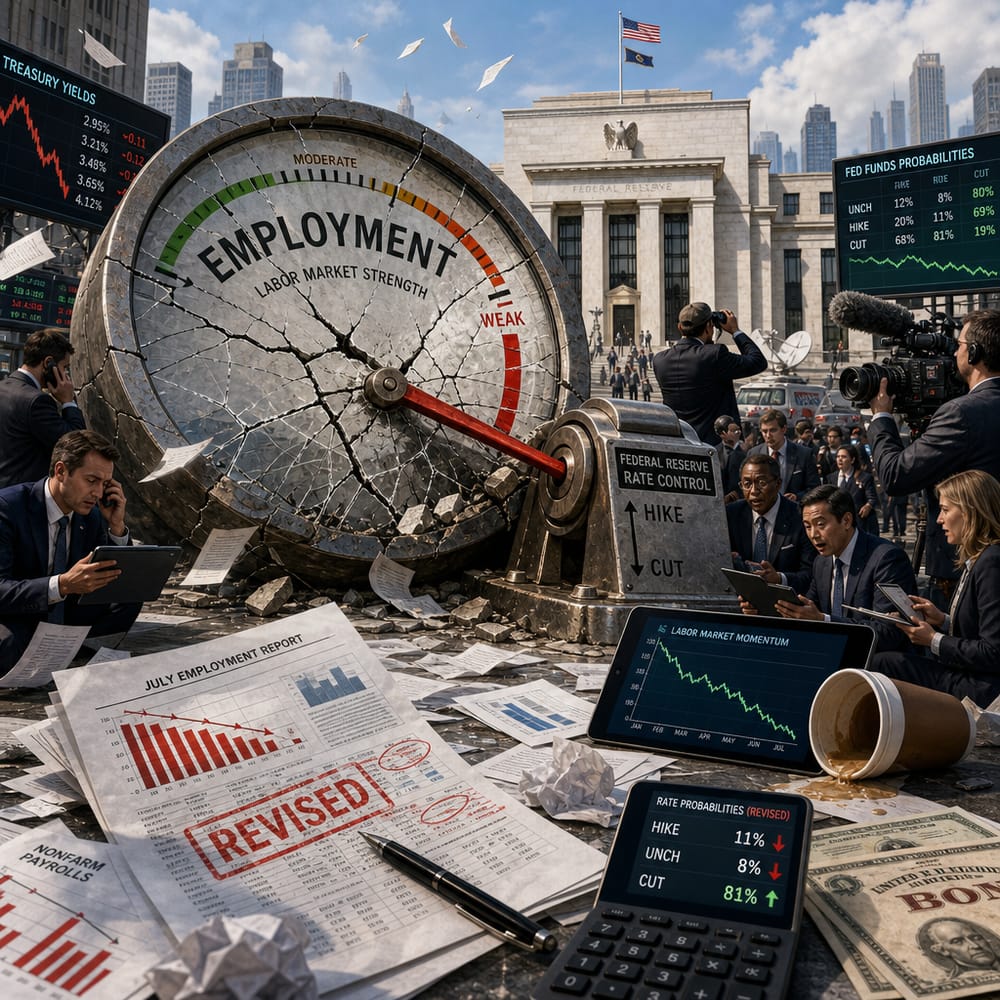
HERE COMES THE FED: HOW WEAK JOBS DATA BOUNCED RATE EXPECTATIONS
Brace yourself, folks. The latest jobs numbers have rolled in, and they are about as weak as a decaf espresso. The U.S. economy added fewer jobs than anticipated in July, and it's shaking up Wall Street's crystal ball predictions for Federal Reserve interest rate hikes. So, what's the buzz about all this labor market kerfuffle? Let's dig into it.
THE JOBS JOLT
Picture this: You go to a party expecting a live band, and find a guy with a kazoo instead. That's how the market felt about July's employment report. Economists had been predicting robust job growth, but the figures came in underwhelming. This slip-up in job creation has made investors and analysts recalibrate their expectations faster than you can say "rate hike."
Why does this matter? Well, the Federal Reserve has been on a mission to tame inflation by hiking interest rates. It's like trying to control a rambunctious toddler with a stern talking-to. But when the jobs data starts to sputter, the Fed might think twice before reaching for the rate lever again.
MARKET EYE: WHAT DO INVESTORS THINK?
The word on the street—and by street, I mean Wall Street—is that rate hikes might be put on ice, at least for a little while. The weak employment numbers have many guessing that the Fed could ease up on its aggressive stance. Traders are now pricing in a higher chance that the central bank will take a rain check on its planned rate increases.
This is music to the ears of those weary of higher borrowing costs. Imagine being able to snag that dream mortgage before it becomes as elusive as a unicorn. A pause in rate hikes could be a boon for borrowers, businesses, and anyone who doesn't want to fork over a fortune in interest payments.
BIGGER PICTURE: THE ECONOMIC RIPPLE EFFECT
So, what happens if the Fed does ease up on rate hikes? For starters, the stock market might just throw a party. Lower rates tend to make equities more attractive—a bit like discovering your favorite band is playing a surprise gig in your hometown. Investors might shift their money back into stocks, which could boost the broader market.
And let's not forget the broader economy. Keeping rates steady or even cutting them could encourage spending and investment. It's like giving the economy a Vitamin C boost to fend off any recessionary sniffles. Businesses might expand, and consumers might finally splurge on that shiny new gadget they've been eyeing.
FED IN FOCUS: WHAT WILL JEROME POWELL DO?
Now, all eyes are on the Federal Reserve and its Chair, Jerome Powell. Powell's got quite the conundrum on his hands. He has to decide whether to continue fighting inflation with higher rates or to pivot in response to tepid job growth. It's a bit like choosing between kale and chocolate cake: one is good for the long-term, but the other is oh-so-tempting in the moment.
The Fed’s choices will have significant implications. If Powell decides to pause on rate hikes, he'll need to convince the public that inflation won't run rampant, turning our wallets into empty shells. Alternatively, if he stays the course and raises rates despite the weak jobs data, he'll risk slowing the economy and increasing unemployment.
SO, WHAT'S NEXT?
Here's the kicker: nobody knows for certain what the Fed will do next. The world of finance is as unpredictable as a cat on a hot tin roof. However, it's clear that the latest employment data has thrown a wrench in the works, prompting a serious re-evaluation of economic strategies.
For everyday investors, this means staying alert and perhaps even considering some strategic moves. Whether it's adjusting investment portfolios, exploring borrowing options, or just keeping a close eye on the news, now is the time to stay informed.
As always, remember that markets can swing like a pendulum, and today's bad news could be tomorrow's opportunity. Keep your wits about you, and be ready to adapt as the Fed decides which way the interest rate wind will blow next.
This article is for informational purposes only and is not investment advice. Always do your own research or consult a licensed financial professional before making investment decisions.
© Copyright 2024. All Rights Reserved.
© Copyright 2024. All Rights Reserved.