

Fed Signals Possible Hikes Ahead Despite Hold
Tuesday, August 04, 2026
FED SIGNALS POSSIBLE HIKES AHEAD DESPITE HOLD
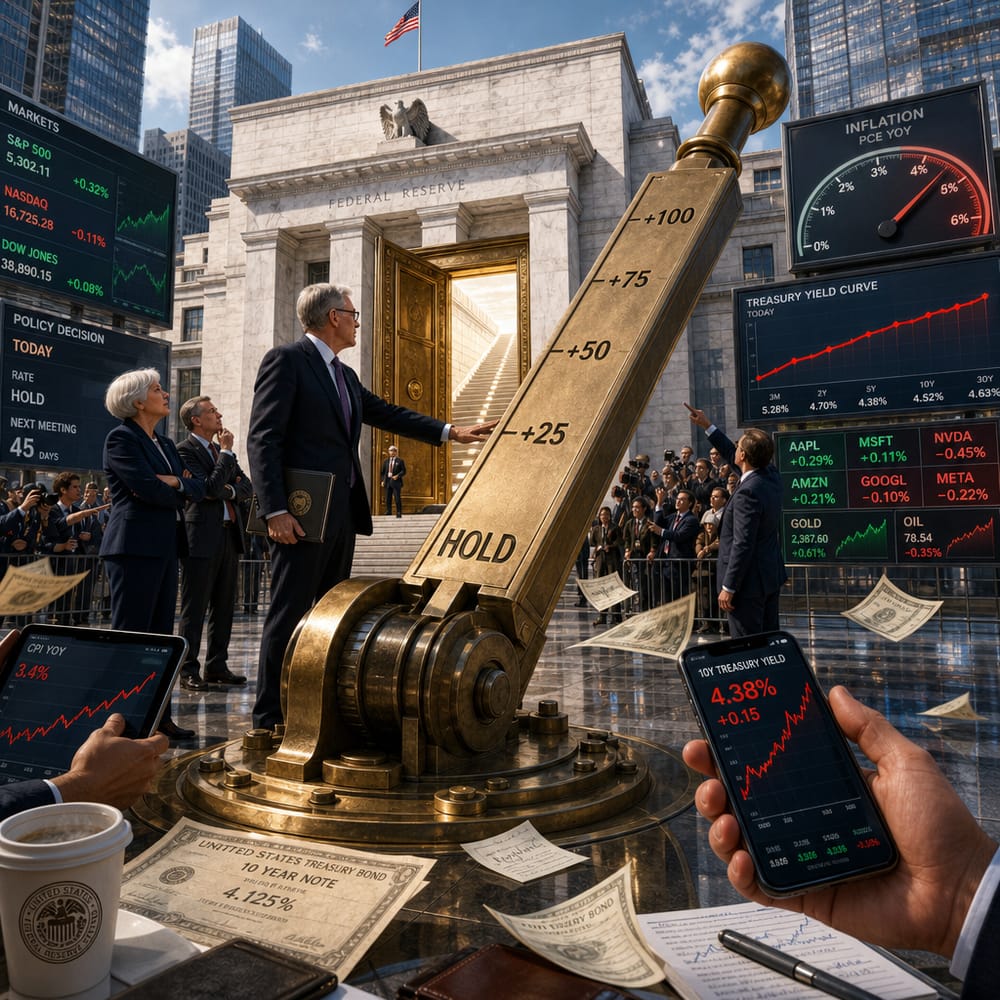
Picture this: The Federal Reserve, like a stern parent with a mischievous glint, just told the markets, "We’re not mad, we’re just…watching.” Despite holding interest rates steady for now, they're hinting at future rate hikes. And, just like that, investors everywhere are leaning in closer, eager to decode every syllable of Fed-speak.
Because in the world of finance, it's not just about what the Fed does, it's about what they might do. And oh, the possibilities! This is like reading a mystery novel where the Fed is the enigmatic sleuth, and everyone wants to know the next move.
SIGNALING FUTURE HIKES
So what's the Fed saying between the lines? Their message is clear: if inflation doesn’t chill out, they might have to tighten the screws again. In plain English, they're ready to hike those rates if prices keep going up like a helium balloon at a birthday party.
Fed Chair Jerome Powell, in his infinite wisdom, is playing it cool. He’s masterfully juggling the dual tasks of reining in inflation without stifling economic growth. It's a dance on a tightrope, and everyone's hanging on his every word.
IMPACT ON MARKETS AND INVESTORS
Now, let's talk about why this matters. When the Fed even hints at changing interest rates, markets go into a frenzy. It’s like Wall Street just got a new plot twist in its favorite drama series.
For investors, this forward-looking language is pure gold. It’s the kind of information that can drastically alter investment strategies. Imagine you're playing chess and suddenly the rules might change—your next move needs to be sharp.
If future hikes do happen, borrowing costs will rise. This means everything from mortgages to business loans could get pricier. Companies might tighten their belts, and consumers might think twice before swiping that credit card.
SECTORS TO WATCH
Certain sectors, like technology and consumer goods, might feel the squeeze more than others. Higher rates often mean a stronger dollar, which can be a bummer for U.S. companies that rely on exports. They'll need to brace themselves for potential headwinds.
On the flip side, financial stocks could get a nice boost. Banks love higher rates because they can charge more for loans, which means bigger profits. So, those looking to shuffle their portfolios might want to give financials a good, hard look.
INFLATION: THE BIG BAD WOLF
Let’s not forget about the real villain here: inflation. It’s been lurking in the shadows, driving prices up and causing all sorts of headaches. The Fed’s got its eye on it, and they're ready to pounce if need be.
But why such a fuss over a few percentage points here and there? Well, runaway inflation can erode purchasing power, meaning your dollar doesn’t stretch as far. That's bad news for everyone, from big corporations to your local coffee shop.
WHAT'S NEXT?
For now, investors are left parsing every public utterance from the Fed. The next meeting, the next set of minutes, the next Powell speech—they’re all potential clues in this ongoing financial mystery.
In the meantime, the savvy investor will stay nimble, watching and waiting. Diversifying portfolios, hedging bets, and keeping a close eye on economic indicators will be crucial.
As this financial thriller unfolds, remember: the Fed might be holding steady today, but tomorrow’s game is still wide open. Keep your eyes sharp and your strategies sharper, because when the Fed calls, you’d better be ready to answer.
This article is for informational purposes only and is not investment advice. Always do your own research or consult a licensed financial professional before making investment decisions.
© Copyright 2024. All Rights Reserved.
© Copyright 2024. All Rights Reserved.