

Fed’s Williams: AI Could Trigger Further Rate Hikes
Wednesday, November 18, 2026
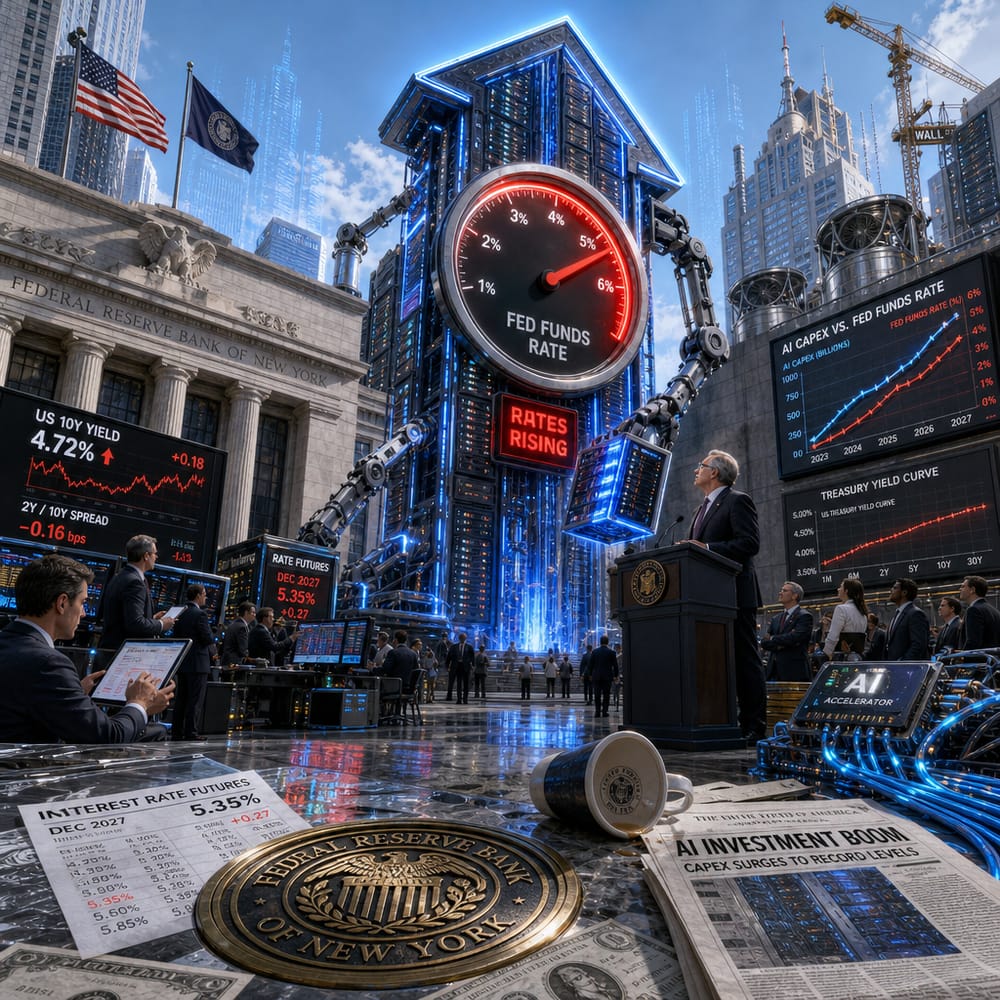
FED’S WILLIAMS: AI COULD TRIGGER FURTHER RATE HIKES
Imagine a world where your morning coffee costs as much as your favorite grilled cheese sandwich. Now, picture that it’s because artificial intelligence has ignited a spending spree that even your grandma's thriftiest coupon-clipping can't curb. Hold that thought while we dive into the latest tidbit from New York Fed President John Williams' crystal ball, which is now forecasting potential interest rate hikes by 2027, thanks to an AI-driven boom.
As if AI didn’t already have enough buzzword cred, it’s now a significant player in the economic arena. Williams hinted that the ongoing surge in AI investments—think smarter algorithms, faster chips (courtesy of Nvidia's latest earnings triumph), and cloud computing gone wild—could necessitate further rate hikes. But unlike your unpredictable uncle at the Thanksgiving table, let's dissect how and why this techno-revolution might push the Fed's buttons.
HOW AI INVESTMENTS MIGHT IMPACT INFLATION
You know how every once in a blue moon, you come across something that's both exciting and terrifying? AI is that something for the economy. The tech is not just about self-driving cars or having Alexa play your favorite playlist. It's about the massive pools of capital being funneled into the sector—investments that can rev the economy’s engine like an espresso shot.
Williams is suggesting that this influx might lead to a classic case of too much money chasing too few goods, a recipe for inflation. When businesses pump dollars into AI, it creates a ripple effect—more jobs, higher wages, and a demand for everything from semiconductors to server space. And just like that, prices start to rise.
THE RISKS OF FURTHER RATE HIKES
But hold your horses! Before you start dreaming of AI robots delivering endless growth, remember what goes up must eventually be tempered. Enter the Federal Reserve and its trusty toolkit of interest rates. Hiking rates is like the Fed’s way of saying, “Whoa there, cowboy! Let's not overheat the economy.”
However, with every interest rate hike comes a set of risks. Higher rates mean borrowing becomes more expensive for everyone, from your average Joe trying to secure a mortgage to corporations looking to expand. The fear is that too many hikes, too quickly, could stifle economic growth and potentially lead to the dreaded recession.
HOW MARKETS ARE REACTING TO THIS NEWS
So, what's the market's take on Williams' forecast? For now, it's a mixed bag. Traders are keeping an eagle eye on interest rate futures, those nifty little contracts that predict where rates are headed. With AI's potential to shake things up, any hint of a rate hike sends ripples through these futures like a pebble tossed into a pond.
Then there’s the stock market, where Nvidia's recent earnings have sparked a rally despite the leadership drama. The chip giant’s success serves as a bellwether for AI’s potential, even as whispers of tighter monetary policy lurk in the background. If investors believe that AI can boost productivity without kickstarting inflation, we might see stocks continue their merry dance upward.
Conversely, if markets think that the Fed’s tightening policies could cramp their style, you might want to brace for a bumpy ride.
THE BIGGER PICTURE
What does all this mean for the everyday investor with a coffee habit to feed? It’s a reminder to keep your ears to the ground and your portfolio diversified. AI is here to stay, and its impact on the economy is as unpredictable as the next viral TikTok dance. But knowledge is power. Understanding the potential for rate hikes and their implications can help you ride out the waves, whether you're a casual observer or an active participant in the market.
In the end, Williams' AI-induced interest rate cautionary tale is a wake-up call. It’s about preparing for a future where technology doesn’t just shape our lives, but also the very framework of our economic policies. So, while AI might be the new frontier, it’s clear that the road ahead will require a delicate balance between stoking innovation and maintaining stability. Shall we call it the art of monetary jiu-jitsu? Only time will tell.
This article is for informational purposes only and is not investment advice. Always do your own research or consult a licensed financial professional before making investment decisions.
© Copyright 2024. All Rights Reserved.
© Copyright 2024. All Rights Reserved.