

Fed's Waller Advocates for 50-bp Rate Hike in December
Saturday, November 21, 2026
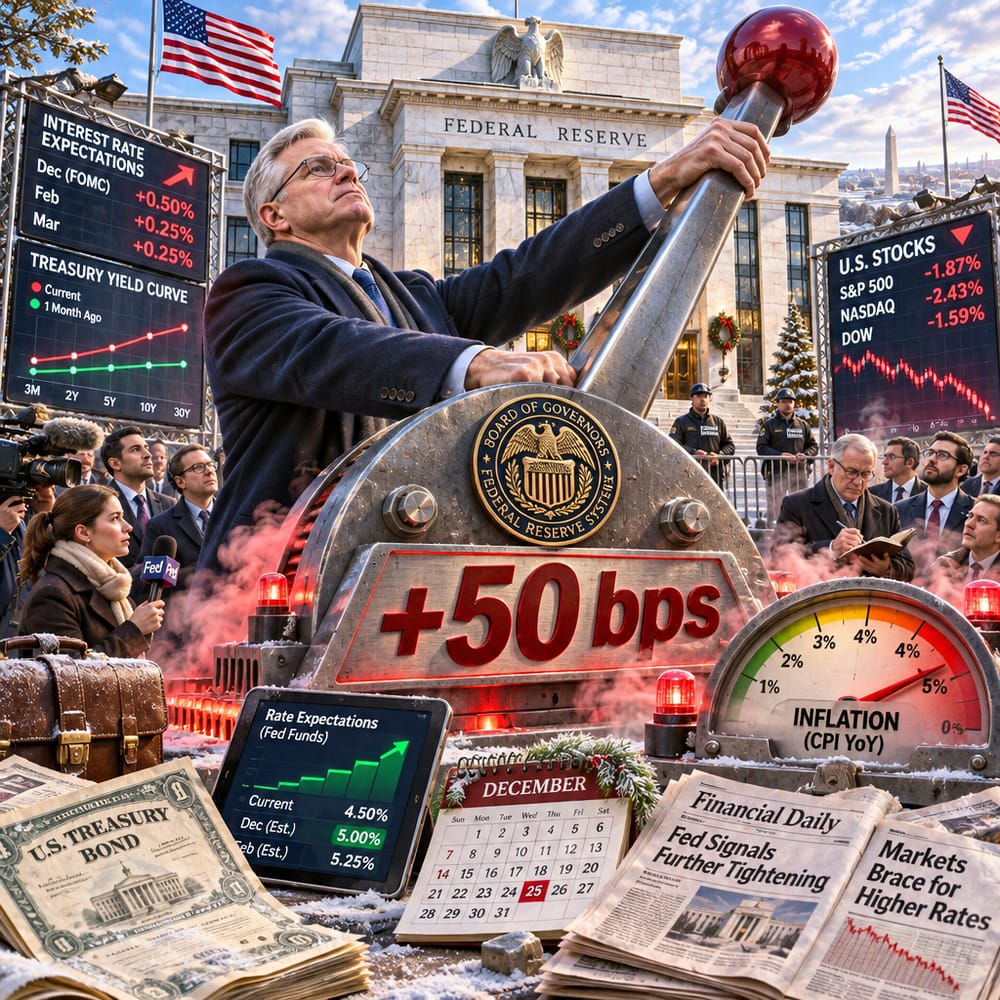
FED'S WALLER ADVOCATES FOR 50-BP RATE HIKE IN DECEMBER
Grab your popcorn, folks, because the Federal Reserve is cranking up the drama. In the latest plot twist, Fed Governor Christopher Waller is pushing for a December surprise—a 50-basis-point rate hike, which is financial speak for giving interest rates a serious boost. The goal? Nipping inflation in the bud before it turns into a full-blown monster. But what does this mean for your wallet and the markets? Let’s break it down.
Ever walked into a store, blinked at the price of a loaf of bread, and thought you’d slipped into an alternate universe? That’s inflation—prices rising faster than a hot air balloon at a summer festival. The Fed’s trusty tool to tame this beast? Interest rate hikes. By making borrowing more expensive, they hope to cool the spending spree that fuels inflation.
Now, a 50-basis-point hike is no small fry. It’s like the Fed moving from a whisper to a shout. And Waller’s pushing for this turbo-charged move just as the latest Fed minutes reveal broad support for keeping the pressure on inflation. The central bank seems to be channeling its inner Clint Eastwood: feeling lucky, punk? If inflation doesn’t simmer down, it's bracing for another showdown.
So, how does this play out in our economic sandbox? For one, borrowing costs—think mortgages, car loans, and credit card rates—will likely rise. Not exactly music to the ears of anyone looking to buy a new home or car. Businesses, too, might find borrowing for expansion a pricier proposition. The ripple effect? A potential slowdown in economic growth as everyone tightens their belts.
But let’s not get ahead of ourselves. The market’s already reacting like a cat on a hot tin roof. Stocks have wobbled at the mere hint of more aggressive Fed action. After all, the stock market, forever the drama queen, hates uncertainty more than a cat hates water. Investors start weighing the trade-off: higher rates can mean lower future earnings, hence jittery hands on the selling trigger.
Yet, not all sectors face the same fate. Financial stocks could throw a low-key celebration. Banks typically earn more as interest rates rise, thanks to bigger margins on loans. Meanwhile, tech and high-growth sectors may feel the pinch, as higher rates can undercut the allure of their future earnings.
For retail investors, Waller’s suggestion of a super-sized rate hike might feel like learning your favorite TV show’s getting a reboot with a surprise twist. It’s a little unsettling, but it’s a reminder to diversify your portfolio, spread your bets, and maybe keep a bit more cash handy for bargains in the markets.
But why the big move now? Well, the Fed’s staring down a stubborn inflation rate that’s been hovering like an uninvited guest at a party. And let’s face it, nobody wants to party with inflation. It erodes purchasing power and, left unchecked, can wreak havoc on the economy. Waller and his crew at the Fed want to make sure they slam the door on it before it overstays its welcome.
As we edge closer to December’s decision, retail investors should keep their ears to the ground and eyes on those Fed minutes. After all, in the world of finance, today’s hawkish talk could be tomorrow’s dovish retreat. The key is staying informed and ready to pivot your investment strategy as the monetary winds change.
In the end, whether the Fed goes big with a 50-basis-point hike or opts for something less headline-grabbing, the message is clear: they’re serious about steering the economy back to calmer waters. So, strap in and get ready for more financial fireworks. And remember, in the Fed’s fight against inflation, it’s not just about who blinks first—it’s about who stands tall in the end.
This article is for informational purposes only and is not investment advice. Always do your own research or consult a licensed financial professional before making investment decisions.
© Copyright 2024. All Rights Reserved.
© Copyright 2024. All Rights Reserved.