

Fed's Stance on Interest Rates and Inflation Concerns
Sunday, August 30, 2026
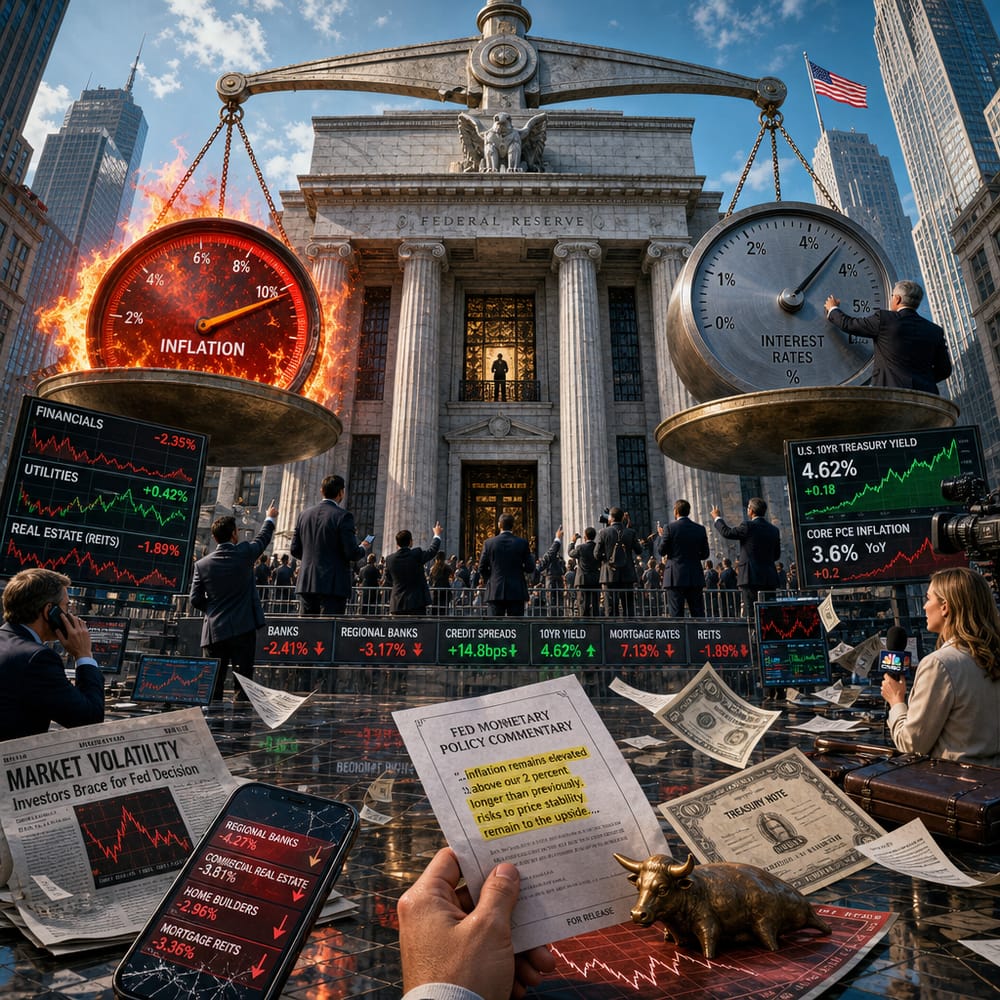
FED'S STANCE ON INTEREST RATES AND INFLATION CONCERNS
Brace yourselves, folks: the Federal Reserve just lit the fuse on an economic guessing game, and it’s got the market buzzing like a live wire. Fed Chairman Kevin Warsh recently dropped a line about inflation being "concerning," then left everyone hanging without so much as a hint about future interest rate moves. It’s like your favorite TV show ending on a cliffhanger — and everyone’s biting their nails.
Interest rate decisions are not just dinner table conversation for Wall Street wonks. They ripple through Main Street, affecting everything from your savings account to that mortgage you might be coveting. With Warsh keeping his cards close to his chest, investors are left playing a hazardous game of economic charades. So, what does this cryptic silence mean for the stock market, and which sectors should investors keep an eye on?
LET'S TALK STOCK MARKET
When it comes to interest rates, think of the stock market as a teenager reacting to a pop quiz — volatility galore. If rates go up, borrowing costs spike. That means companies might tighten their belts, leading to lower profits and potentially shaky stock prices.
Investors could quickly shift from growth stocks, like tech and biotech — where future cash flows are everything — to more stable, dividend-paying giants. Why bet on a long shot when safer, immediate returns beckon other investments?
SECTORS FEELING THE HEAT
If Warsh decides to pull the trigger on rate hikes, you'd better believe the financial sector will be front and center. Banks tend to profit from rising interest rates because they can charge more to lend money than they pay in interest. It’s like selling ice cream in a heatwave — a little more demand never hurt margins. But not all financial entities may pop the champagne. Rate hikes can also lead to higher defaults, which isn't exactly music to lenders' ears.
Flip the coin, and you'll find sectors like utilities and real estate sweating bullets. These are typically interest rate-sensitive, meaning they rely heavily on debt funding. Higher rates raise their borrowing costs, and that could hurt profitability. Utility companies, for example, might struggle to pass on those costs to consumers, who aren't thrilled to see their bills go up faster than their paychecks.
A DEEPER DIVE INTO ECONOMIC GROWTH
Now, let's say the Fed keeps rates low despite inflation. Borrowing remains cheap, and businesses continue to invest, creating jobs and fueling economic growth. But there’s a catch — unchecked inflation could erode purchasing power, making it a little tougher to buy that extra-large cup of overpriced coffee.
Inflation and interest rates are like tango partners; one rarely moves without affecting the other. Historically, a little inflation is a sign of a growing economy. But too much, and you’ve got a runaway train that makes everything from groceries to gadgets more expensive.
PLAYING THE WAITING GAME
The overarching question remains: Where does Warsh’s silence leave us? Analysts will be on edge, dissecting every economic report and Fed meeting for clues. In the meantime, investors might consider a diversified approach, balancing riskier assets with steadier, income-generating ones. It's a classic play in uncertain times.
For those in the financial sector, this could be a golden window to capitalize on potential rate hikes. Meanwhile, utility firms and real estate investors may need to brace themselves, possibly looking to hedge against potential rate surges.
Warsh's hush-hush attitude might just push investors to stay nimble, keeping a keen eye on those sectors likely to get tossed around in the rate rumble. While we wait for him to reveal his play, it's a reminder that in the world of finance, nothing stays still for long. Strap in, because the ride is just beginning.
Invest intelligently, keep your ears to the ground, and remember: in this economic circus, the show must go on — whether you're ready or not.
This article is for informational purposes only and is not investment advice. Always do your own research or consult a licensed financial professional before making investment decisions.
© Copyright 2024. All Rights Reserved.
© Copyright 2024. All Rights Reserved.