

Fed’s Path Under Threat from Energy-Fueled Inflation
Wednesday, July 29, 2026
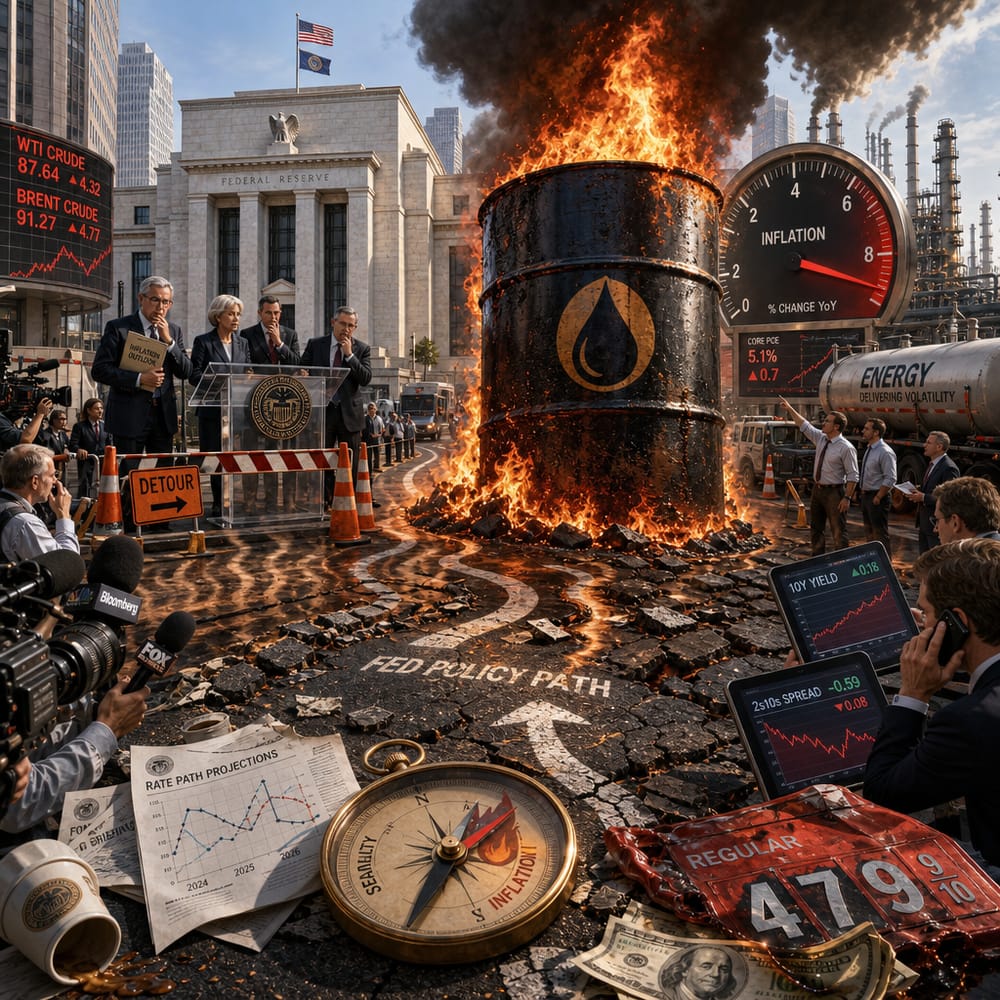
How’s your wallet feeling these days? A little lighter every time you fill up the tank or pay that utility bill? You're not alone. The dance between energy prices and inflation is turning into a two-step that's got the Federal Reserve waltzing on thin ice. And if you're wondering what this means for your stocks or your savings, buckle up. It's a wild ride with the stakes sky-high.
RISING ENERGY PRICES: THE UNWELCOME GUEST
Let's start with the bad news. Oil prices have gone on a bender, fueled by geopolitical tensions hotter than a summer in Death Valley. The U.S. and Iran are swapping strikes like a pair of angry disco dancers, and it's pushing oil prices through the roof. Brent crude is hovering around $87 a barrel, and if that doesn't make you wince, you're probably driving an electric car.
Energy prices are the cantankerous guest at the inflation party, and they're wreaking havoc on the Federal Reserve's plans. The Fed's been playing a cautious game, balancing its rate hikes like a tightrope walker in a storm. But rising energy costs – they don't care about the Fed's careful choreography. They just keep pushing prices up.
THE FED STRIKES BACK... MAYBE
So, what's a central bank to do? In an ideal world, the Fed wants inflation to chill at 2%. Right now, we're about as likely to see that as a snowstorm in Miami. And energy prices are the main culprit.
If energy-driven inflation persists, the Fed might have to hit the brakes on the economy by amping up interest rates. Remember, higher rates make borrowing more expensive. That can cool off spending and investment, but it also risks shoving the economy into a slow lane—or worse, a recession.
For your portfolio, this is like watching a horror movie with an unpredictable villain. The specter of higher rates could spook investors and send stock prices tumbling – especially those high-flying tech stocks that were everyone’s darlings when money was cheap. The sell-off in AI stocks is a recent case in point.
MARKET JITTERS: SURVIVAL OF THE FITTEST
So, if you've got a stake in the market, what's the smart play here? First off, hold onto your hats—and your more reliable stocks. Energy companies are, unsurprisingly, loving the chaos. When oil prices climb, so do they. So, if you've got investments in energy, you might be sitting pretty for now.
But don't get too cozy. The market's as restless as a cat on a hot tin roof, and nobody likes surprises. The Fed's next moves are under a microscope. Any hints of rate hikes could send ripples through sectors far and wide, from tech to retail to housing.
Diversification is your friend in these unpredictable times. While tech stocks might be feeling the heat, sectors like consumer staples and utilities are typically safer harbors. They're the comforting comfort food of your portfolio—steady and reliable when market turbulence is driving you crazy.
LOOKING AHEAD: UNCERTAINTY RULES
The Fed’s path forward is as clear as mud right now. Energy prices are a big wild card, and as long as geopolitical tensions and supply chain headaches persist, volatility is the name of the game. If you're someone who's all about stability, this might feel like a bad roller-coaster ride that you can't get off.
But here's the silver lining: chaotic markets can offer opportunities, too. If you're a savvy retail investor, there are bargains to be found amid the noise. Just remember, investing in this climate is like treasure hunting in a minefield. Step carefully, and don't ignore the risks.
As the economic landscape evolves, keep an eye on those energy prices and the Fed's dance moves. Their interplay will set the tone for markets in the months to come, and your financial health might depend on how well you read the rhythm.
So, next time you fill up your gas tank, think of it as more than just a hit to your budget. It's a reminder of the intricate balance between energy, inflation, and your financial future—a dance we're all a part of, whether we like it or not.
This article is for informational purposes only and is not investment advice. Always do your own research or consult a licensed financial professional before making investment decisions.
© Copyright 2024. All Rights Reserved.
© Copyright 2024. All Rights Reserved.