

Fed's New Data Task Force Aims to Improve Economic Signals
Wednesday, August 12, 2026
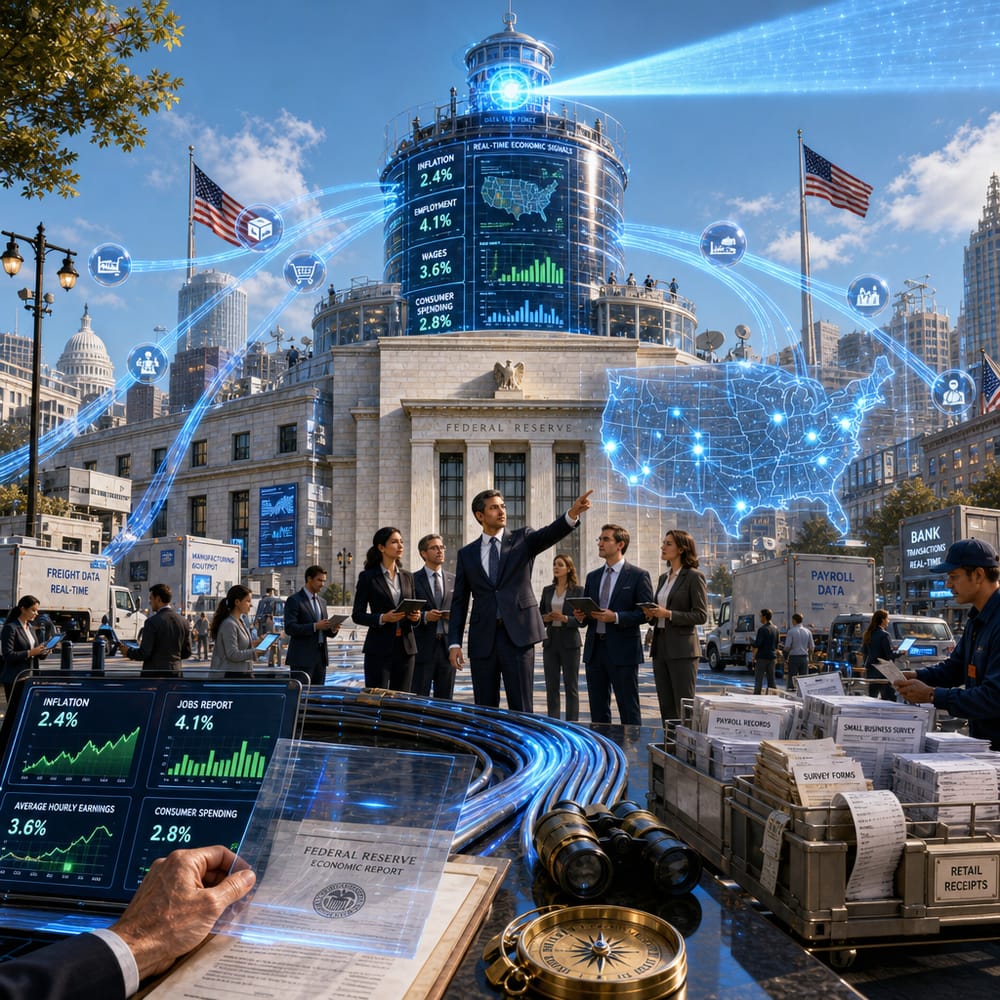
FED'S NEW DATA TASK FORCE AIMS TO IMPROVE ECONOMIC SIGNALS
Picture this: the Federal Reserve, the big kahuna steering the economic ship, decides it's time to ditch its dusty old compass for a cutting-edge GPS. That's right, Uncle Sam's money maestros want to tune up their data game to put their monetary policy decisions on the fast track. Enter Fed Chair Kevin Warsh and his shiny new data task force, aimed at spicing up the quality and timeliness of economic signals. It's a move that promises to shake up how the central bank reads the economic tea leaves. Now that's something to perk up your portfolio ears.
This isn't just a fancy rebrand or a PR stunt. No, no. Warsh's initiative is like handing the Fed a pair of augmented reality glasses, letting it see the economy with newfound clarity. As any savvy investor knows, the better your read on the economy, the better your bets will be. And let's face it, the Fed has been taking its sweet time reacting to the quicksilver changes in the economy, thanks to outdated data tricks. But with a real-world analytics shift, the Fed might just catch that curveball before it hits.
So, what's the plan? Well, imagine the Fed's current data collection as a horse and buggy — sturdy, sure, but not exactly built for speed. Warsh's task force is set to revamp this with turbocharged methods. Think more real-time insights, like scraping credit card transactions or analyzing satellite imagery for crop health. This kind of data wizardry could make those dreary old reports look like a Model T at a Tesla convention.
Now, onto the juicy bit: how does this data makeover affect you, the retail investor who just wants to know if it's time to stash cash under the mattress or buy that hot tech stock? With sharper data, the Fed can make more informed decisions, potentially smoothing out those wild market swings that make your portfolio feel like a roller-coaster ride. Better data means better policy — translating to interest rates and inflation rates that are more in sync with the actual economy, not yesterday's news.
Let's talk policy changes. You've heard the Fed toss around terms like "tightening" and "easing," reminiscent of some strange yoga class. These are just fancy ways of saying they're jiggling interest rates to keep inflation and unemployment in check. But with more precise data, they could fine-tune these policies like a maestro at a symphony, rather than a DJ at an all-night rave. Expect quicker, more surgical moves if the economy starts to sizzle or fizzle unexpectedly.
But hold on — let's not pop the champagne just yet. This data overhaul isn't going to flip the economic switch overnight. The Fed, despite its newfound tech swagger, is still a bit like turning an aircraft carrier; it takes time. Plus, there's the ever-present risk of data overload, where too much information becomes paralyzing instead of enlightening. The balance here will be crucial.
The real winner in this scenario, if all goes as planned, is confidence — in the markets, in investments, in the stability of your 401(k). Better data not only helps the Fed; it helps everyone who relies on their signals to make financial decisions. Whether this new task force brings about a data renaissance or just ends up as another sage talking shop, only time will tell. But for now, retail investors can dream of a future where the Fed's decisions are as sleek and efficient as a well-oiled algorithm.
So, what’s the takeaway for you, the curious market enthusiast scrolling through this on your phone? Keep your eye on how Warsh's task force unfolds. It could be the secret sauce that turns those oft-murky Fed signals into clear, actionable insights. And in a world where information is king, that's a chess move you definitely want to watch.
This article is for informational purposes only and is not investment advice. Always do your own research or consult a licensed financial professional before making investment decisions.
© Copyright 2024. All Rights Reserved.
© Copyright 2024. All Rights Reserved.