

Fed’s July FOMC Minutes Reveal Broad Support for Further Tightening
Sunday, August 30, 2026
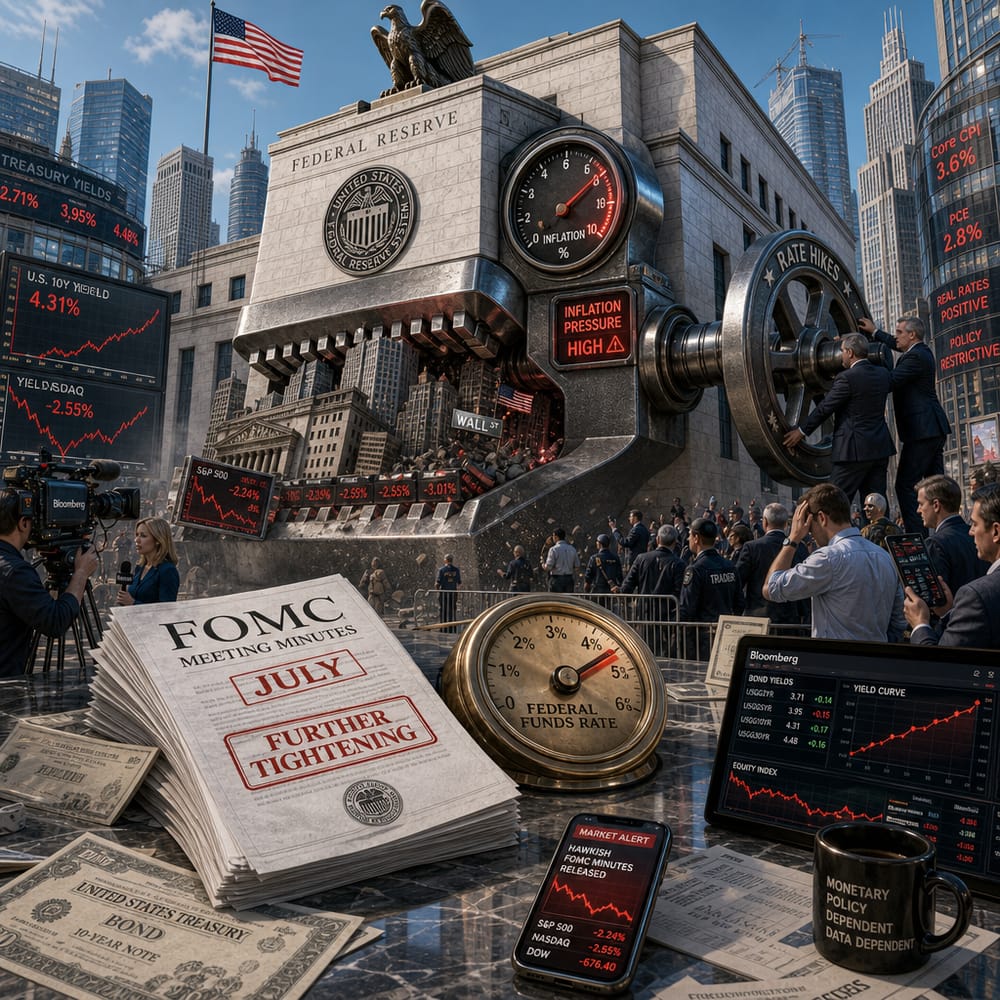
FED'S JULY FOMC MINUTES REVEAL BROAD SUPPORT FOR FURTHER TIGHTENING
Here’s a shocker for your summer playlist: The Federal Reserve has been cranking up the volume on its hawkish rhetoric, and it looks like they’ve got their fingers on the dial, ready to go full blast if inflation keeps partying like it’s 2020. The minutes from the Fed’s July Federal Open Market Committee (FOMC) meeting just dropped, and they’re reading like a consensus thriller—everyone’s in on the need to tighten more if the economy doesn’t start behaving itself.
In Fed-speak, "tightening" means potentially hiking up the federal funds rate, which is the interest rate at which banks lend to each other overnight. It's the kind of thing that gives Wall Street heart palpitations and can send markets on a rollercoaster faster than you can say "quantitative easing."
But why should you, the average Joe or Jane with a Netflix queue and a mortgage, care about what a room full of economic heavyweights thinks about future interest hikes? Well, because it’s the sort of thing that can turn financial markets into a mosh pit. When the Fed leans hawkish—their fancy term for supporting higher interest rates—investors tend to scramble. Stocks can dip, bond yields might rise, and volatility becomes the name of the game. There's no free lunch when it comes to taming inflation.
What does broad support for tightening actually mean in the context of future rate hikes? Essentially, if inflation doesn’t cool its jets, the Fed’s ready to step in with more aggressive rate increases. Inflation's been the unruly guest that overstayed its welcome, and Chair Warsh, with the rest of his economic band, is ready to play bouncer if necessary. It’s a strong signal that the Fed is prepared to act decisively, even if it means making some investors sweat bullets.
How might this influence investor sentiment and market volatility? Buckle up. Historically, markets don’t love surprises from the Fed. When central bankers talk about tightening, it can send jittery investors running to safer shores like government bonds or commodities, potentially pulling the rug from under more volatile assets like stocks. But it’s not just panic; it’s a recalibration. Investors start reassessing the risk versus reward of their portfolios, trying to figure out where to park their cash as interest rates rise. At times, it can feel like trying to play chess with the board on fire.
And the potential impacts on financial markets? It’s a mixed bag. Higher interest rates can make borrowing more expensive, slowing down consumer spending and business investment. This can put a damper on economic growth. On the flip side, it can strengthen the dollar, making imports cheaper and exports pricier. For your 401(k), it might mean a bumpy ride. Stocks could get pummeled, especially those that rely heavily on borrowed money for growth. However, sectors like financials might rejoice as higher rates tend to boost bank profits.
Here’s the kicker: The Fed isn’t just operating in a vacuum. Global economic conditions, fiscal policies, and geopolitical tensions are like unpredictable backup dancers in this monetary policy performance. They can sway the Fed’s decisions and complicate the path forward. Recent inflation metrics might have the Fed sweating through their suits, but they’re not the only factor at play here.
If you’re an investor, now might be the time to check your risk tolerance. Are you comfortable with the potential for more volatility, or is it time to pivot towards safer investments? As for everyday consumers, keep an eye on borrowing costs. Those credit card rates, car loans, and mortgages might just start creeping up.
So, as the Fed keeps its hawkish stance, it’s clear they’re ready to act if inflation doesn’t simmer down. The ripple effects on financial markets can’t be ignored, and for investors and consumers alike, it’s essential to stay informed and nimble. The economic landscape can be as unpredictable as a reality TV plot twist, and staying ahead of the curve is the best way to ride out whatever comes next.
This article is for informational purposes only and is not investment advice. Always do your own research or consult a licensed financial professional before making investment decisions.
© Copyright 2024. All Rights Reserved.
© Copyright 2024. All Rights Reserved.