

Fed's Internal Deliberations: Task Forces and Tools
Saturday, August 29, 2026
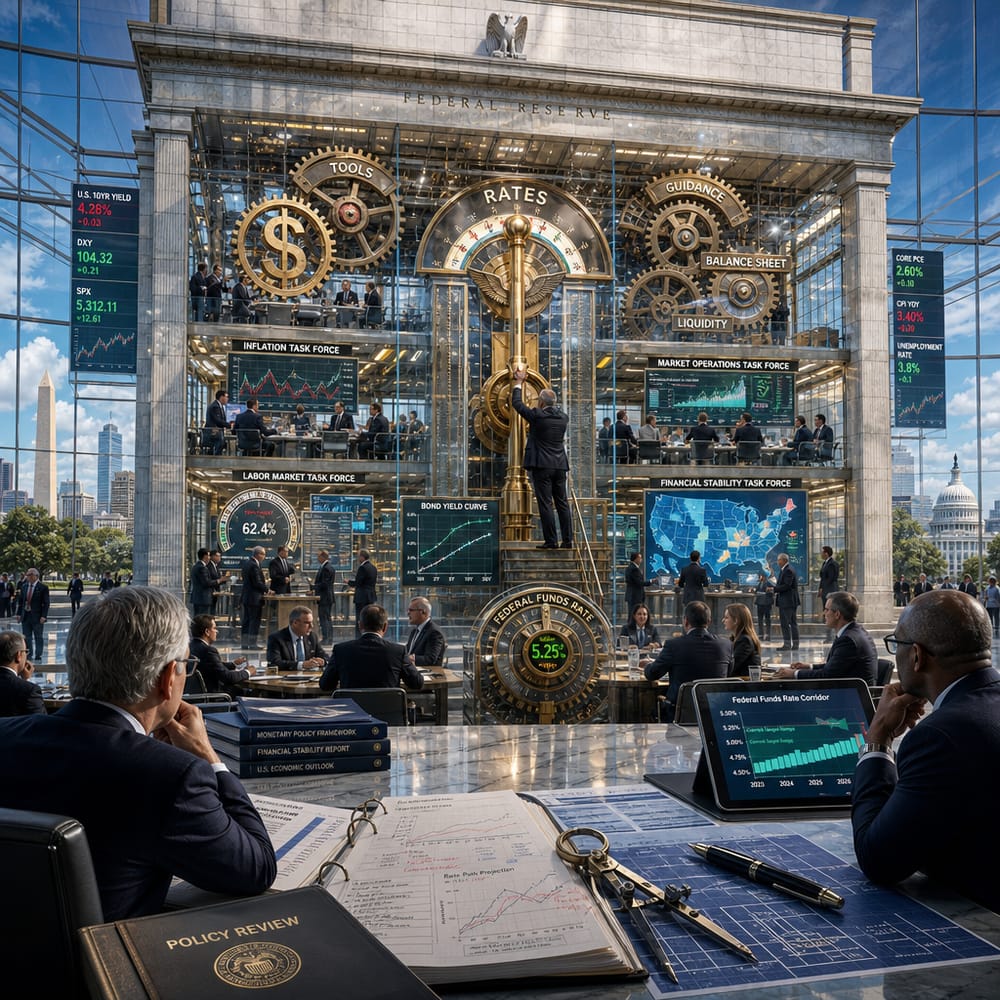
FED'S INTERNAL DELIBERATIONS: TASK FORCES AND TOOLS
What keeps Federal Reserve officials awake at night? Sure, there’s inflation, recession threats, and maybe the occasional existential dread about AI taking over, but right now, they’re also grappling with a series of task forces digging into the very gears of monetary policy. The central bank is turning inward, and its latest moves hint at some possible future twists and turns. This isn't just a snoozefest for economists; it's a suspense thriller for anyone with a 401(k) or an interest in the economy.
You’d think the folks at the Fed have enough on their plate without forming new committees, right? Wrong! It seems they're rolling up their sleeves and diving deep into their toolkit. The Fed's established specialized task forces to review and evaluate key areas of monetary policy, signaling a potential pivot on how they tackle economic turbulence in the future.
Why should you care? Because when the Fed sneezes, the market catches a cold—or sometimes pneumonia. Understanding these internal deliberations is like getting a sneak peek at the screenplay before the blockbuster movie hits theaters. It offers insights into where the Fed might steer the economy, and whether you should brace for impact or breathe easy.
So, what exactly are these task forces putting under the microscope? For starters, they're zeroing in on the inflation framework—no surprise there since inflation seems to be the financial bogeyman of the decade. Then there's the nitty-gritty of interest rates. You know, the magical numbers that make your mortgage more expensive or your savings slightly less pathetic. But beyond that, the task forces are peering into the black box of quantitative easing and how it might evolve. In layman’s terms, that's the Fed's slick method of increasing the money supply by purchasing government securities and other financial assets.
Now, here's where it gets juicy. These reviews aren’t just academic exercises. They're like a behind-the-scenes strategy session at your favorite football team. What plays should they focus on? Which ones should be benched? The answers could shape the Fed's next moves and, by extension, the broader economy.
An intriguing aspect of these internal reviews is the potential shift towards more diverse monetary policy tools. It's like the Fed is eyeing that shiny new gadget in the store window—fascinated but unsure whether to splash out. As the economic landscape changes, so too could the Fed’s arsenal, possibly moving beyond the traditional reliance on interest rates and government bond purchases.
Fed Chairman Kevin Warsh, with his trademark poker face, has been tight-lipped about the specifics, but his silence speaks volumes. By not telegraphing their every move, the Fed is keeping investors on their toes, which, depending on your viewpoint, is either a masterstroke of strategy or akin to wandering through a maze blindfolded. The task forces' findings could break from tradition, potentially advocating for innovative approaches to stabilize the economy in an increasingly unpredictable world.
So, what could this mean for you, the retail investor scrolling through this article while waiting in line for your coffee? Well, if the Fed shifts its policy stance based on these reviews, it could ripple across everything from your stock portfolio to the price of your future home. A more nuanced approach to quantitative easing, for example, could mean different things for asset prices, while changes in interest rate policy might alter the balance in sectors like banking, real estate, and consumer goods.
Of course, like any good financial thriller, the ending is uncertain. The Fed's task forces are still crunching numbers and running scenarios. But knowing they’re at work offers a heads-up that change could be afoot. Whether that means policy shifts will be subtle nudges or seismic overhauls is anyone’s guess.
In the meantime, keep your eyes peeled for signals from the Fed. The direction they choose doesn't just influence the economy's health; it dictates the tempo of markets and, by extension, your financial future. So, hang on tight. It's going to be an exciting ride, and you’ll definitely want to stay tuned for the sequel.
This article is for informational purposes only and is not investment advice. Always do your own research or consult a licensed financial professional before making investment decisions.
© Copyright 2024. All Rights Reserved.
© Copyright 2024. All Rights Reserved.