

Fed’s Internal Debate and Remaining Credibility at Stake
Monday, August 17, 2026
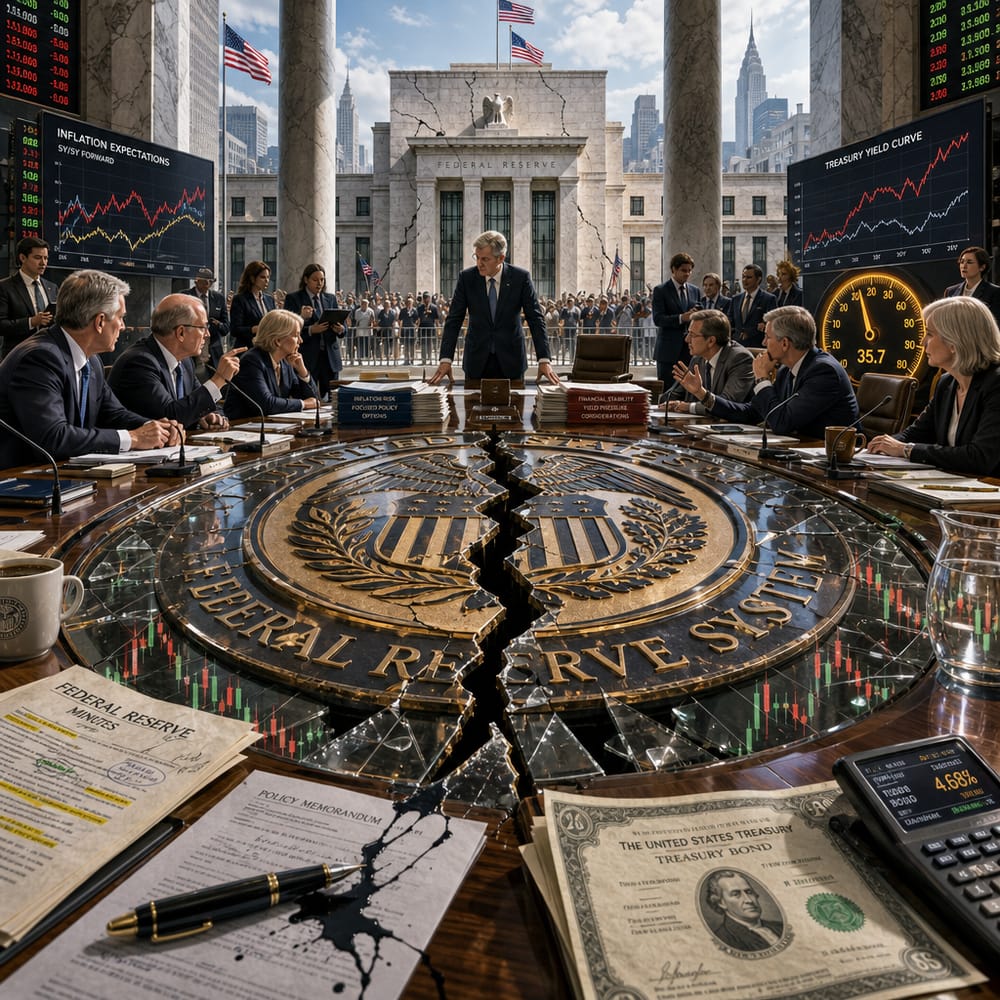
FED'S INTERNAL DEBATE AND REMAINING CREDIBILITY AT STAKE
Picture this: you're at your favorite diner, and the kitchen's in chaos. The chefs are bickering about whether to add more salt or pepper. Meanwhile, your breakfast is getting cold. Now swap the breakfast with the U.S. economy, and those chefs? They’re the Federal Reserve. Welcome to the world where internal divisions in the Fed could shake up everything from your 401(k) to your grocery bill.
The Federal Reserve, the institution we trust to keep our economic ship steady, is having a bit of an identity crisis. Recent minutes from their meetings read like a transcript from a family therapy session rather than a plan to tackle economic challenges. At the heart of it all? Inflation expectations: hotter than a jalapeño or cool as a cucumber? That’s where the debate starts.
MAIN POINTS OF CONTENTION
On one side, some Fed members are sweating over inflation, convinced it could spiral out of control faster than a viral TikTok dance. They argue that more interest rate hikes are necessary to keep inflation in check. Higher interest rates can help cool down spending and borrowing, much like throwing a cold bucket of water on an overheating engine.
On the flip side, the more dovish members — think of them as the Zen yoga instructors of the Fed — argue for a gentler approach. They believe inflation will chill out on its own, without aggressive intervention. After all, they say, raising rates too quickly might choke off the economic recovery, leaving us all gasping for air.
THE IMPACT ON FUTURE POLICY DECISIONS
So, with the Fed divided like a pizza with toppings nobody agrees on, what happens next? These internal conflicts could lead to a more cautious and possibly inconsistent approach to policy-making. Imagine trying to drive a car where both the gas pedal and the brakes are being pressed down at the same time. Not exactly a smooth ride, right?
Expect the Fed to tread carefully, potentially opting for smaller rate hikes or none at all until they reach a consensus. This indecision might lead to mixed signals for investors, who are already jittery enough without the Fed adding to their anxiety.
MARKET CONFIDENCE AND ECONOMIC GROWTH
Now, why should you care about the Fed's family feud? Well, it’s all about confidence. Right now, the Fed's credibility is hanging in the balance like your favorite reality show contestant on an elimination night. Investors, like the rest of us, crave certainty. Knowing the Fed has a clear plan builds trust, which in turn can stabilize markets.
But with all these mixed messages, market confidence could take a hit. U.S. Treasury yields could start resembling a rollercoaster at your local amusement park, and the Stock Market Volatility Index — sometimes called the “fear gauge” — might just make a jump out of bed.
For the everyday investor, this could mean more volatility in stock portfolios, higher borrowing costs if interest rates do rise, and potentially slower economic growth if businesses start pulling back on investments.
IN THE END
In a world where even the Fed doesn't seem sure-footed, what's a retail investor to do? For starters, pay attention to the Fed's next moves, but don't let them paralyze you with fear. Diversification remains your best friend; spread your investments to weather the storm.
Remember, the Fed's internal debate signals just how complex the economic landscape is right now. They're navigating through uncharted waters, much like all of us. Keep an eye on Treasury yields and stock volatility, but most importantly, stay informed and stay calm. After all, in the financial world, fortune favors the prepared mind.
So, as the Fed continues its verbal tug-of-war, watch closely but hold steady. Like a good suspense novel, the next chapter in the Fed saga promises to be intriguing, even if it keeps us all on the edge of our seats.
This article is for informational purposes only and is not investment advice. Always do your own research or consult a licensed financial professional before making investment decisions.
© Copyright 2024. All Rights Reserved.
© Copyright 2024. All Rights Reserved.